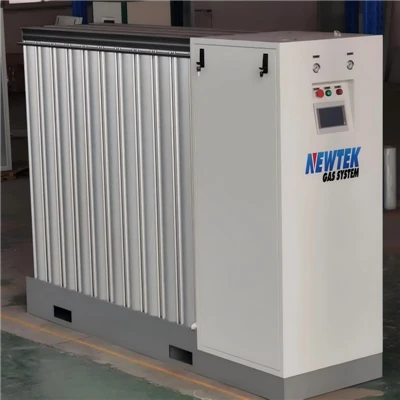
To address these challenges, more aquaculture operators are considering on-site oxygen production as an alternative supply strategy. A PSA oxygen generator produces oxygen directly from ambient air, helping farms reduce reliance on regular external deliveries and gain greater control over oxygen supply. However, the investment decision involves more than replacing purchased oxygen. Actual oxygen demand, transfer efficiency, electricity consumption, equipment capacity, maintenance requirements, and backup arrangements must all be evaluated to determine whether on-site generation is suitable for the farm's operating conditions.
Rising Oxygen Demand in Modern Fish Farming
The development of intensive aquaculture has changed how fish farms manage dissolved oxygen. Traditional ponds may rely partly on atmospheric exchange and photosynthesis, while high-density tanks, raceways, and recirculating aquaculture systems require more controlled oxygen management.
As the biomass in a farming system increases, the total amount of oxygen consumed by fish also rises. Feeding activity, metabolic processes, water temperature, fish species, and growth stages influence the actual demand. The oxygen requirements of a production system therefore change throughout the day and across different production cycles.
Stocking Density and Total Fish Biomass
Stocking density directly affects the biological oxygen demand of an aquaculture system. When more fish occupy the same water volume, the total oxygen consumption increases even if the physical size of the tank or pond remains unchanged.
In intensive fish farming, oxygen availability must be considered alongside the total fish biomass rather than only the water volume. A system designed for a lower stocking density may not provide sufficient oxygen when production expands.
Insufficient dissolved oxygen can reduce feeding activity, affect metabolic performance, and create stressful conditions for aquatic organisms. Under severe oxygen depletion, fish may experience respiratory distress and mortality. For commercial operators, maintaining adequate oxygen availability is therefore closely connected to production stability and stocking management.
Feeding Cycles and Water Temperature
Oxygen demand does not remain constant throughout the day. Feeding increases metabolic activity, while fish respiration and biological processes in the water continue consuming oxygen.
Temperature is another important variable. As water temperature rises, the oxygen solubility of water generally decreases. At the same time, warmer conditions can increase the metabolic oxygen requirements of many fish species.
These combined effects can create periods when oxygen demand increases while the water holds less dissolved oxygen. An oxygen supply system must therefore account for peak operating conditions instead of relying exclusively on average daily consumption.
Oxygen Requirements in Recirculating Aquaculture Systems
Recirculating Aquaculture Systems (RAS) reuse water through mechanical filtration, biological filtration, circulation, and other treatment processes. Although water recycling reduces the need for continuous water replacement, it does not eliminate oxygen consumption.
Fish respiration and biological filtration both contribute to oxygen demand. Water returning from treatment processes may require additional oxygen before entering the culture tanks.
For farms operating these systems, a dedicated oxygen generation installation can provide a controllable source of oxygen for the treatment and distribution network. Oxygen supply must be coordinated with water circulation, carbon dioxide removal, and other water-quality management processes.
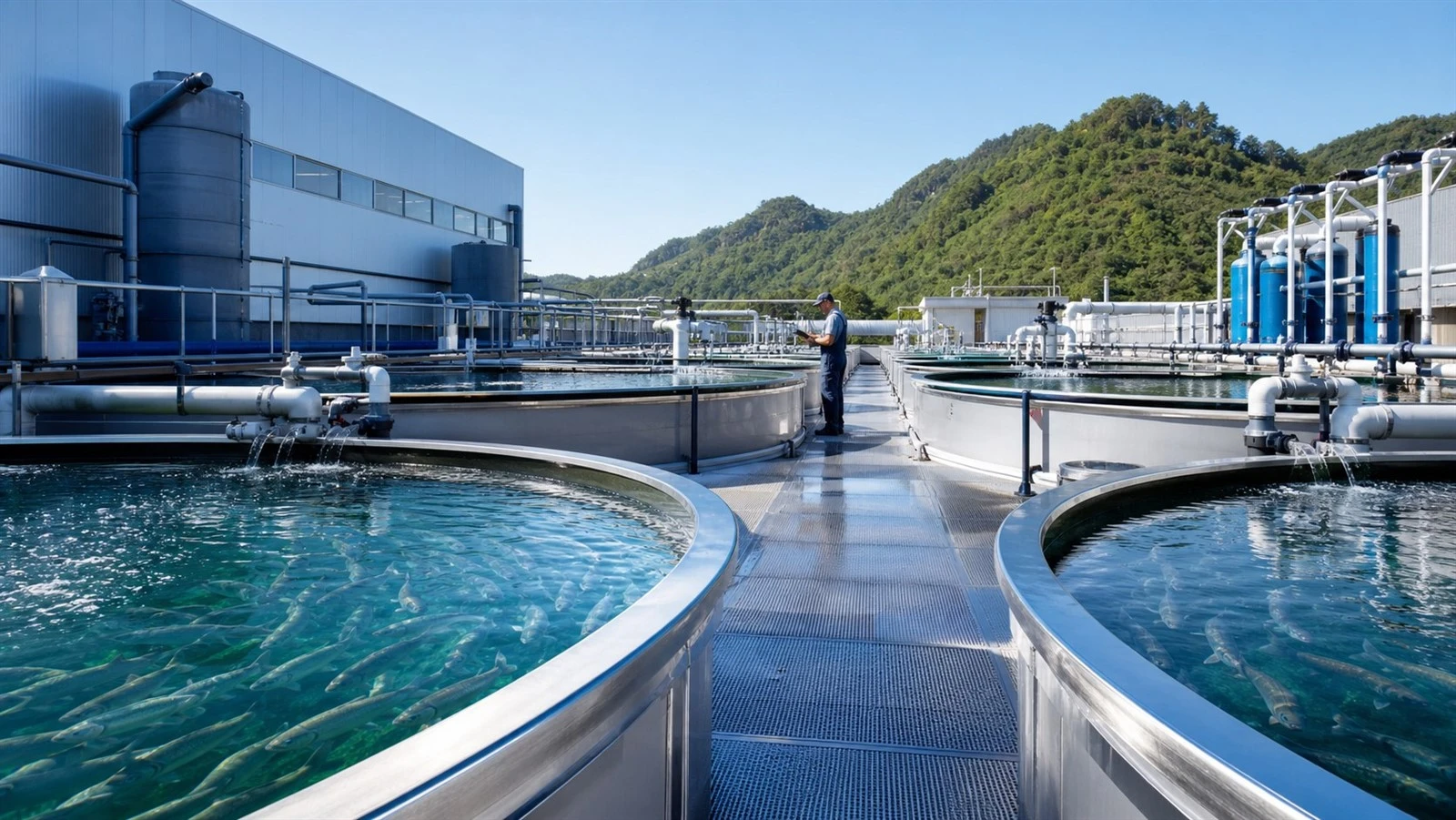
The Challenges of Traditional Oxygen Supply Methods
Purchased oxygen remains a practical option for many aquaculture operations. Smaller farms, seasonal projects, and facilities with relatively low oxygen consumption may find external supply convenient.
However, as oxygen demand increases, the logistics and recurring expenses associated with purchased oxygen become more significant.
| Supply Method | Operational Requirements | Potential Limitations |
|---|---|---|
| Compressed oxygen cylinders | Cylinder procurement, storage, pressure regulation and replacement | Frequent deliveries, handling workload and limited on-site inventory |
| Liquid oxygen | Insulated storage tanks, vaporization equipment and scheduled replenishment | Delivery dependence, specialized storage and infrastructure costs |
| On-site PSA generation | Air compressor, pretreatment, adsorption towers and oxygen distribution | Initial equipment investment, electricity consumption and maintenance |
Compressed Oxygen Cylinders: Handling and Inventory
Compressed oxygen cylinders are commonly used in small-scale aquaculture and as emergency oxygen sources. They can be transported to different locations and connected to appropriate pressure regulation and distribution equipment.
However, commercial farms with substantial oxygen requirements may need frequent cylinder deliveries and replacements. The operational workload can include monitoring remaining inventory, coordinating deliveries, managing storage areas, securing high-pressure cylinders, and checking regulators, valves, and distribution connections.
When oxygen consumption increases, cylinder replacement frequency also rises. This can create additional labor requirements and complicate supply management.
Liquid Oxygen: Storage and Delivery Infrastructure
Liquid oxygen is another option for large-scale oxygen consumption. It can supply substantial quantities of oxygen through insulated storage tanks and suitable vaporization and pressure-control equipment.
Nevertheless, liquid oxygen requires specialized storage installations, safety procedures, and scheduled replenishment. Delivery availability may also depend on the distance between the fish farm and the industrial gas supplier.
For remote aquaculture facilities, transportation schedules and delivery costs can become important factors in operating budgets. A delay in replenishment can create additional pressure on inventory planning, particularly when the farm has limited backup oxygen capacity.
External Supply and Operational Dependencies
The main limitation of purchased oxygen is not necessarily the oxygen itself, but the dependence on an external supply chain.
Fish farms must coordinate oxygen procurement with production schedules, storage capacity, transportation arrangements, and expected consumption. As production expands, the farm may need larger storage facilities, more frequent deliveries, or additional supply contracts.
These requirements do not automatically make external oxygen uneconomical. However, they create a reason for operators to compare the long-term cost and operational flexibility of purchased oxygen with an independent production system.
Why On-Site Oxygen Production Makes Operational Sense
On-site oxygen production changes the way fish farms obtain and manage oxygen. Instead of relying entirely on delivered gas, the facility generates oxygen from compressed ambient air and supplies it through its own distribution infrastructure.
For farms with continuous and substantial oxygen demand, this approach offers several operational advantages.
Reduced Dependence on External Deliveries
A PSA oxygen generator produces oxygen at the fish farm using atmospheric air as its raw material. This reduces the need to purchase and transport the entire quantity of oxygen required for routine operations.
Operators can plan oxygen production according to the facility's actual consumption, equipment capacity, and operating schedule. This is particularly relevant for remote fish farms where transportation costs and delivery coordination can complicate regular oxygen procurement.
More Control Over Daily Oxygen Supply
Aquaculture systems may require oxygen supplementation throughout the day and night. Oxygen consumption does not stop when feeding operations or routine maintenance activities are completed.
A properly configured PSA system can operate continuously through alternating adsorption and regeneration cycles. This allows the equipment to produce oxygen without requiring manual replacement of the adsorption tower after each cycle.
However, continuous production should not be confused with guaranteed uninterrupted supply under every operating condition. Compressor faults, electrical interruptions, maintenance requirements, and downstream equipment failures must still be considered.
For critical aquaculture applications, farms should evaluate backup oxygen sources, standby equipment, and emergency power arrangements alongside the main generator.
Flexible Production Planning for Expanding Farms
External oxygen procurement is generally organized around delivery quantities and storage inventory. On-site production allows the farm to manage oxygen output according to its operating requirements.
For example, a facility can assess oxygen demand across different production stages and select equipment capacity based on the expected operating load.
Where the system includes appropriate monitoring and control equipment, oxygen production and distribution can also be coordinated with measured dissolved oxygen levels. This provides greater flexibility in oxygen management, although the actual control strategy depends on the sensors, valves, automation equipment, and oxygen transfer system installed at the farm.
For facilities planning to add tanks or increase stocking density, modular oxygen generation equipment or a larger PSA installation may provide additional production capacity. Planning for future demand during the initial equipment selection stage can help avoid unnecessary system modifications when the farm expands.
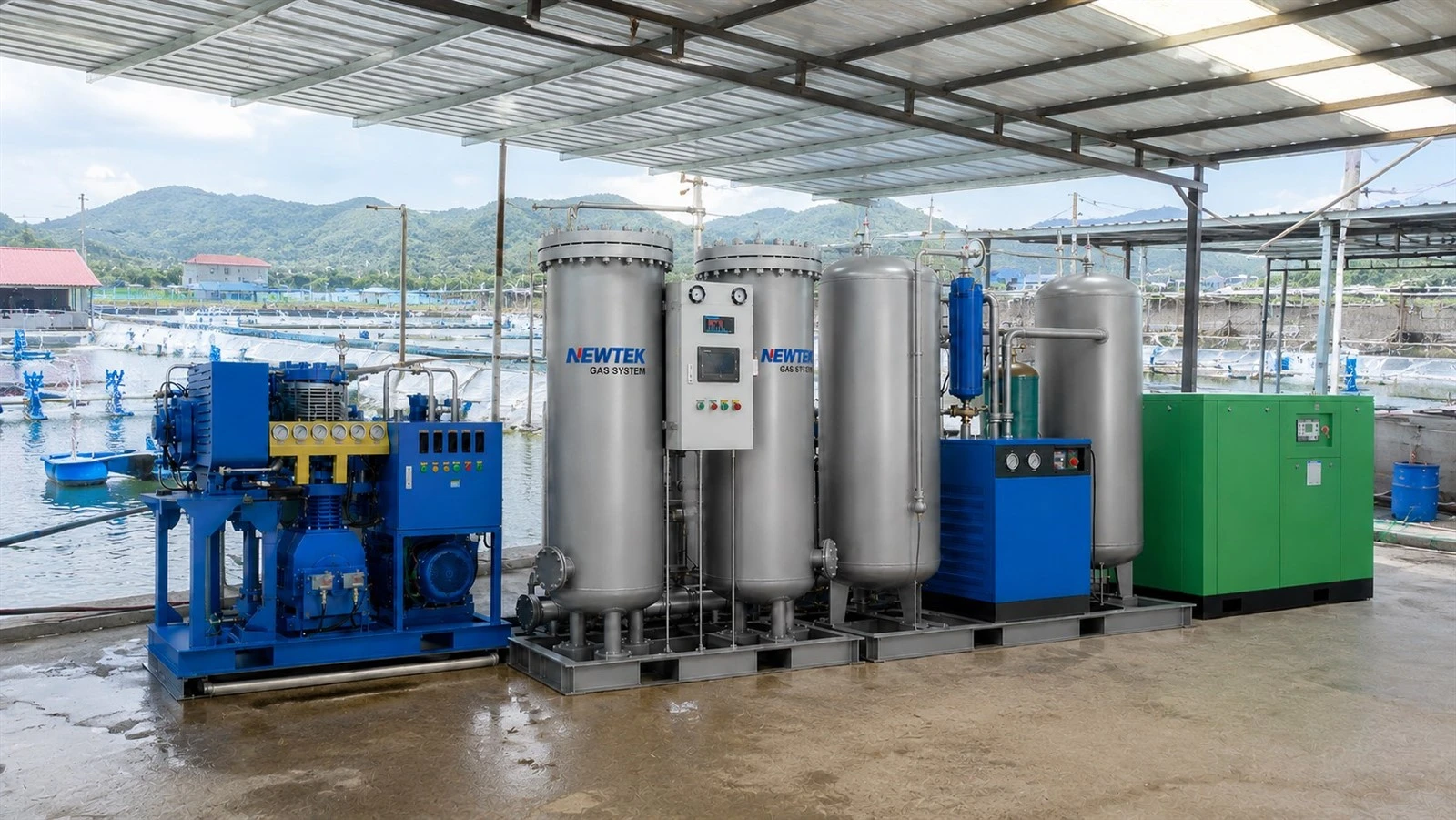
How PSA Oxygen Generation Works in Aquaculture Applications
Pressure Swing Adsorption (PSA) is widely used for on-site oxygen generation. The technology separates oxygen from compressed air through the different adsorption characteristics of gas components in a molecular sieve adsorbent.
A typical PSA oxygen generation system includes an air compressor, air pretreatment equipment, adsorption towers, control valves, an oxygen buffer tank, and a monitoring and control unit.
Process Stage 1: Air Compression and Pretreatment
The process begins with ambient air entering the air compressor. The compressor raises the air pressure to the operating level required by the adsorption system.
Compressed air then passes through pretreatment equipment to remove moisture, oil aerosols, dust, and other contaminants.
This stage is important because excessive moisture or oil contamination can affect the adsorption performance and service life of the molecular sieve. Depending on the system configuration, pretreatment may include air coolers, water separators, refrigerated or desiccant dryers, and precision filters.
Process Stage 2: Molecular Sieve Adsorption
After pretreatment, compressed air enters the PSA adsorption towers.
The zeolite molecular sieve preferentially adsorbs nitrogen under pressurized conditions, allowing an oxygen-enriched gas stream to pass through the tower.
When the adsorption material approaches its working capacity, the system changes operating conditions. The pressure in the tower decreases, releasing the adsorbed nitrogen and regenerating the molecular sieve.
Process Stage 3: Alternating Tower Regeneration
In a twin-tower configuration, the two adsorption towers operate alternately. One tower produces oxygen while the other undergoes regeneration.
The control valves and PLC coordinate the pressure changes and switching sequence. This alternating process supports continuous oxygen generation without requiring the equipment to stop after every adsorption cycle.
Standard PSA oxygen generators commonly produce oxygen at approximately 93% purity, with specific output purity depending on the equipment design and operating conditions.
Process Stage 4: Oxygen Buffering and Distribution
The oxygen-enriched gas passes into a buffer tank or an appropriately configured downstream supply system. The buffer tank helps stabilize oxygen delivery and accommodates short-term variations between production and consumption.
From there, oxygen can enter the farm's distribution network through pressure regulation, flow-control equipment, and suitable piping. The oxygen is then delivered to the water through devices such as venturi injectors, oxygen cones, or fine-bubble diffusers.
The choice of injection equipment influences how efficiently oxygen transfers from the gas phase into the water. A generator's rated oxygen output alone does not determine the actual amount of dissolved oxygen available to fish.
For this reason, PSA generation capacity and oxygen transfer performance must be evaluated as two connected but separate parts of the overall system.
Evaluating the Investment: Operating Costs and Long-Term Value
Investing in a PSA oxygen generator requires an initial capital expenditure. Whether the investment provides economic benefits depends on the farm's oxygen consumption, local energy prices, external oxygen procurement costs, and equipment operating conditions.
A comparison based only on the purchase price of oxygen or the initial price of the generator is insufficient. Fish farms should evaluate the total cost of ownership over the expected service period, including equipment investment, daily energy consumption, maintenance, and backup supply arrangements.
Cost Structure of Purchased Oxygen
For farms using compressed cylinders or liquid oxygen, the annual supply cost may include:
- Oxygen purchase prices and supplier service charges.
- Transportation and delivery expenses.
- Cylinder rental or storage-related costs.
- Labor for receiving, handling, and replacing cylinders.
- Storage tank operation and maintenance, where applicable.
- Additional expenses associated with maintaining emergency oxygen inventory.
These costs can vary significantly with delivery distance, oxygen consumption, supplier pricing, and storage requirements. Farms with increasing production volumes may also need to expand their storage capacity or arrange more frequent deliveries.
Operating Expenses of PSA Oxygen Generation
An on-site PSA system introduces a different cost structure. Instead of purchasing the entire oxygen supply, the farm operates its own generation equipment using compressed ambient air.
The main operating expenses generally include electricity for the air compressor and associated equipment, filter replacement, routine maintenance, and periodic servicing of valves and other components.
Electricity consumption deserves particular attention because the air compressor is a major contributor to the system's operating energy demand. Actual consumption per unit of oxygen depends on the generator's capacity, operating pressure, required purity, inlet air conditions, and equipment efficiency.
Maintenance planning also affects long-term operating costs. Air pretreatment components require periodic inspection and replacement, while compressors, control valves, and other mechanical components need servicing according to operating conditions and manufacturer recommendations.
Comparing Total Operating Costs
| Cost Category | Purchased Oxygen | PSA On-Site Production |
|---|---|---|
| Initial investment | Storage and distribution facilities | Generator and supporting equipment |
| Oxygen acquisition | Recurring gas purchases | No routine external oxygen purchase for normal production |
| Transportation | Delivery and logistics expenses | Reduced routine delivery requirements |
| Energy | Depends on supply and vaporization arrangements | Electricity consumption |
| Maintenance | Storage and distribution equipment | Compressor, filters, valves and PSA components |
| Backup supply | Additional oxygen inventory | Emergency oxygen source and standby arrangements |
The comparison should use actual supplier quotations, local electricity tariffs, equipment specifications, and the farm's historical oxygen consumption. A generator operating under a stable load may have a different production cost from one running intermittently or significantly below its rated capacity.
When Does On-Site Production Become a Practical Investment?
On-site oxygen generation is generally worth evaluating when a fish farm has consistent oxygen demand, substantial recurring procurement expenses, or logistical difficulties associated with external deliveries.
The investment case may become stronger when the facility operates continuously, plans to increase stocking density, or intends to expand its production capacity. However, farms with low or irregular oxygen consumption may find purchased oxygen more economical because it avoids the initial investment and ongoing maintenance of a dedicated generation system.
Operators should also consider the expected equipment service life, installation costs, financing requirements, backup arrangements, and the time needed to recover the initial investment.
Rather than assuming that one supply method is always less expensive, fish farms should compare the full operating costs under their own production conditions. This provides a more reliable basis for deciding whether PSA oxygen generation can improve long-term cost control and supply management.
Selecting a PSA Oxygen Generator for Fish Farms
Selecting an oxygen generator requires more than matching the equipment's nominal output to the size of the fish farm. The complete oxygen demand and distribution requirements must be evaluated before determining the appropriate configuration.
Oxygen Demand and Production Capacity
The first step is to estimate the oxygen consumption of the entire production system.
Relevant factors include fish species, total biomass, stocking density, feeding rate, water temperature, and production stage. In RAS facilities, the oxygen demand of biological treatment equipment and other system processes should also be considered.
The calculation should distinguish between average consumption and peak demand. Equipment selected only for average requirements may not provide sufficient output during periods of maximum oxygen consumption.
Key Equipment Selection Parameters
| Parameter | What Buyers Should Evaluate |
|---|---|
| Oxygen capacity | Total oxygen demand and peak operating requirements |
| Oxygen purity | Requirements of the injection and distribution equipment |
| Outlet pressure | Pressure loss across pipes, valves and injection devices |
| Operating hours | Continuous or intermittent production |
| Power consumption | Electricity requirements under actual operating conditions |
| Control system | Automatic operation, alarms and monitoring |
| Installation environment | Ambient temperature, humidity, ventilation and available space |
Oxygen capacity is commonly expressed in Nm³/h. Buyers should confirm the reference conditions used for the rated flow and ensure that the specified output corresponds to the required oxygen purity and pressure.
Integration with Oxygen Transfer Equipment
The oxygen generator and water oxygenation equipment must be designed as a coordinated system.
A venturi injector, oxygen cone, or diffuser may have different operating pressure, flow, and oxygen transfer characteristics. If the oxygen delivery pressure is insufficient, the distribution system may not perform as expected.
Similarly, supplying more oxygen than the injection equipment can effectively transfer does not necessarily improve water quality.
The system design should therefore consider oxygen flow, pressure losses, injection depth, water circulation, and actual dissolved oxygen measurements.
Monitoring, Backup and Emergency Planning
Dissolved oxygen monitoring is essential for evaluating the actual oxygen conditions in fish tanks and ponds.
DO probes can measure water oxygen levels at selected locations, while a suitable control system can use this information to regulate oxygen supply equipment.
Fish farms should also establish an emergency response plan covering:
- Power failure and compressor shutdown.
- Oxygen pipeline leakage or pressure loss.
- Unexpected increases in oxygen demand.
- Generator maintenance and equipment downtime.
- Failure of dissolved oxygen monitoring equipment.
Depending on the production risk, this may involve backup oxygen cylinders, liquid oxygen storage, standby generators, or redundant equipment.
An on-site oxygen generator should form part of a broader oxygen supply strategy rather than serve as the only protection against supply interruptions.
Conclusion
The growing interest in on-site oxygen production reflects changes in modern aquaculture. As fish farms increase stocking density, expand production capacity, and adopt more controlled farming systems, oxygen supply becomes an increasingly important part of infrastructure planning. Traditional oxygen procurement remains suitable for facilities with low or irregular consumption, but farms with continuous oxygen requirements may face additional costs and operational dependencies associated with cylinder replacement, liquid oxygen deliveries, and storage management. PSA oxygen generation offers an alternative by producing oxygen directly at the farm through compressed air pretreatment, molecular sieve adsorption, and alternating tower regeneration.
Whether this investment is worthwhile depends on actual oxygen demand, production capacity, energy consumption, maintenance requirements, and the reliability of the complete supply system. The generator must also work with suitable oxygen distribution and water oxygenation equipment to achieve the required dissolved oxygen levels. For farms planning long-term production growth, evaluating on-site oxygen generation during facility design or expansion can help establish a more manageable supply strategy. A properly selected PSA system, supported by effective monitoring and backup arrangements, can reduce dependence on routine external deliveries and support more controlled aquaculture operations.