Oxygen is a critical operating input in commercial aquaculture, particularly in intensive fish farming, shrimp production, hatcheries, and recirculating aquaculture systems (RAS). As stocking densities increase and production cycles become more intensive, farms must maintain adequate dissolved oxygen levels to support respiration, feeding activity, growth, and water quality management. However, the cost of maintaining a reliable oxygen supply can become a significant part of daily operating expenses.
Reducing oxygen supply costs requires more than negotiating lower oxygen purchase prices. Farms also need to examine oxygen transfer efficiency, distribution losses, equipment energy consumption, and actual biological demand. Improving these factors can reduce unnecessary oxygen consumption while maintaining stable water conditions. For operations with continuous oxygen requirements, comparing delivered oxygen with on-site PSA generation can also help identify a more economical long-term supply strategy.
Where Do Oxygen Supply Costs Come From in Commercial Aquaculture?
Oxygen supply expenses involve several interconnected cost components. The actual cost structure depends on farm size, production intensity, water treatment configuration, oxygen demand, and the selected supply method. Understanding these expenses is the first step toward identifying practical savings opportunities.
Purchased Oxygen and Delivery Expenses
Many commercial farms rely on liquid oxygen or compressed oxygen cylinders to support intensive production. These arrangements provide an external oxygen source without requiring the farm to operate its own oxygen generation equipment. However, they also create recurring procurement and logistics expenses.
Liquid oxygen users must account for oxygen purchase prices, delivery schedules, storage tank rental or ownership, and associated handling requirements. Farms located far from industrial gas suppliers may face additional transportation expenses or delivery constraints. Compressed oxygen cylinders are useful for smaller facilities and backup applications, but frequent cylinder replacement can increase handling labor and procurement costs.
Supply interruptions can also create operational risks. Farms with high oxygen demand may need additional storage capacity or emergency supplies to maintain continuity during delivery delays. These arrangements increase the overall cost of oxygen management beyond the price paid per unit of gas.
Oxygen Loss During Storage and Transfer
Not all purchased or generated oxygen reaches the culture water. Leakage from pipelines, unsuitable connections, pressure losses, poorly maintained valves, and inefficient injection equipment can reduce the amount of oxygen available at the point of use.
Oxygen transfer losses also occur when gas bubbles escape from the water before sufficient oxygen has dissolved. These losses increase the amount of oxygen that must be purchased or generated to achieve the required dissolved oxygen level.
Consequently, oxygen procurement costs should be evaluated alongside storage, distribution, and transfer performance rather than treated as an isolated expense.
Control Energy Consumption Across Aeration and Oxygenation Equipment
Electricity is another major component of aquaculture oxygen supply costs. Mechanical aerators, air blowers, water pumps, oxygen injection equipment, and oxygen generation systems all consume energy during operation.
In pond aquaculture, paddlewheel aerators and surface aerators may operate for extended periods, particularly at night or during periods of high biological oxygen demand. In RAS facilities, circulation pumps, oxygenation devices, and filtration equipment contribute to continuous electricity consumption.
Operating equipment without considering actual oxygen demand can lead to unnecessary energy use. For example, running all aerators at maximum capacity when dissolved oxygen levels are already sufficient may increase electricity expenses without providing a corresponding production benefit.
Identify Unnecessary Equipment Operation
Farm operators should examine equipment operating schedules and compare electricity consumption with actual oxygen requirements. The assessment should include:
- Operating hours of paddlewheel and surface aerators.
- Air blower and water pump electricity consumption.
- Oxygen injection equipment operating conditions.
- Compressor and oxygen generator running hours.
- Differences between normal and peak production periods.
The objective is to identify equipment that operates longer or at higher capacity than necessary. Adjusting operating schedules according to measured water conditions can reduce energy consumption while maintaining appropriate oxygen availability.
Include Maintenance in Energy Management
Diffusers, oxygen cones, valves, regulators, flow meters, filters, and pipeline connections require periodic inspection and maintenance. Blocked diffusers, damaged seals, incorrect pressure settings, and deteriorating equipment performance can increase gas consumption and energy demand.
Labor costs should also be considered. Manual oxygen cylinder replacement, frequent equipment adjustments, and routine troubleshooting can consume considerable staff time in facilities with multiple production tanks or ponds.
A well-maintained oxygen distribution system helps prevent avoidable losses and reduces the frequency of corrective maintenance.
Improve Oxygen Transfer Efficiency to Reduce Waste
Oxygen transfer efficiency describes how effectively supplied oxygen moves from the gas phase into the water. Improving this process can reduce the quantity of oxygen required to maintain a target dissolved oxygen level.
Select Suitable Oxygen Transfer Equipment
Different aquaculture systems require different oxygen transfer methods.
| Equipment | Main Function | Typical Application |
|---|---|---|
| Paddlewheel Aerators | Water circulation and atmospheric aeration | Pond aquaculture |
| Air Diffusers | Introduce air or oxygen through distributed bubbles | Tanks and aquaculture basins |
| Oxygen Cones | Transfer concentrated oxygen into flowing water | Intensive aquaculture and RAS |
| Venturi Injectors | Draw gas into water through pressure differences | Water circulation and oxygen injection |
| Low-Head Oxygenators | Transfer oxygen into flowing water under relatively low hydraulic head | Selected RAS configurations |
Paddlewheel aerators are commonly used in ponds to combine water circulation with atmospheric oxygen transfer. Air diffusers introduce bubbles into the water, while oxygen cones and low-head oxygenators are designed to transfer concentrated oxygen into flowing water.
Venturi injectors use fluid pressure differences to draw gas into a water stream. Their performance depends on hydraulic conditions, flow velocity, pressure, and equipment configuration.
For intensive aquaculture and RAS applications, pure oxygen injection may be more appropriate than relying exclusively on atmospheric aeration. However, the most suitable equipment depends on the required oxygen transfer rate, water circulation capacity, operating pressure, and maintenance conditions.
Optimize Diffuser Placement and Water Flow
Diffuser position influences bubble contact time and oxygen transfer. Shallow installation or unsuitable placement may allow bubbles to reach the water surface before sufficient oxygen has dissolved.
In pond systems, aerator placement should consider water circulation patterns, pond geometry, stocking distribution, and areas where dissolved oxygen may become depleted. In tanks and RAS facilities, diffuser positioning should support effective mixing without creating unnecessary hydraulic resistance or disrupting filtration processes.
Operators should also inspect diffuser condition regularly. Mineral deposits, suspended solids, biological growth, and other contaminants can block diffuser openings and change bubble size. These conditions may reduce oxygen transfer efficiency and increase the pressure required for gas delivery.
Prevent Losses in Oxygen Distribution Pipelines
A properly designed distribution network helps deliver oxygen at the required flow rate and pressure. Pipeline diameter, total length, connection quality, valve configuration, and pressure regulation all affect system performance.
Leaks should be identified through routine inspection and appropriate pressure or leak testing. Regulators and flow meters should also be checked to ensure that measured values reflect actual operating conditions.
For facilities serving multiple tanks or production zones, individual flow control can help distribute oxygen according to demand rather than supplying the same flow to every outlet. This approach reduces unnecessary gas consumption and makes system performance easier to monitor.
Use Dissolved Oxygen Monitoring to Match Supply with Biological Demand
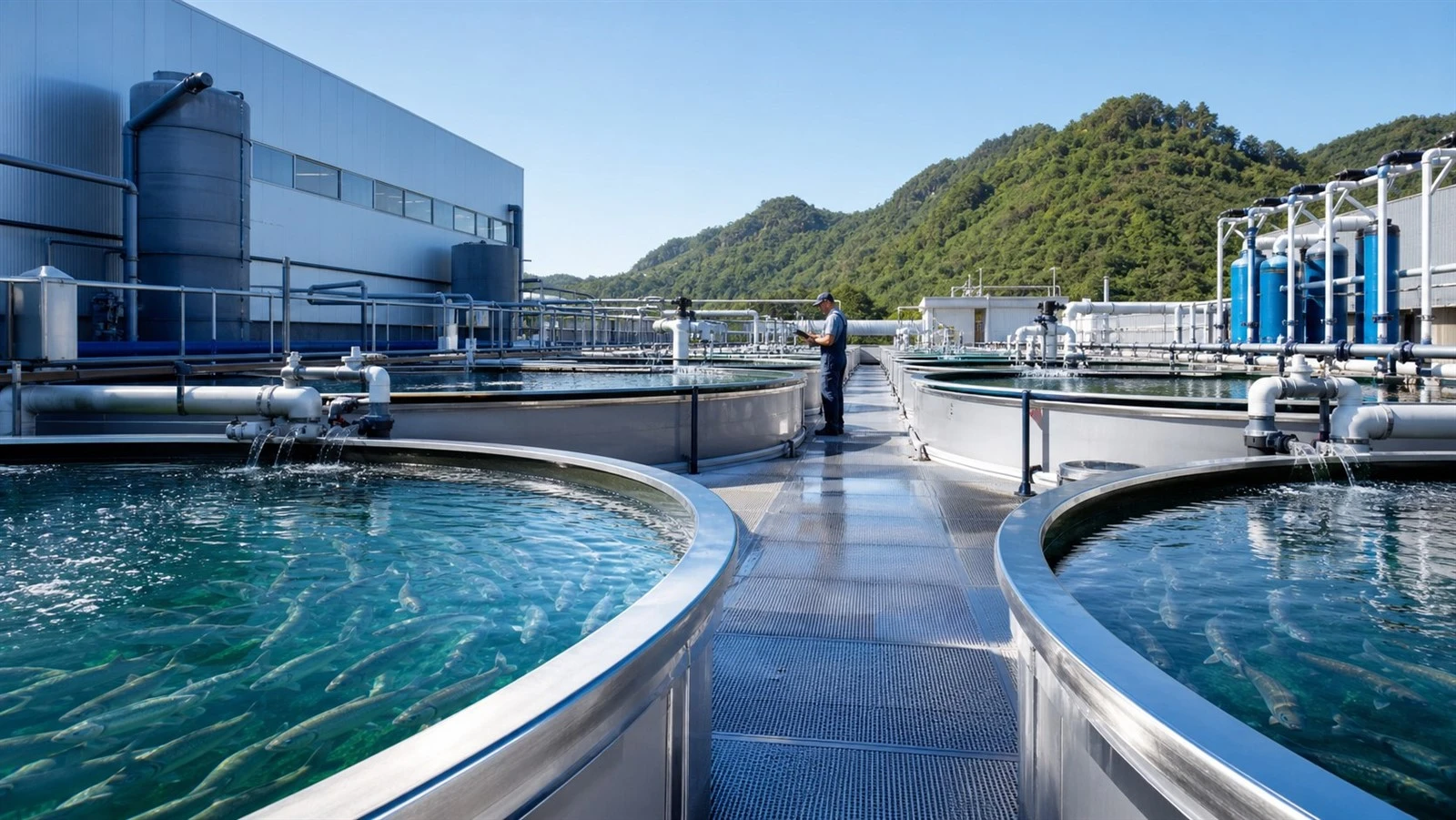
Dissolved oxygen (DO) monitoring provides the information needed to match oxygen supply with actual water conditions. Without reliable monitoring, operators may rely on fixed schedules or visual observations that do not accurately reflect oxygen demand.
Monitor Dissolved Oxygen at Critical Locations
DO levels can vary between different tanks, pond zones, water depths, and sections of a recirculating system. Measurements taken at only one location may not represent the oxygen conditions throughout the facility.
Commercial farms should identify critical monitoring points based on water circulation patterns, stocking density, feeding areas, and system design. Sensors should be installed and maintained according to their operating requirements, with periodic calibration to reduce measurement errors.
Continuous monitoring is particularly useful in intensive systems where oxygen levels can change rapidly. Historical DO data can also help operators identify recurring periods of high demand and adjust equipment operation accordingly.
Consider Factors That Change Oxygen Demand
Oxygen demand changes throughout the production cycle. Stocking biomass, fish or shrimp species, feeding activity, water temperature, salinity, and microbial respiration all influence oxygen consumption.
For example, increased feeding activity can raise metabolic oxygen demand, while higher water temperatures generally reduce oxygen solubility and may increase the physiological oxygen requirements of aquatic organisms.
A fixed oxygen supply setting may therefore be inefficient. Farms should adjust oxygen flow according to measured water conditions and changes in biomass.
The following operating factors should be considered together:
- Stocking density and total biomass.
- Species and production stage.
- Feeding schedules and feeding intensity.
- Water temperature and salinity.
- Water circulation and exchange conditions.
- Dissolved oxygen levels across different production zones.
The objective is not to minimize oxygen flow at all times. It is to provide sufficient oxygen where and when it is needed, avoiding both unnecessary consumption and inadequate supply.
Apply Automatic Control and Backup Procedures to Improve Supply Management
Monitoring data becomes more useful when it is connected to an appropriate control strategy. Automatic oxygen management can help farms respond to changing demand without relying entirely on manual adjustments.
Use Automatic Control to Manage Peak Demand
Automatic control systems can connect DO sensors, oxygen flow meters, valves, and pumps to regulate oxygen delivery. Depending on the system configuration, controllers can adjust equipment operation when measured DO levels move outside predefined operating ranges.
PLC-based control can also coordinate multiple oxygen supply zones, record operating parameters, and activate alarms when abnormal conditions occur.
Automation helps reduce the need for constant manual adjustments and makes oxygen management more consistent. However, control parameters must be configured according to the species, production stage, and system design. Sensor failure, communication interruption, and power outages should also be addressed through suitable alarm and backup procedures.
Establish Alarm and Emergency Oxygen Supply Arrangements
Oxygen supply reliability is directly connected to production risk. A power failure, equipment malfunction, pipeline blockage, or unexpected increase in oxygen demand can cause dissolved oxygen levels to fall rapidly in intensive aquaculture systems.
Farms should establish alarm thresholds, emergency response procedures, and backup oxygen arrangements. Depending on production requirements, backup options may include:
- Stored liquid oxygen.
- Compressed oxygen cylinders.
- Standby oxygen generators.
- Independent emergency aeration equipment.
Although backup arrangements create additional costs, they can prevent substantial losses during supply interruptions. Their capacity should be determined by the farm's peak oxygen demand and the time required to restore normal operation.
Compare Oxygen Supply Methods and Evaluate On-Site PSA Generation
The oxygen supply method has a significant influence on long-term operating expenses. For farms with regular and substantial oxygen demand, on-site generation may provide an alternative to repeated external oxygen purchases.
Delivered Liquid Oxygen
Liquid oxygen is commonly used in facilities that require relatively large and continuous oxygen supplies. It can support high-demand applications and can be stored in dedicated insulated tanks before vaporization and distribution.
Its operating cost includes oxygen purchases, transportation, storage infrastructure, vaporization equipment, and routine tank management. The economic performance of liquid oxygen depends partly on supplier availability, delivery distance, purchase volume, and local industrial gas prices.
For farms with stable demand and convenient access to oxygen suppliers, delivered liquid oxygen may remain a practical solution. However, recurring logistics expenses should be included when evaluating its total cost.
Compressed Oxygen Cylinders
Compressed oxygen cylinders are generally suitable for smaller facilities, temporary installations, laboratory-scale aquaculture, and emergency backup applications.
Their advantages include flexible deployment and relatively limited initial infrastructure requirements. However, large-scale continuous consumption can result in frequent cylinder replacement, storage management requirements, and higher handling expenses.
As production capacity increases, farms should evaluate whether cylinder-based supply remains economical compared with bulk liquid oxygen or on-site generation.
How On-Site PSA Oxygen Generation Works
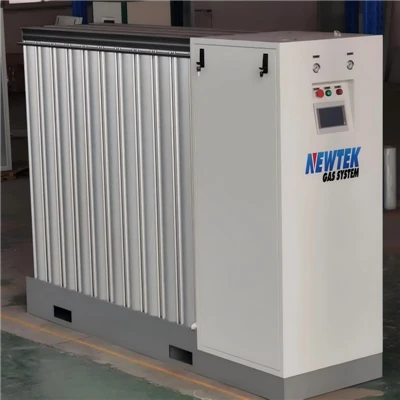
Pressure Swing Adsorption (PSA) technology produces oxygen from compressed atmospheric air. The process uses zeolite molecular sieves to selectively adsorb nitrogen under pressure, allowing oxygen-enriched gas to pass through the adsorption system.
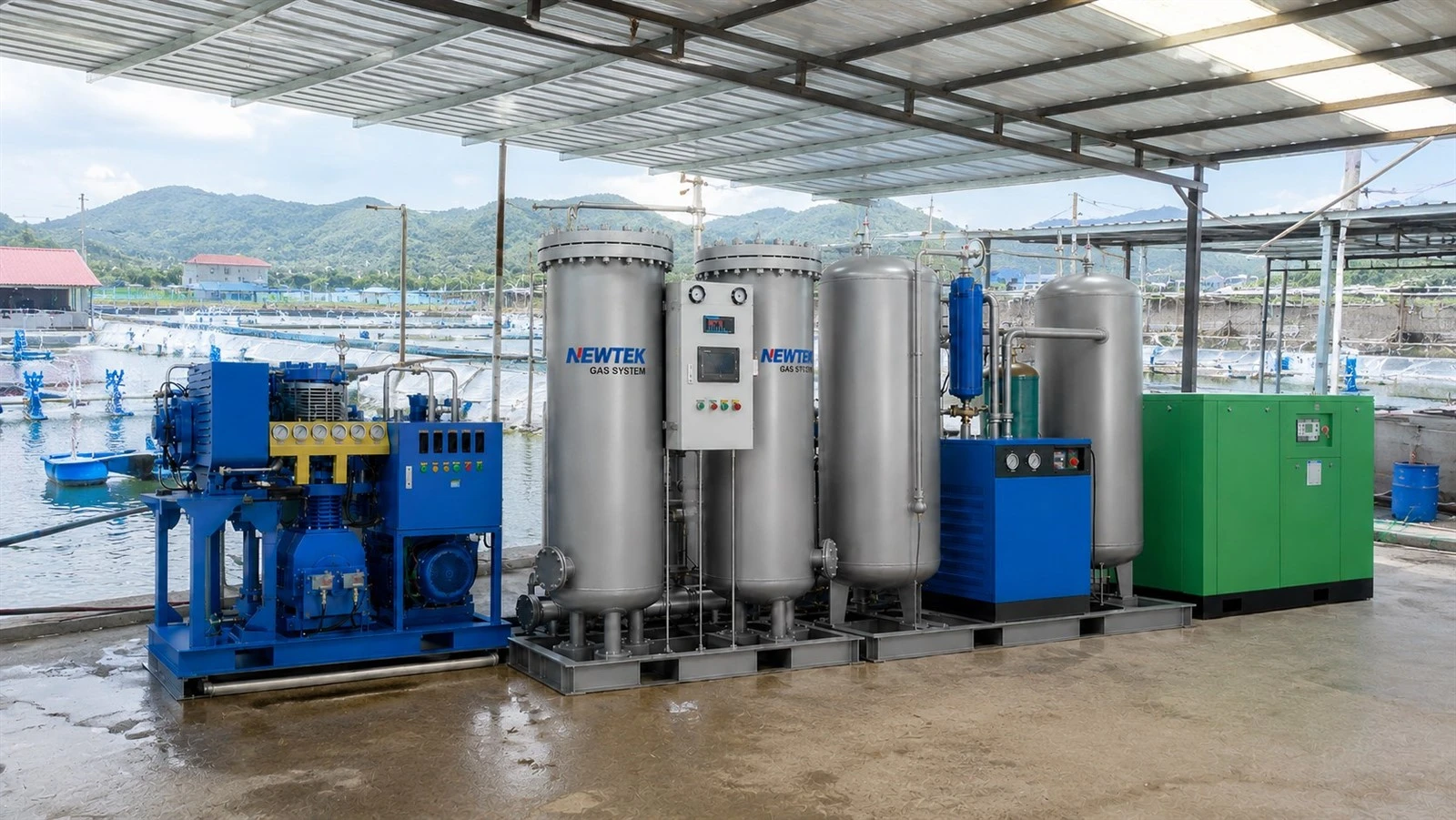
A typical PSA oxygen generation system includes an air compressor, air treatment equipment, adsorption towers, control valves, a PLC control system, and an oxygen storage or distribution arrangement.
In a twin-tower configuration, one tower performs adsorption while the other undergoes depressurization and regeneration. The towers alternate between these stages to maintain continuous oxygen production.
The main operating sequence is:
- Air Compression: An air compressor supplies compressed atmospheric air.
- Air Treatment: Drying and filtration equipment remove moisture and contaminants.
- Nitrogen Adsorption: Compressed air enters a tower containing zeolite molecular sieves, which selectively adsorb nitrogen.
- Oxygen Enrichment: Oxygen-enriched gas passes through the adsorption tower.
- Tower Regeneration: The second tower undergoes depressurization and regeneration.
- Continuous Production: The towers alternate between adsorption and regeneration to maintain oxygen output.
- Gas Distribution: Produced oxygen passes through the storage, pressure regulation, and distribution arrangement before reaching the aquaculture equipment.
For commercial aquaculture, on-site PSA generation can reduce dependence on external oxygen deliveries and provide a supply source close to the production facility. It may be particularly relevant to remote farms, intensive fish production facilities, and operations with stable daily oxygen requirements.
However, PSA systems also consume electricity and require routine maintenance. Their economic value depends on generator capacity, operating hours, oxygen purity, production efficiency, electricity prices, and the cost of alternative oxygen sources.
Calculate Total Oxygen Supply Costs Before Selecting a System
Comparing supply methods requires more than looking at oxygen purchase prices or generator investment. Farms should evaluate the total cost of ownership (TCO) over an appropriate operating period.
Build a Complete Cost Comparison
The following table outlines the main cost components associated with different oxygen supply arrangements.
| Cost Component | Delivered Liquid Oxygen | Compressed Oxygen Cylinders | On-Site PSA Generation |
|---|---|---|---|
| Initial Investment | Storage and vaporization infrastructure | Cylinder storage and handling arrangements | Generator and supporting equipment |
| Gas Cost | Recurring oxygen purchases | Recurring cylinder purchases or refills | No external oxygen purchase for normal production |
| Transportation | Regular delivery expenses | Frequent cylinder transportation | Generally limited to equipment and replacement components |
| Electricity | Vaporization and distribution equipment where applicable | Mainly downstream equipment | Compressor, dryer, generator and auxiliary equipment |
| Maintenance | Tank, vaporizer and distribution system | Cylinders, regulators and connections | Compressor, filters, dryer, valves and molecular sieve system |
| Operating Labor | Delivery and tank management | Cylinder replacement and handling | Equipment inspection and routine maintenance |
| Supply Management | Inventory and delivery scheduling | Cylinder inventory and replacement | Generator operation and backup supply management |
The table provides a general comparison. Actual costs depend on local energy prices, supply contracts, equipment configuration, operating conditions, and facility requirements.
Calculate the Cost per Unit of Oxygen
A simplified annual cost model can be expressed as:
Annual Oxygen Supply Cost = Oxygen Purchase Cost + Delivery Cost + Electricity Cost + Maintenance Cost + Labor Cost + Equipment Depreciation
For purchased oxygen, the calculation should include the gas purchase price, transportation, storage, and handling expenses.
For PSA generation, the calculation should include electricity consumption, air compressor operation, filtration and drying equipment, routine servicing, replacement components, and equipment depreciation.
The cost per unit of oxygen can then be calculated using:
Cost per kg of Oxygen = Total Annual Oxygen Supply Cost ÷ Annual Oxygen Consumption (kg)
For a more accurate comparison, farms should also consider the quantity of oxygen actually transferred into the water. A system with a lower gas purchase price may still have a higher effective cost if its transfer efficiency is poor.
PSA generation is not automatically the lowest-cost option in every location. Farms with low or irregular oxygen demand may find external supply more economical, while facilities with continuous consumption and high delivery expenses may benefit from on-site production.
A site-specific calculation is therefore essential.
Select an Oxygen Supply System Based on Farm Requirements
The correct oxygen supply configuration should reflect actual production conditions rather than relying solely on the rated capacity of individual equipment.
Calculate Average and Peak Oxygen Demand
Average oxygen consumption helps determine the normal operating capacity of a supply system, while peak demand indicates the capacity required during periods of increased biological activity or abnormal operating conditions.
Farm operators should evaluate oxygen requirements by production zone, species, biomass, feeding schedule, water temperature, and water circulation rate.
Peak demand should not be estimated using average consumption alone. Sudden increases in stocking biomass, higher temperatures, and equipment failures can create additional oxygen requirements.
Match Generator Capacity with Daily Operating Requirements
An oversized oxygen generator may operate inefficiently under low-load conditions, while an undersized system may struggle to maintain supply during peak demand.
Generator selection should consider the required oxygen flow rate, product purity, operating pressure, daily running hours, and expected production changes. The capacity of the air compressor and downstream oxygen distribution equipment must also match the generator's operating requirements.
Where demand fluctuates significantly, storage capacity and suitable flow-control arrangements can help balance production and consumption. Backup oxygen supply should be considered separately rather than assuming that the main generator alone provides sufficient redundancy.
Evaluate Oxygen Purity, Flow Rate and Delivery Pressure
Oxygen purity, output flow, and delivery pressure are important parameters when comparing different oxygen generation systems.
The required purity depends on the oxygen transfer equipment and the biological application. Higher purity does not automatically mean lower oxygen supply costs, because the generator configuration and energy requirements may change with the specified operating conditions.
Delivery pressure must also match the requirements of diffusers, oxygen cones, injection equipment, and pipeline networks. Excessive pressure can increase energy consumption, while insufficient pressure may prevent the system from delivering the required flow.
These parameters should be evaluated together during system design and equipment selection.
Consider Installation, Maintenance and System Reliability
The total investment should include installation space, electrical infrastructure, air treatment equipment, pipelines, storage arrangements, control systems, and commissioning requirements.
Routine maintenance is also important. Air filters, dryers, valves, molecular sieve performance, sensors, and compressor components should be inspected according to the equipment manufacturer's maintenance schedule.
For commercial aquaculture, reliable operation is especially important because oxygen shortages can affect the entire production cycle. Farms should establish preventive maintenance plans, monitor operating parameters, and maintain backup supply arrangements appropriate to their production risks.
Conclusion
Reducing oxygen supply costs in commercial aquaculture requires coordinated improvements across oxygen procurement, generation, distribution, transfer, and demand management. Optimizing diffuser placement, preventing pipeline leakage, monitoring dissolved oxygen, and adjusting supply according to biological demand can reduce avoidable consumption and energy expenses.
For farms with continuous and substantial oxygen requirements, on-site PSA oxygen generation is another option worth evaluating. Its economic suitability depends on electricity prices, operating hours, generator capacity, maintenance requirements, and the cost of alternative oxygen supplies.
The most effective strategy is to measure actual oxygen consumption, improve transfer efficiency, and compare supply options using total operating costs. By treating oxygen as an integrated production resource rather than simply a purchased gas, commercial aquaculture operators can improve supply efficiency while maintaining the oxygen conditions required for stable production.