Modern wastewater treatment is increasingly dependent on controlled oxygen supply. Whether the application is municipal sewage treatment, industrial wastewater treatment, aquaculture wastewater management, food-processing effluent treatment, or high-strength organic wastewater, biological treatment relies on microorganisms that require oxygen to convert pollutants into more stable compounds.
In conventional treatment plants, oxygen is commonly introduced through mechanical aeration systems using ambient air. However, air contains only about 21% oxygen, which limits the oxygen concentration available to the biological process. As wastewater loads increase and treatment systems become more compact, energy-efficient, and automated, treatment operators need greater control over oxygen transfer rather than simply increasing blower capacity.
This is where PSA oxygen generation becomes important.
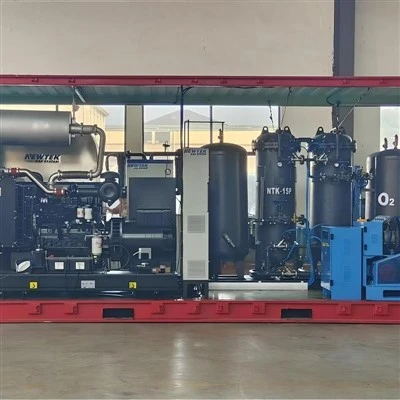
A PSA oxygen generator produces oxygen on site by separating oxygen from compressed air through pressure swing adsorption. Instead of depending entirely on oxygen cylinders or bulk liquid oxygen, a PSA system can provide a continuous oxygen stream directly to the wastewater treatment process.
For modern wastewater facilities, the value of PSA oxygen is not simply its oxygen purity. Its importance comes from the combination of continuous supply, controllable oxygen concentration, process stability, decentralized production, and compatibility with high-efficiency oxygen transfer systems.

Why Oxygen Is Critical in Wastewater Treatment
Many wastewater treatment processes depend on aerobic microorganisms.
Organic compounds, ammonia, and other biodegradable pollutants cannot be efficiently removed unless the biological system receives sufficient oxygen. In an activated sludge process, for example, microorganisms consume dissolved oxygen while metabolizing organic matter.
A simplified aerobic oxidation reaction can be represented as:
Organic matter + O₂ → CO₂ + H₂O + new biomass
For nitrification, oxygen is also required to convert ammonia into nitrite and subsequently nitrate:
NH₄⁺ → NO₂⁻ → NO₃⁻
These reactions directly connect oxygen availability with treatment performance.
If the biological reactor does not receive enough oxygen, several problems can occur:
Organic matter removal decreases.
Ammonia oxidation becomes incomplete.
Dissolved oxygen concentration falls.
Microbial activity becomes unstable.
Sludge characteristics may deteriorate.
Odor and untreated pollutants can increase.
The treatment plant may fail to maintain its required effluent quality.
Therefore, oxygen is not simply an auxiliary utility in an aerobic wastewater treatment plant. It is a process input.
The challenge is that oxygen demand is not constant.
Wastewater flow, COD concentration, ammonia loading, temperature, biomass concentration, sludge age, and biological activity can all change the oxygen requirement. A treatment plant therefore needs an oxygen supply system that can respond to changing process conditions.
The Limitation of Atmospheric Air Aeration
Traditional wastewater treatment plants generally use blowers to deliver atmospheric air into aeration tanks.
Because atmospheric air contains approximately 21% oxygen, a large quantity of air must be moved to transfer sufficient oxygen into the wastewater.
For example, if a biological reactor requires a high oxygen transfer rate, the plant may need to increase:
blower capacity;
air flow;
diffuser density;
aeration pressure;
pipeline diameter;
or operating hours.
However, simply increasing air volume does not always produce proportional improvements in oxygen transfer.
The oxygen transfer process depends on several factors, including:
oxygen concentration in the gas phase;
bubble size;
wastewater temperature;
dissolved oxygen concentration;
hydrostatic pressure;
diffuser efficiency;
reactor depth;
wastewater characteristics;
and mass-transfer conditions.
This creates an important engineering problem.
A treatment plant may move a very large quantity of air while transferring only a relatively limited amount of oxygen into the water.
PSA oxygen changes this condition by increasing the oxygen concentration of the gas supplied to the aeration system.
What Is PSA Oxygen?
PSA stands for Pressure Swing Adsorption.
A PSA oxygen generator separates oxygen from compressed air using an adsorbent material, typically a molecular sieve.
The basic feed air contains several major components, including nitrogen and oxygen. The molecular sieve preferentially adsorbs nitrogen under pressure while allowing oxygen-rich gas to pass through.
A typical PSA oxygen generation cycle contains several stages:
Compressed air enters an adsorption vessel.
Nitrogen is preferentially adsorbed by the molecular sieve.
Oxygen-enriched gas exits the vessel.
The adsorption vessel is depressurized.
Adsorbed nitrogen is released.
The molecular sieve is regenerated.
The second vessel takes over adsorption.
The cycle continues automatically.
Two or more adsorption vessels normally operate alternately.
While one vessel is producing oxygen, another vessel is undergoing regeneration. This cyclic operation allows the system to provide a relatively continuous oxygen stream.
The exact oxygen concentration depends on the PSA system design, adsorbent characteristics, operating pressure, flow rate, and required application.
For wastewater treatment, the important point is that PSA provides oxygen-enriched gas on demand rather than relying exclusively on atmospheric air.
How PSA Oxygen Improves Biological Treatment
The main engineering advantage of oxygen enrichment is that the gas entering the biological reactor contains a higher oxygen concentration than normal atmospheric air.
This can improve the driving force for oxygen transfer from the gas phase into the wastewater.
The oxygen transfer rate can be conceptually expressed as:
OTR = kLa × (C* − CL)
Where:
OTR = oxygen transfer rate;
kLa = overall oxygen transfer coefficient;
C* = saturation dissolved oxygen concentration;
CL = actual dissolved oxygen concentration in the liquid.
Increasing the oxygen concentration in the supplied gas can increase the effective oxygen concentration available for transfer.
This becomes particularly useful when the biological reactor has:
high organic loading;
high ammonia loading;
high mixed liquor concentration;
limited reactor volume;
deep aeration tanks;
oxygen transfer limitations;
or strict effluent requirements.
Instead of solving oxygen shortages only by increasing air volume, the treatment plant can increase the oxygen concentration of the supplied gas.
That is a fundamentally different approach to aeration optimization.
PSA Oxygen and Activated Sludge Systems
Activated sludge remains one of the most widely used biological wastewater treatment technologies.
The process normally consists of an aeration basin followed by solid-liquid separation.
Inside the aeration basin, microorganisms consume organic pollutants while oxygen is supplied through diffusers or other aeration devices.
The oxygen requirement can increase significantly when influent wastewater contains high concentrations of biodegradable organic matter.
For example, wastewater from:
food processing;
beverage manufacturing;
slaughterhouses;
paper production;
pharmaceutical manufacturing;
textile processing;
chemical industries;
may have significantly higher organic loading than typical domestic sewage.
When the oxygen demand exceeds the effective transfer capacity of the aeration system, the plant must increase aeration intensity.
PSA oxygen can supplement or replace part of the atmospheric air supply.
The oxygen-rich gas can be introduced through existing or dedicated diffusers, depending on system design. Because the gas contains a higher oxygen concentration, the biological reactor can potentially achieve the required oxygen transfer with lower gas volume.
This is especially valuable when the existing aeration tank has limited physical space.
PSA Oxygen for Ammonia Removal and Nitrification
Nitrogen removal is one of the most demanding biological processes in wastewater treatment.
Nitrifying bacteria require oxygen to oxidize ammonia.
The overall nitrification reaction can be simplified as:
NH₄⁺ + O₂ → NO₃⁻ + H⁺ + H₂O
The actual biochemical pathway occurs in multiple stages, but the engineering principle is straightforward: nitrification requires a stable aerobic environment.
When dissolved oxygen becomes insufficient, nitrification performance can decline.
This can become a problem in wastewater containing high ammonia concentrations, particularly when treatment plants operate under:
high nitrogen loading;
low-temperature conditions;
high biomass concentration;
long sludge retention times;
or strict ammonia discharge limits.
PSA oxygen can provide a more concentrated oxygen source for the nitrification stage.
Instead of increasing blower air flow indefinitely, operators can use oxygen enrichment to increase oxygen availability inside the biological reactor.
This makes PSA oxygen particularly relevant for wastewater plants where nitrogen removal is a major treatment objective.
PSA Oxygen in MBR Wastewater Treatment
Membrane bioreactors, commonly known as MBR systems, combine biological treatment with membrane separation.
Compared with conventional activated sludge systems, MBRs can operate with higher biomass concentrations and smaller reactor footprints.
However, high biomass concentration also creates a greater oxygen demand per unit reactor volume.
The biological reactor must maintain sufficient oxygen for microbial metabolism while the membrane system operates under controlled conditions.
Oxygen supply therefore becomes an important design parameter.
PSA oxygen can be integrated into MBR aeration systems to provide oxygen-enriched gas where conventional air aeration cannot efficiently meet the process demand.
The application may involve:
biological reactor aeration;
membrane scouring;
oxygen enrichment;
or dedicated high-oxygen-demand zones.
The specific configuration depends on the MBR process design.
For compact treatment facilities, oxygen enrichment can be especially useful because increasing oxygen concentration may provide additional treatment capacity without requiring a proportional increase in air-handling infrastructure.
PSA Oxygen for Industrial Wastewater
Industrial wastewater often presents a more complex oxygen demand profile than municipal sewage.
The wastewater composition can change significantly depending on production schedules, raw materials, cleaning cycles, and manufacturing processes.
Industries that may require substantial biological oxygen demand include:
Food Processing
Food-processing wastewater can contain high concentrations of biodegradable organic compounds, fats, proteins, and carbohydrates.
Aerobic treatment therefore requires substantial oxygen input.
Pulp and Paper
Pulp and paper wastewater can contain organic compounds and suspended solids that require biological treatment before discharge or reuse.
Pharmaceutical Manufacturing
Pharmaceutical wastewater may contain complex organic compounds and variable pollutant concentrations.
Biological treatment conditions must therefore be carefully controlled.
Textile Processing
Textile wastewater may contain organic matter, dyes, surfactants, and other compounds. Depending on the process configuration, aerobic biological treatment can form part of a larger treatment train.
Chemical Manufacturing
Chemical wastewater may have highly variable composition and may require pretreatment before biological treatment.
In these applications, a stable oxygen supply is important because biological treatment performance can change rapidly when oxygen availability does not match pollutant loading.
PSA Oxygen and Dissolved Oxygen Control
One of the most important aspects of modern wastewater treatment is automatic process control.
Traditional aeration systems often control blower output based on dissolved oxygen measurements.
When dissolved oxygen falls below the target range, blower output increases.
However, this method mainly changes air quantity.
A PSA oxygen system provides another control variable: oxygen concentration.
The treatment system can potentially regulate:
PSA oxygen flow;
oxygen-air mixing ratio;
blower flow;
dissolved oxygen setpoint;
aeration zone;
and operating pressure.
This creates more flexibility in process control.
For example, during periods of low wastewater loading, the system can reduce oxygen production.
When organic or ammonia loading increases, oxygen production can be increased to maintain the required dissolved oxygen level.
This demand-based operation is particularly suitable for automated wastewater treatment plants.
Why PSA Oxygen Is Suitable for Remote Wastewater Facilities
Not every wastewater treatment facility has access to a reliable oxygen supply infrastructure.
This is particularly important for:
remote industrial sites;
mining operations;
offshore facilities;
rural treatment plants;
isolated manufacturing facilities;
decentralized wastewater systems;
and temporary treatment installations.
Traditional oxygen cylinders require regular transportation and replacement.
Bulk liquid oxygen requires storage tanks, delivery infrastructure, and appropriate handling systems.
A PSA oxygen generator takes a different approach.
It uses:
ambient air + compressed air system + PSA separation + oxygen delivery
As long as the system has an appropriate power supply and compressed-air infrastructure, oxygen can be generated directly at the treatment site.
This makes PSA technology suitable for facilities where external oxygen logistics are inconvenient or unreliable.
PSA Oxygen vs. Oxygen Cylinders
Oxygen cylinders are practical for small-scale or intermittent oxygen requirements, but they are less convenient when a treatment plant requires continuous oxygen.
A wastewater treatment system may operate continuously for 24 hours a day.
If oxygen consumption is significant, relying on cylinders creates several operational requirements:
cylinder storage;
regular delivery;
cylinder replacement;
pressure monitoring;
transportation;
safety management;
and inventory control.
PSA oxygen generation removes the dependence on continuous cylinder replacement.
The generator produces oxygen at the site and supplies it directly to the process.
This makes PSA particularly suitable for continuous biological treatment applications.

PSA Oxygen vs. Liquid Oxygen
Liquid oxygen can provide high oxygen concentration and is widely used in large industrial applications.
However, liquid oxygen requires cryogenic storage and a suitable supply chain.
The facility needs:
cryogenic storage equipment;
vaporization equipment;
delivery infrastructure;
pressure regulation;
and appropriate safety systems.
PSA oxygen operates differently.
It generates oxygen from compressed air at the point of use.
For wastewater treatment facilities that need a continuous but moderate oxygen supply, on-site PSA generation can provide a more decentralized configuration.
The appropriate technology still depends on oxygen demand, plant scale, site infrastructure, required purity, redundancy requirements, and operating conditions.
PSA should therefore not be treated as a universal replacement for every oxygen source.
Its main advantage is on-site generation with controllable production capacity.
The Importance of Oxygen Purity
A common misunderstanding is that wastewater treatment always requires the highest possible oxygen purity.
In reality, oxygen purity should be selected according to the process requirement.
Higher oxygen concentration can increase the oxygen transfer driving force, but producing extremely high-purity oxygen may require different equipment configurations and operating conditions.
For many wastewater applications, the engineering objective is not simply:
"Get the highest oxygen purity possible."
It is:
"Provide sufficient oxygen transfer capacity with stable and controllable operation."
This distinction is important when designing a PSA oxygen system.
The oxygen generator should be matched with:
required oxygen flow;
operating pressure;
oxygen concentration;
aeration depth;
diffuser characteristics;
wastewater oxygen demand;
dissolved oxygen target;
and daily operating profile.
A correctly sized system is more important than selecting the highest nominal oxygen purity.
Oxygen Transfer Equipment Still Matters
Installing a PSA oxygen generator does not automatically guarantee high oxygen transfer efficiency.
The downstream aeration system remains critical.
Oxygen must move from the gas phase into the liquid phase.
Therefore, the PSA system should be evaluated together with:
fine-bubble diffusers;
oxygen injection systems;
venturi injectors;
static mixers;
packed-column contactors;
membrane aeration systems;
or other gas-liquid transfer equipment.
For example, fine-bubble diffusers generate smaller bubbles, increasing gas-liquid contact area.
Deeper tanks can also increase contact time and hydrostatic pressure.
The complete system should therefore be evaluated as:
PSA oxygen generator → oxygen pipeline → pressure regulation → gas distribution → diffuser/injector → wastewater → dissolved oxygen
This system-level approach is more useful than evaluating the oxygen generator alone.
PSA Oxygen for Sludge Treatment
Waste activated sludge can also require oxygen during aerobic stabilization processes.
Aerobic sludge digestion uses microorganisms to stabilize biodegradable organic material under oxygenated conditions.
The oxygen demand depends on:
sludge concentration;
volatile solids content;
temperature;
retention time;
biological activity;
and process configuration.
If oxygen transfer becomes insufficient, stabilization efficiency can decrease.
PSA oxygen can provide an oxygen-enriched gas stream for aerobic sludge treatment systems where a more concentrated oxygen source is beneficial.
The same principle applies: oxygen availability must match the biological oxygen demand.
PSA Oxygen in Advanced Wastewater Treatment
Modern wastewater treatment increasingly focuses on more than conventional organic pollutant removal.
Treatment plants may need to address:
ammonia;
total nitrogen;
refractory organic compounds;
industrial contaminants;
odor;
water reuse requirements;
and increasingly strict discharge standards.
As treatment requirements become more demanding, biological processes may operate closer to their oxygen-transfer limits.
PSA oxygen can support these systems by increasing oxygen availability without requiring a proportional increase in total air volume.
This is particularly relevant when upgrading an existing plant.
Instead of completely rebuilding the aeration basin, an operator may investigate oxygen enrichment as one component of the capacity-upgrade strategy.
Whether this is technically feasible depends on the existing diffuser system, oxygen demand, reactor geometry, gas distribution system, and hydraulic conditions.
PSA Oxygen and Energy Optimization
Aeration is typically one of the major energy-consuming processes in biological wastewater treatment.
Blowers consume electrical power to compress and move large quantities of air.
If the same oxygen transfer requirement can be achieved with a smaller total gas flow, the air-handling requirement may be reduced.
However, PSA oxygen generation itself also consumes energy because the feed air must be compressed.
Therefore, the correct engineering comparison is not simply:
"PSA uses less air."
It should be:
"How much total energy is required to transfer the required amount of oxygen into the wastewater?"
This calculation should consider:
compressor efficiency;
PSA operating pressure;
oxygen recovery;
oxygen purity;
diffuser efficiency;
oxygen transfer efficiency;
blower efficiency;
pipeline pressure loss;
and actual wastewater oxygen demand.
The energy advantage of PSA oxygen is therefore application-specific.
A properly engineered system should compare the complete aeration system rather than one component in isolation.
Main Components of a PSA Oxygen System for Wastewater Treatment
A typical PSA oxygen generation system can include several major components.
Air Compressor
The compressor provides feed air at the pressure required by the PSA separation process.
Stable compressed-air quality is important because oil, water, and particulate contamination can affect molecular sieve performance.
Air Treatment System
Pre-treatment may include:
air filters;
oil removal;
water separation;
air dryers;
and other purification components.
The exact configuration depends on the compressor and PSA design.
PSA Adsorption Towers
The adsorption towers contain molecular sieve material.
Multiple towers operate alternately to provide continuous oxygen generation.
Oxygen Buffer Tank
An oxygen storage or buffer tank helps stabilize pressure and flow between PSA production and oxygen consumption.
Oxygen Control System
Flow meters, pressure sensors, oxygen analyzers, valves, and PLC controls can be used to monitor and regulate the system.
Oxygen Delivery Pipeline
The pipeline transfers oxygen from the generator to the aeration or injection system.
Material selection and pressure rating should match the oxygen service requirements.
Aeration or Injection System
The oxygen is finally introduced into the wastewater through diffusers, injectors, mixers, or another oxygen-transfer device.
What Should Be Considered When Selecting PSA Oxygen Equipment?
A wastewater treatment plant should not select a PSA oxygen generator based only on its nominal oxygen production capacity.
Several parameters should be evaluated.
Oxygen Demand
Determine the actual oxygen requirement of the biological process.
The design should consider peak rather than only average loading.
Oxygen Purity
Select the required oxygen concentration according to the biological and mass-transfer requirements.
Operating Pressure
The required delivery pressure depends on the aeration tank depth, pipeline pressure loss, diffuser characteristics, and injection technology.
Flow Regulation
The oxygen generator should be capable of adjusting output according to the wastewater treatment load.
Feed Air Quality
Compressed air must be appropriately treated to protect the molecular sieve.
Operating Profile
A plant operating 24/7 requires different system design considerations from an intermittent wastewater facility.
Redundancy
For critical treatment facilities, multiple PSA modules may be preferable to one large unit.
Modular redundancy can allow the plant to continue operating when one module requires maintenance.

Modular PSA Oxygen Systems for Wastewater Plants
Modularization is becoming increasingly important in modern wastewater treatment.
Instead of installing one oversized oxygen generator, the oxygen supply can be divided into multiple PSA modules.
For example:
Module A + Module B + Module C + Module D
The number of operating modules can be adjusted according to oxygen demand.
During low-load periods, fewer modules operate.
During peak loading, additional modules can be activated.
This configuration provides several engineering benefits:
flexible oxygen production;
easier maintenance;
staged capacity expansion;
improved redundancy;
easier transportation;
and more adaptable system control.
For decentralized wastewater treatment, containerized PSA oxygen systems can further simplify installation.
The PSA equipment, air treatment system, control cabinet, oxygen buffer tank, and auxiliary equipment can be integrated into a compact package depending on the project requirements.
PSA Oxygen Is Part of a Complete Treatment System
PSA oxygen should not be considered a standalone wastewater treatment technology.
It does not directly remove COD, ammonia, suspended solids, or other pollutants.
Instead, it supplies oxygen to biological and oxidation processes that require oxygen.
A typical treatment system may include:
Screening → Equalization → Pretreatment → Biological Treatment → Secondary Clarification or Membrane Separation → Advanced Treatment → Disinfection
PSA oxygen mainly supports the oxygen-demanding sections of this process.
Its role is therefore similar to other critical utilities: it provides the process condition required for the biological system to function properly.
This distinction is important when evaluating wastewater treatment technologies.
The question should not be:
"Can PSA oxygen treat wastewater by itself?"
The correct question is:
"Can controlled oxygen generation improve the oxygen supply and operating stability of the selected wastewater treatment process?"
Why PSA Oxygen Is Becoming More Important
The wastewater industry is moving toward several important trends:
higher treatment loads;
stricter nitrogen removal requirements;
smaller plant footprints;
decentralized treatment;
greater automation;
water reuse;
modular plant design;
and improved energy management.
All of these trends increase the importance of controllable oxygen supply.
A conventional aeration system mainly adjusts air volume.
A PSA oxygen system provides another engineering parameter: oxygen concentration.
This additional degree of control can be valuable when the biological process approaches its oxygen-transfer limitation.
For high-load industrial wastewater, compact biological reactors, MBR systems, nitrogen-removal processes, and remote treatment facilities, oxygen enrichment can therefore become an important part of the process design.
Final Considerations: Is PSA Oxygen Indispensable?
PSA oxygen is not mandatory for every wastewater treatment plant.
A conventional air-based aeration system may remain the most appropriate solution for many municipal and industrial applications.
However, when oxygen demand becomes high, reactor volume is limited, oxygen transfer efficiency becomes a bottleneck, or external oxygen logistics are difficult, PSA oxygen generation offers a technically valuable alternative.
Its importance comes from five core capabilities:
On-site oxygen generation
Oxygen is produced directly at the treatment facility from compressed air.
Continuous oxygen supply
The PSA cycle allows continuous oxygen production without depending entirely on cylinder replacement or liquid oxygen deliveries.
Controllable oxygen concentration
Oxygen enrichment can increase the driving force for gas-liquid oxygen transfer.
Integration with automated treatment systems
Oxygen flow can be coordinated with dissolved oxygen monitoring and biological loading.
Compatibility with modern high-load treatment processes
PSA oxygen can support activated sludge, MBR, nitrification, aerobic sludge treatment, and other oxygen-dependent processes.
The future of wastewater treatment is not simply about adding more air to biological reactors. It is about controlling oxygen transfer according to actual biological demand.
PSA oxygen generation provides a practical way to achieve that control. When properly sized and integrated with compressors, oxygen treatment systems, pipelines, diffusers, and process controls, PSA oxygen can transform oxygen supply from a fixed utility into a controllable process parameter.
That is why PSA oxygen is becoming increasingly relevant to modern wastewater treatment-not because every treatment plant requires pure oxygen, but because stable and controllable oxygen availability is fundamental to efficient biological treatment.