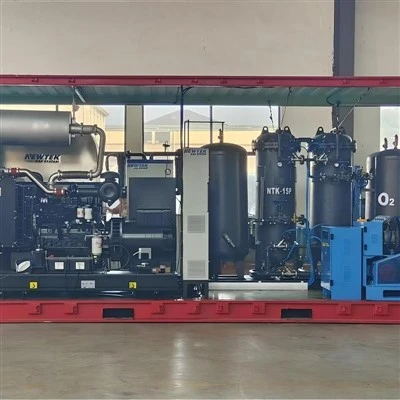
Reliable medical oxygen is one of the most important resources in any healthcare facility. While large hospitals often have centralized oxygen infrastructure, many district hospitals, rural medical centers and private clinics continue to rely on oxygen cylinders delivered by external suppliers.
Although oxygen cylinders remain a practical storage method, depending entirely on external deliveries can create logistical challenges, especially in remote regions where transportation is less predictable.
For this reason, an increasing number of healthcare providers are choosing containerized medical oxygen cylinder filling plants. These integrated systems combine on-site PSA oxygen generation with oxygen cylinder filling, allowing hospitals to produce and refill their own medical oxygen whenever it is needed.
This article explains why containerized oxygen filling plants are becoming a preferred solution for small hospitals and healthcare providers worldwide.
The Challenges of Traditional Oxygen Cylinder Supply
For many hospitals, oxygen is purchased from external gas suppliers and delivered in high-pressure cylinders. While this model has been widely used for decades, it also introduces several operational challenges.
For hospitals located in rural areas or developing regions, maintaining a stable oxygen supply can become increasingly difficult when transportation infrastructure is limited.
What Is a Containerized Cylinder Filling Plant?
A containerized medical oxygen cylinder filling plant is a complete oxygen production and cylinder filling system pre-installed inside a standard ISO shipping container. Instead of transporting gas, the hospital generates medical oxygen directly from ambient air using PSA (Pressure Swing Adsorption) technology. The gas is then compressed and filled into high-pressure cylinders for intra-hospital distribution or regional supply.
Standard Turnkey Integrated Subsystems
Why Small Hospitals Prefer Containerized Solutions
Faster Installation & Deployment
Traditional plant stations require complex civil concrete buildings and on-site piping assembly. Containerized units arrive completely built, pre-piped and pre-tested, minimizing local engineering timelines drastically.
Total Gas Supply Independence
Producing gas on site breaks the reliance on third-party commercial delivery networks. Hospitals keep using high-mobility cylinders as their primary distribution method while controlling production directly based on real-time consumption.
Reduced & Predictable Operating Costs
Eliminating cylinder commercial purchasing fees, recurring logistics shipping margins, and premium emergency truck dispatches results in highly predictable operational budgets. Financial resources can instead be focused into critical patient care infrastructure.
Easy Logistics Transportation & Future Relocation
Since all internal processing equipment sits tightly inside an engineered shipping container frame, transportation using standard cargo trucks or ocean liners is incredibly straightforward. It permits easy equipment relocation if regional hospital footprints change.
Minimal Civil Engineering Footprint
Many established clinics suffer from extreme indoor space limitations. Containerized plants operate externally-requiring only a flat outdoor concrete slab foundation, a stable main electrical link, and gas output line connections to start up commissioning.
Global Healthcare Deployment Markets
These transportable integration configurations address modern healthcare needs-faster implementation, clean logistics, and low technical setup complexity-making them popular across Africa, Southeast Asia, and the Middle East:
| Institutional Segments | Containerized Plant Field Utility Role |
|---|---|
| District & Community Hospitals | Serves as an on-site standalone production center to secure independent cylinder supply for general patient wards and surgery theaters. |
| Remote Centers & Islands | Overcomes extreme geographic isolation where routine commercial gas marine shipping or supply vehicles are unavailable or cost-prohibitive. |
| NGO & Military Field Missions | Enables immediate tactical air/land deployment and rapid commissioning for humanitarian aid zones or temporary clinical response camps. |
Conclusion
Reliable oxygen supply remains essential for modern healthcare. For many small and medium-sized hospitals, containerized medical oxygen cylinder filling plants provide a practical way to improve oxygen availability while reducing dependence on external oxygen deliveries. By combining PSA oxygen generation, cylinder filling and factory-integrated design into one complete solution, healthcare providers can establish a more flexible and reliable medical oxygen supply system. NEWTEK provides customized containerized systems matching your unique cylinder flow rate demands and site climate conditions.
Request Custom Layout
Secure your hospital oxygen pricing blueprint. Submit your core field parameters for quick engineering proposals:
- Daily Cylinder Refill Counts
- Target Pressure (150/200 bar)
- Local Power Grid Specs
- Ambient Max Temperatures
Integrated Mobile Units
20ft ISO Plants
Compact containerized manifold setups.
40ft High-Output Units
High capacity stations for regional hubs.
Oxygen Ramps & Racks
Custom heavy-duty filling layout manifolds.