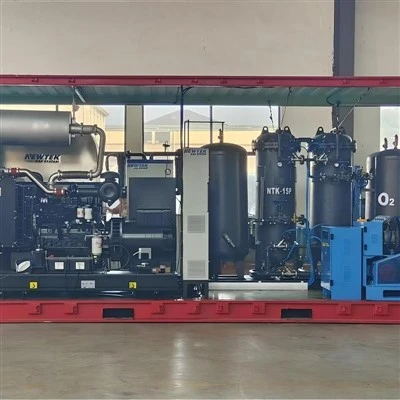
In medical treatment, oxygen is called the "source of life", and medical PSA (pressure swing adsorption) oxygen generators are gradually replacing traditional cylinder oxygen and liquid oxygen with their high efficiency, safety and sustainability, becoming the core oxygen supply equipment for medical institutions. In recent years, with the iteration of technology and the upgrading of market demand, many innovative achievements have emerged in this field - from mobile oxygen supply in plateau areas to intelligent oxygen production systems in grassroots hospitals, from family health management to emergency response to sudden disasters, medical PSA oxygen generators are writing a new chapter in the industry. This article explores the core dynamics of this field from the perspectives of NEWTEK's technological breakthroughs, application scenarios, quality challenges and future trends.
PSA oxygen plants for medical use
PSA oxygen generation plants are very important element in healthcare infrastructure, notably in hospitals. PSA technology offers an efficient and cost-effective solution for on-site oxygen generation for medical use . These systems operate based on the principle of pressure swing adsorption, a process that separates oxygen from other gases in the air. The air is compressed and then passed through a molecular sieve made of zeolite, which adsorbs nitrogen while allowing oxygen to pass through as a purified product. This technology enables the generation of oxygen with purities up to 95%, suitable for most medical applications.
Oxygen generation plants can be used in various industries such as those in gold mining , aquaculture , biogas production etc. What differentiates the oxygen used in other industries is its purity. The design, manufacturing, and operation of PSA oxygen plants for medical purposes must comply with regulatory standards such as the Medical Device Regulation (MDR) in the European Union. The MDR mandates that medical devices, including oxygen generators, meet specific safety and performance criteria.
By generating oxygen on-site, hospitals can reduce dependence on external suppliers, minimizing the risk of shortages that can jeopardize patient care. Medical oxygen generators based on PSA technology offer significant cost benefits over traditional liquid oxygen supply methods. The initial investment in a PSA plant is offset by the elimination of recurring costs associated with purchasing, transporting, and storing liquid oxygen.
The flexibility and scalability of PSA oxygen plants make them suitable for hospitals of all sizes. These systems can be designed to meet the specific oxygen demands of a facility, ensuring that both small clinics and large medical centers can achieve self-sufficiency in oxygen supply.
PSA Oxygen Generator

Oxygen Generator For Aquaculture

PSA Oxygen Plant

Psa Oxygen Plant For Hospital Use

Psa Based Oxygen Generator
MDR regulations for oxygen generation PSA Plants
Regardless of the need, all oxygen PSA plants must be regulated according to the given criteria, such as that of EUs (MDR) Medical Device Regulations. WHO details the following interim guidance on technical specifications for PSA Oxygen Plants. These guidelines include:
Oxygen Purity: Minimum acceptable levels of oxygen purity for medical use.
Flow Rate: The capacity of the plant to produce oxygen at a specified flow rate.
Safety Standards: Compliance with safety regulations to protect operators and patients.
Operational Reliability: Ensuring consistent operation without frequent breakdowns.
Maintenance Requirements: Guidelines for routine maintenance to ensure longevity and performance.
Noise Levels: Limits on operational noise for hospital environments.
Energy Efficiency: Requirements for minimizing energy consumption.
Installation Specifications: Guidelines on how the plant should be installed within a healthcare facility.
Monitoring and Control Systems: Features for monitoring oxygen production and purity.
Alarm Systems: Alarms for operational failures or deviations from set parameters.
Certifications: Necessary regulatory and quality certifications (e.g., CE marking under the MDR).
User Training: Specifications for training healthcare staff on the use and maintenance of the plant.
After-Sales Support: Availability of technical support and spare parts.
Types of PSA Plants
In hospital settings PSA plant design can vary based on capacity and medical requirements. Various PSA oxygen plant designs are available to meet the diverse healthcare facility needs, ranging from compact models for smaller spaces to high-capacity versions for extensive medical centers. Each offers unique benefits in providing a steady supply of medical-grade oxygen. Below are highlighted some of the different PSA Plant designs.
Compact PSA oxygen generators
These are designed for smaller facilities or as supplementary units in larger hospitals. They are usually easily transportable and can be installed in various places in hospitals.
Standard capacity PSA oxygen plants
Standard capacity plants are the most common type found in medium to large hospitals. They are designed to meet the day-to-day oxygen requirements.
High-capacity PSA oxygen plants
High-capacity PSA plants are built for large medical centers and hospitals with high demand for medical-grade oxygen. These plants have a larger footprint and can produce oxygen at a higher rate.
Modular PSA oxygen plants
Modular PSA plants offer flexibility in terms of expansion and are suitable for hospitals that anticipate future growth in oxygen demand. As the word implies, these systems can be scaled up by adding more modules.
Customized oxygen plants
Some hospitals may have unique requirements based on their location, patient demographics, or specialized medical services. Customized PSA oxygen plants are designed to meet these specific needs.
Mobile oxygen plants
Mobile PSA plants are designed for emergency or temporary use, such as in field hospitals, disaster response scenarios, or during maintenance of permanent oxygen delivery systems. These units usually mounted on trailers or skids. Sometimes these oxygen systems are containerized or built as an in-frame installations.
MDR-Compliant oxygen solutions from NEWTEK
NEWTEK's PSA oxygen generators are engineered to support hospitals with a reliable on-site source of medical-grade oxygen, aligning with global standards such as the European Pharmacopoeia and EU Medical Device Regulation 2017/745 (MDR). These generators ensure an uninterrupted oxygen supply, directly addressing the demand without dependency on external sources.
The oxygen produced meets the specifications outlined in the European Pharmacopoeia 10.1 Monograph Oxygen (93 per Cent), defined as 90.0 % V/V to 96.0 % V/V of oxygen, ensuring compliance with medical standards for purity. For facilities requiring oxygen bottling capabilities, NEWTEK offers an optional high-pressure, oil-free compressor with a filling station. This enables the filling of bottles with 93-percent oxygen, providing an even greater level of versatility and self-sufficiency in oxygen supply.
NEWTEK offers a range of PSA oxygen generators for hospitals, capable of producing from 1.8 to 433.40 m3/h. Notably, these units consume 40% less energy than competing generators and are designed for easy expansion and scalability. Beyond standalone units, NEWTEK also provides in-frame and container-based PSA oxygen solutions, offering adaptable options for various healthcare facility needs.
Read more about regulations and approvals in here.
Future trends and industry challenges
Technology development direction
Higher purity: Military and laboratory scenarios drive oxygen purity to 99%. For example, a company has achieved mass production of 97% purity through multi-layer molecular sieve composite bed design.
Energy fusion: The application cases of photovoltaic + energy storage power supply system in remote areas are increasing. For example, an oxygen production station in Tibet achieves "zero carbon oxygen production" through off-grid power supply.
Deep intelligence: AI algorithm combines patient medical history to dynamically adjust oxygen flow and concentration. For example, Philips Everflo Q model predicts equipment failure through machine learning, and maintenance efficiency is improved by 40%.
Changes in market demand
Expansion of primary care: The "Healthy China 2030" policy has promoted the coverage rate of oxygen supply equipment in county-level hospitals from 65% to 90%, and the demand for economical PSA oxygen concentrators has increased by 20% annually.
Home scenario segmentation: The penetration rate of portable oxygen concentrators in plateau tourism and outdoor sports has increased rapidly, and the market size is expected to exceed US$5 billion in 2025.
Industry Challenges
Core technology barriers: High-end molecular sieves still rely on imports, and domestic companies need to break through the bottleneck of material research and development. For example, a laboratory has successfully synthesized domestic lithium-based molecular sieves with a 30% reduction in cost.
Rising compliance costs: New regulations in 2025 require companies to establish a real-world data collection mechanism, and some small and medium-sized enterprises face the risk of elimination due to insufficient R&D investment.
Conclusion
PSA oxygen generation plants present a transformative solution for healthcare facilities, ensuring a consistent and reliable oxygen supply while following stringent global and regional standards. NEWTEK's range of PSA oxygen generators is fully compliant with MDR regulations, providing hospitals with the autonomy to produce medical-grade oxygen on-site. An installation by NEWTEK can effectively eliminate reliance on external sources and significantly reduce operational costs.
The variety in design and capacity of NEWTEK generators, from compact to high-capacity systems, highlights the adaptability of PSA technology to meet the unique demands of any healthcare setting. This adaptability, coupled with the efficiency and regulatory compliance, positions NEWTEK PSA oxygen plants as an indispensable asset in the modern medical infrastructure, ready to address the critical needs of patient care with reliability and economic efficiency.