A hydroponic system is a moder cultivation technology that grows plants without sol, using nutrient solutions instead. it is suitable forcultivating vegetables, flowers, and medicinal plants. Compared to traditional agricultural techniques, hydroponic systems utilize wateland nutrients more efficiently, reduce the use of chemical pesticides and fertlizers, and achieve higher spatial utilization.The rapid development of hvdroponic systems is sionificant for food supplv, enabing urban aariculture while protecting the environment
and natural resources.
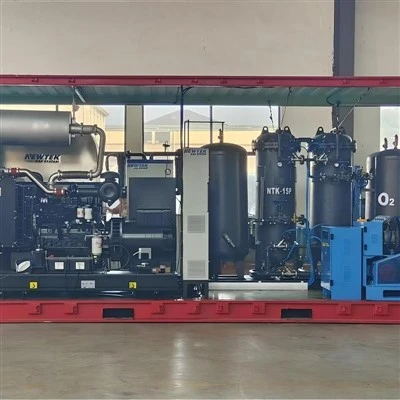
Among these, PSA Oxygen Generator, particularly those offered by industry - leader NEWTEK, are making a significant impact.

PSA oxygen generation solves the pain point of hydroponic dissolved oxygen
The core of the hydroponic system is to maintain a stable dissolved oxygen level in the water body. Traditional air pumps or diffusers are difficult to meet the needs of high-density planting due to large bubbles and low oxygen transfer efficiency (only 30%-40%). PSA oxygen generator selectively adsorbs nitrogen through molecular sieves, directly separates oxygen with a purity of 90%-99% from the air, and combines with micron-level diffusion devices to increase the oxygen dissolution efficiency to more than 3 times that of traditional methods.
Key technical breakthroughs:
Molecular sieve upgrade: Using LiX molecular sieve instead of traditional CaA type, the nitrogen and oxygen separation efficiency is increased by 40%, and the oxygen purity is stable at more than 95%, which is suitable for the stringent requirements of crops such as lettuce and strawberries for clean oxygen.
Oil-free air compressor technology: compressors with international Class 0 oil-free certification avoid oil pollution of water bodies, while extending the life of molecular sieves to 10 years and reducing maintenance frequency.
Dynamic adjustment system: based on real-time monitoring of pH and temperature data, the oxygen supply is automatically adjusted to control DO fluctuations within ±0.2mg/L to ensure the stability of root respiration.
Case study:
After a large vertical farm introduced a PSA oxygen generator, the growth cycle of lettuce was shortened by 15%, the yield increased by 22%, and theenergy consumption was reduced by 41%. The core lies in the improvement of oxygen dissolution efficiency and precise control. energy
Double breakthrough of nanobubbles and intelligent monitoring
The introduction of nanobubble technology (particle size 80-200 nanometers) has completely changed the dynamic characteristics of oxygen in water. Its ultra-long suspension time (72 hours) and high specific surface area increase the oxygen utilization rate from 30% to 94%, and it also comes with multiple synergistic functions:
Charged surface effect: Nanobubbles carry strong negative charges, which can adsorb and decompose organic pollutants in water, reducing the amount of fungicides by 70%.
Light-oxygen synergy: Blue light (80μmol/m²s) stimulates plant photosynthesis, and with an oxygen-rich environment, biomass production increases by 35%, and the CO₂ fixation rate increases simultaneously.
Intelligent monitoring system:
IoT platform: Through the industrial-grade IoT, the operating status of the equipment is monitored in real time, and faults such as molecular sieve pulverization and air compressor overheating are warned, and the maintenance response time is shortened to 4 hours.
AI prediction algorithm: Combine historical data to predict crop oxygen demand and achieve "oxygen supply on demand", with an annual energy saving cost of 180,000 yuan.
Resource closed loop from wastewater to fertilizer
The eutrophic wastewater generated by the hydroponic system is expensive to treat with traditional methods. Through the "algae-PSA" combined Theeutrophic wastewater generated by the hydroponic system is expensive to treat with traditional methods. Through the "algae-PSA" combined process, wastewater can be converted into high value-added resources:
Spirulina bioremediation: Using specific strains to treat wastewater, COD removal rate is 68%, ammonia nitrogen degradation is 76%, and biomass containing 17.59% lipid is produced for health products and biodiesel production.
Nitrogen and phosphorus recovery technology: Nanobubbles enrich nitrogen and phosphorus elements, and extract them as slow-release fertilizers after precipitation, reducing fertilizer costs by 30%.
Commercial practice:
After integrating PSA oxygen production and wastewater circulation modules, a vegetable base achieved "zero wastewater discharge", saving 45,000 tons of water annually, and fertilizer recovery income reached 1.2 million yuan.
Breakthrough path for cost and standardization
Despite significant technical advantages, popularization still faces multiple obstacles:
High initial investment: A PSA system with a daily output of 500m³ of oxygen costs about 258,000 yuan, which is 5 times that of traditional air pumps, and small and medium-sized farms can hardly afford it.
Lack of standards: There is a lack of unified purity and energy efficiency standards. Some manufacturers sell inferior products with an oxygen concentration of only 80% in the name of "agricultural grade", which leads to root rot.
Operation and maintenance complexity: The molecular sieve needs to be replaced every 5-8 years, with a single cost of more than 30,000 yuan, and technical support is weak in remote areas.
Solution:
Pay-as-you-go model: Farms pay according to oxygen usage, and equipment maintenance is managed by manufacturers throughout the process, reducing initial investment by 70%.
International certification specifications: The EU promotes the "Certification Specifications for Hydroponic Aeration Equipment", requiring oxygen purity ≥ 90%, noise ≤ 65dB, and mandatory labeling of energy consumption levels.
Modular design and global application exploration
In order to meet diverse needs, the PSA hydroponic system is evolving in two directions:
Modular expansion: The adsorption tower supports stacking and combination. Users can gradually expand from 30m³/h to 200m³/h according to the planting scale, greatly improving investment flexibility.
Off-grid system: The solar-powered PSA oxygen generator can meet the all-weather oxygen supply in the desert greenhouse with only photovoltaic power supply, and the oxygen cost is 83% lower than that of liquid oxygen transportation.
Emerging market opportunities:
Polar agriculture: In a -30℃ environment, PSA oxygen production is combined with geothermal warming technology to successfully cultivate high-value-added crops.
Urban vertical farms: The yield per unit area is 15 times that of traditional farmland, and the oxygen utilization rate is 91%, becoming the core support of urban agriculture.
Conclusion
The combination of hydroponic system and PSA oxygen generator marks the transformation of agriculture from extensive management to technology-intensive. The integration of nanobubbles, intelligent monitoring and recycling technology not only overcomes the core problem of dissolved oxygen management, but also builds a "zero waste" ecological closed loop. However, cost and standardization are still the key bottlenecks for the popularization of the industry - only through business model innovation and international collaboration can the technology be promoted from the laboratory to the field. In the future, with the deep integration of modular design and renewable energy, "oxygen precision agriculture" is expected to become the core pillar of global food security and carbon neutrality goals.