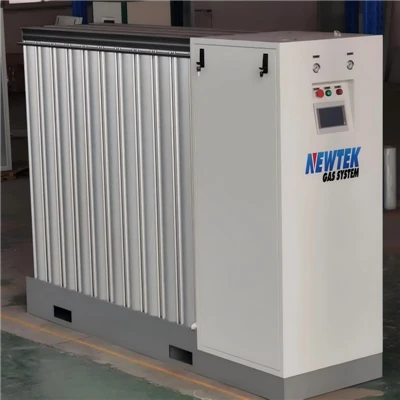
A continuous oxygen supply is essential to hospital operations. From emergency departments and intensive care units to operating rooms and general wards, medical oxygen supports patients who require respiratory assistance, oxygen therapy, and other clinical treatments. Any interruption in oxygen availability can affect patient care, making supply reliability a critical consideration when hospitals plan their medical gas infrastructure.
Traditional oxygen supply methods, including high-pressure cylinders and bulk liquid oxygen storage, can meet hospital demand. However, they also involve transportation schedules, storage management, inventory planning, and coordination with external suppliers. For hospitals with high or continuously increasing oxygen consumption, dependence on delivered oxygen may introduce additional operational risks.
Medical-grade PSA oxygen generation offers an alternative by producing oxygen directly at the hospital. Through Pressure Swing Adsorption (PSA) technology, the system separates oxygen from compressed air and supplies it to the medical gas pipeline system. When properly designed, installed, monitored, and maintained, it can provide a continuous on-site oxygen source while reducing dependence on external deliveries.
However, continuous hospital oxygen supply does not depend on the oxygen generation unit alone. It requires coordinated system design, appropriate production capacity, backup arrangements, oxygen quality monitoring, pressure regulation, and preventive maintenance.
This article examines how medical-grade PSA oxygen systems support uninterrupted hospital oxygen supply and what healthcare facilities should consider when selecting and configuring such equipment.
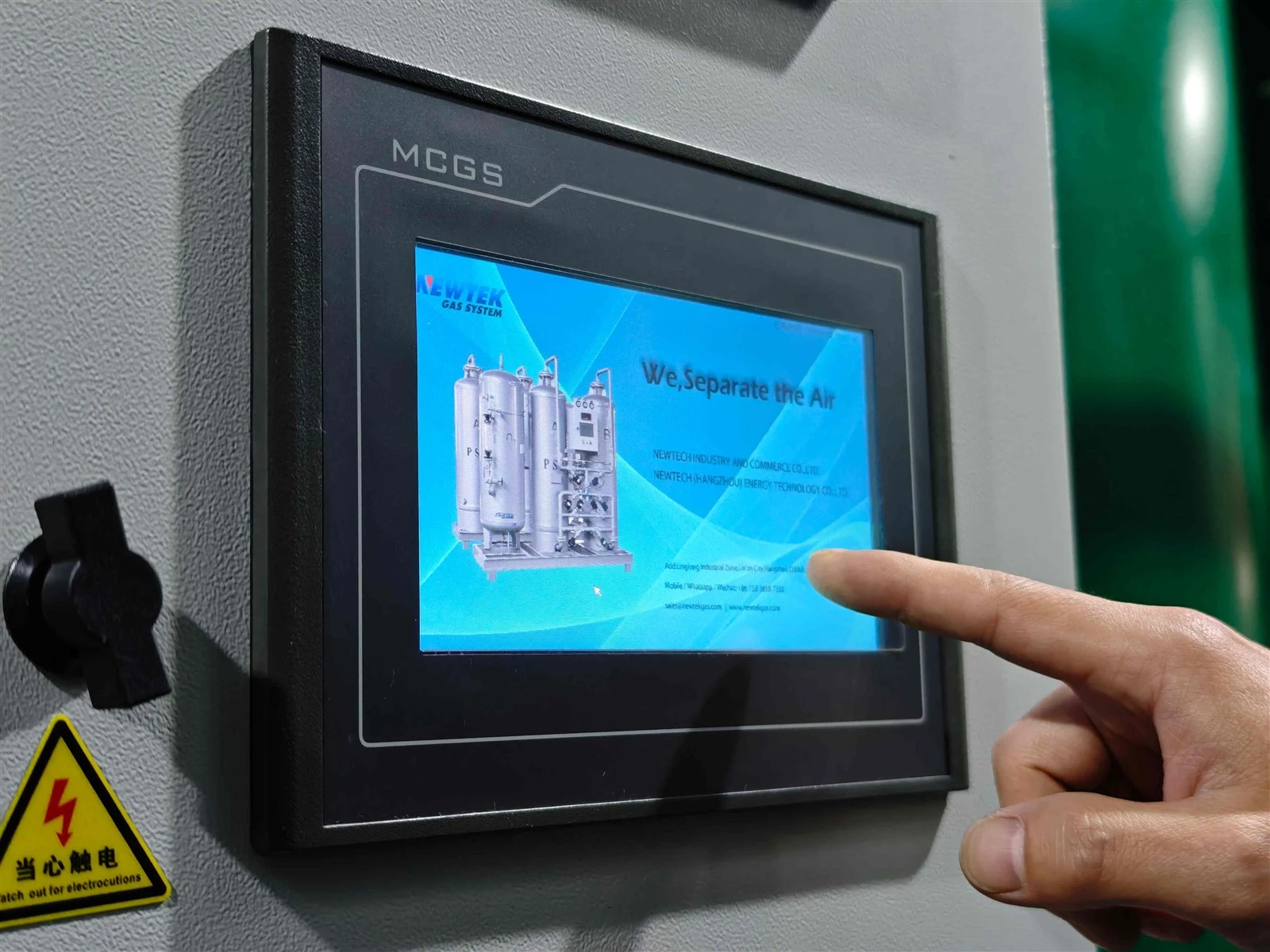
How Does PSA Technology Maintain a Continuous Oxygen Supply?
The fundamental advantage of a medical-grade PSA oxygen system is its ability to produce oxygen on-site rather than relying exclusively on pre-filled cylinders or external liquid oxygen deliveries.
The process begins with ambient air, which contains approximately 21% oxygen, 78% nitrogen, and small amounts of other gases. After compression and purification, the air enters adsorption towers containing specialized molecular sieve material.
The oxygen production process follows several stages:
Step 1: Compressed Air Preparation
An air compressor supplies the required compressed air. Before entering the adsorption towers, the air passes through filtration and drying equipment to remove moisture, oil aerosols, and particulate matter. Proper air pretreatment protects the molecular sieve and helps maintain stable system performance.
Step 2: Selective Nitrogen Adsorption
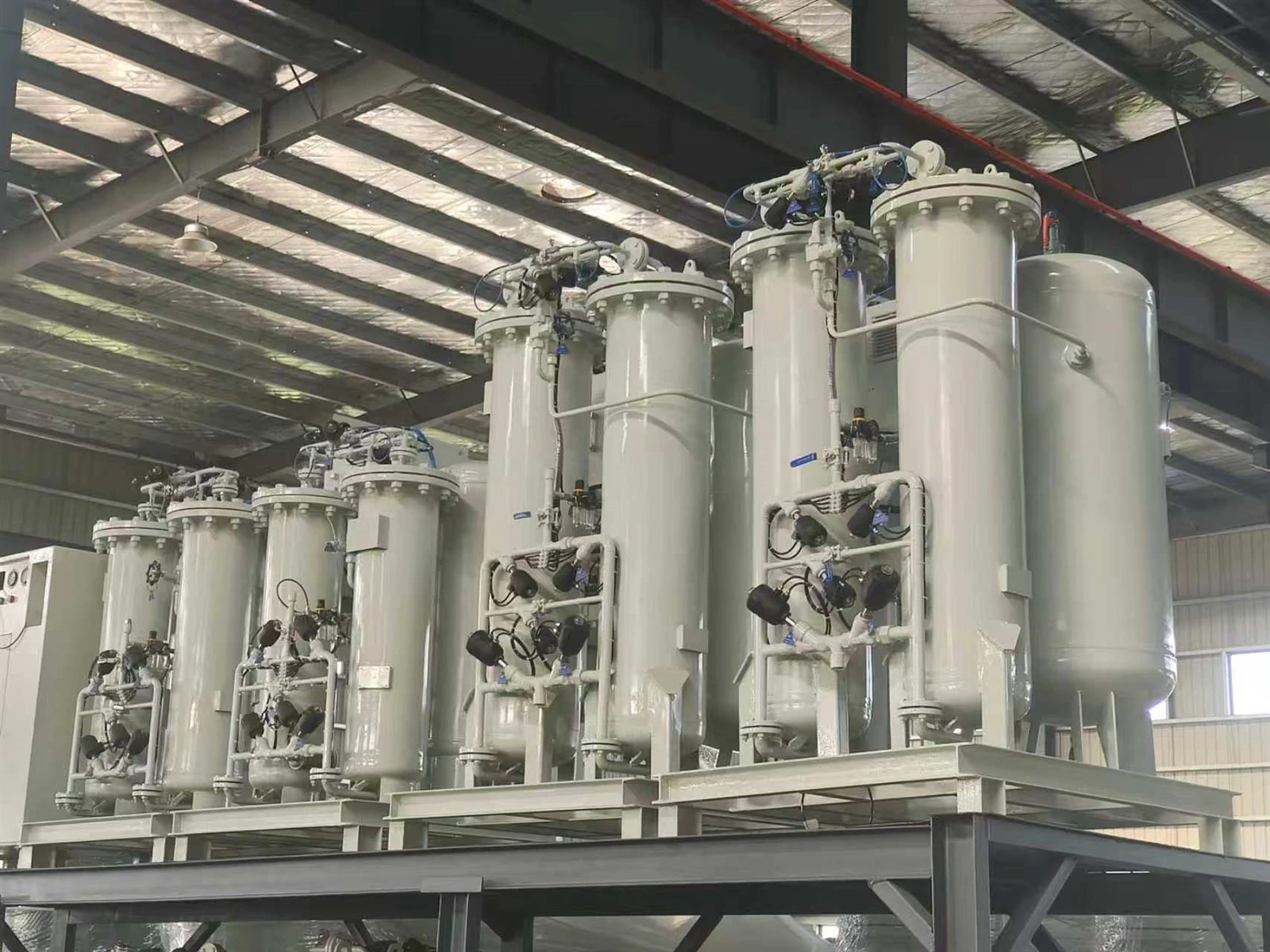
Inside the adsorption tower, molecular sieve material selectively adsorbs nitrogen under pressure. Oxygen-enriched gas passes through the adsorption bed and is collected for subsequent processing.
Step 3: Automatic Pressure Switching
A typical dual-tower arrangement alternates between adsorption and regeneration. While one tower produces oxygen, the other releases the previously adsorbed nitrogen and prepares for the next production cycle.
This alternating process allows oxygen production to continue without requiring the entire system to stop during tower regeneration.
Step 4: Oxygen Collection and Buffering
The oxygen-enriched gas enters an oxygen buffer tank. The tank helps stabilize downstream pressure, accommodates variations in short-term consumption, and provides a temporary reserve between production and demand.
Step 5: Medical Gas Pipeline Distribution
After the necessary quality checks, pressure regulation, and system controls, oxygen is delivered through the hospital's medical gas pipeline network to designated clinical areas.
The complete process transforms ambient air into an on-site oxygen source that can operate according to the hospital's daily consumption requirements.
Why Is Continuous Oxygen Production Important for Hospitals?
Hospital oxygen demand is not constant throughout the day. Emergency admissions, surgical schedules, intensive care requirements, and seasonal respiratory illnesses can all influence consumption.
A hospital may experience relatively stable oxygen usage during normal operations but encounter sudden increases when several patients require respiratory support simultaneously.
Depending on a delivery-based supply model can create several operational concerns:
Delivery delays: Transportation problems, supplier shortages, or adverse weather can affect scheduled oxygen deliveries.
Inventory management: Hospitals must monitor remaining cylinder quantities or liquid oxygen storage levels to prevent unexpected shortages.
Demand fluctuations: Sudden increases in oxygen consumption may exceed the available inventory or planned delivery volume.
Storage limitations: Cylinder storage areas and bulk oxygen tanks require appropriate space, safety arrangements, and management.
Supply coordination: Hospitals must coordinate procurement, transportation, storage, and replacement schedules with external suppliers.
An on-site PSA oxygen plant addresses these issues by moving part of the oxygen supply process into the hospital itself.
Instead of waiting for each delivery, the facility can produce oxygen according to its operating schedule. This is particularly useful for hospitals in remote areas, regions with limited medical gas infrastructure, and facilities where transportation conditions make frequent deliveries difficult.
However, on-site production should not be interpreted as eliminating every supply risk. Electricity interruptions, equipment failures, maintenance requirements, and unexpected demand peaks must all be considered during system planning.
How Do Backup Systems Prevent Oxygen Supply Interruptions?
A medical oxygen system should never rely on a single production unit without an appropriate emergency supply arrangement.
Even when the primary PSA equipment operates continuously, individual components may require maintenance or experience unexpected faults. A power failure, compressor malfunction, control system issue, or pipeline problem can affect oxygen availability.
For this reason, hospital oxygen infrastructure should incorporate multiple layers of protection.
Primary Oxygen Production
The main PSA plant supplies oxygen during normal hospital operations. Its rated output should be calculated according to the facility's expected consumption, peak demand, and required operating pressure.
Secondary Oxygen Source
A backup supply can consist of an independent oxygen production unit, a medical oxygen cylinder manifold, or a bulk liquid oxygen system, depending on the hospital's infrastructure and applicable regulations.
If the primary equipment stops operating, the secondary source must be capable of supplying the required oxygen demand within the specified response time.
Automatic Changeover System
An automatic changeover arrangement can switch the oxygen supply from the primary source to the secondary source when predefined operating conditions are reached.
This reduces dependence on manual intervention and helps maintain oxygen availability during equipment failures.
Emergency Power Supply
The PSA plant relies on electricity to operate compressors, control systems, valves, and other auxiliary equipment. Hospitals should evaluate emergency power requirements and connect essential components to an appropriately designed backup electrical supply.
Oxygen Storage and Buffer Capacity
Oxygen storage provides additional flexibility during short-term demand changes or transitions between supply sources. However, a buffer tank is not a substitute for an adequately sized emergency oxygen source.
The World Health Organization's technical specifications for health facility oxygen systems identify secondary backup supply, preferably automatic changeover, and dedicated continuous power arrangements as important considerations when planning oxygen generation infrastructure.
How Is Medical Oxygen Quality Maintained?
Continuous production is only one part of hospital oxygen supply. The oxygen must also meet the quality requirements established by the applicable pharmacopoeia and national medical gas regulations.
Medical-grade PSA oxygen is commonly associated with the Oxygen 93 specification.
According to the World Health Organization's technical guidance, PSA plants can produce medical oxygen with an oxygen concentration of 93% ± 3%. This generally corresponds to an oxygen concentration range of 90% to 96% by volume, subject to the applicable quality standard.
Maintaining this specification requires several quality-control measures.
|
Quality Control Measure |
Purpose |
|---|---|
|
Oxygen Purity Monitoring |
Checks whether the produced oxygen remains within the specified concentration range |
|
Air Filtration |
Removes particulate matter and contaminants from incoming compressed air |
|
Air Drying |
Reduces moisture entering the adsorption system |
|
Product Gas Testing |
Verifies oxygen quality against applicable medical specifications |
|
Pressure Monitoring |
Maintains the required operating conditions |
|
Alarm System |
Identifies abnormal purity, pressure, or equipment conditions |
|
Pipeline Inspection |
Helps prevent leakage and contamination during distribution |
Why Is Oxygen Purity Monitoring Necessary?
The performance of molecular sieve material can be affected by moisture, oil contamination, operating pressure, and component deterioration. These factors may influence oxygen output and purity.
A suitable oxygen analyzer should therefore monitor product gas quality. If oxygen concentration falls outside the configured limits, the control system should activate the relevant alarm and implement the designed protective response.
Hospitals should also establish procedures for periodic independent quality testing, instrument calibration, maintenance records, and quality verification at appropriate points in the distribution system.
It is important to distinguish medical oxygen from industrial oxygen. Although both may be produced using similar separation principles, oxygen intended for patient use must comply with the relevant medical quality requirements. Industrial oxygen should not be substituted for medical oxygen simply because its measured oxygen concentration appears similar.
How Does the Hospital Pipeline System Support Stable Oxygen Delivery?
Even if the oxygen generation plant produces sufficient gas, the hospital still needs a properly designed distribution network to deliver it safely and consistently.
Medical gas pipelines connect the central oxygen supply station with clinical areas such as intensive care units, operating theaters, emergency departments, recovery rooms, and general wards.
The distribution system needs to consider several technical factors.
Pipeline Capacity
Pipe diameters must be selected according to the expected flow rate, maximum foreseeable demand, pipeline length, and allowable pressure drop. Undersized pipelines may create pressure fluctuations when multiple departments use oxygen simultaneously.
Pressure Regulation
Pressure regulators maintain the required supply pressure at different stages of the medical gas system. The pressure delivered to clinical outlets must comply with the relevant design requirements and medical equipment specifications.
Zone Isolation Valves
Hospitals should incorporate appropriate isolation valves to allow individual pipeline sections to be shut off for inspection, maintenance, or emergency response without unnecessarily affecting the entire facility.
Alarm and Monitoring Systems
Central and area alarms help technical personnel identify abnormal supply pressure and other operating conditions. Monitoring arrangements should provide clear information about the status of the primary and secondary oxygen sources.
Installation and Commissioning
Before the system enters clinical service, the pipeline network requires appropriate inspection, pressure testing, leakage testing, verification of gas identity, and commissioning procedures according to applicable regulations.
ISO 7396-1 addresses the design and installation of medical gas pipeline systems, including systems supplied with Oxygen 93. It provides an important technical reference for hospitals planning new pipeline infrastructure or modifying existing systems.
What Factors Determine the Required PSA Oxygen Production Capacity?
Selecting the correct production capacity is one of the most important decisions when planning a hospital oxygen supply project.
A system that is too small may struggle to meet peak demand, while an oversized system can increase initial investment and operating expenses.
Hospitals should evaluate the following factors before purchasing equipment.
|
Selection Factor |
What Hospitals Need to Evaluate |
|---|---|
|
Number of Hospital Beds |
Total beds and expected occupancy rate |
|
Oxygen Consumption |
Average oxygen demand across different departments |
|
Peak Flow Demand |
Maximum simultaneous oxygen consumption |
|
Clinical Departments |
Additional requirements from ICUs, operating rooms, and emergency units |
|
Future Expansion |
Planned increases in beds, departments, or treatment capacity |
|
Operating Schedule |
Daily operating hours and expected continuous operation |
|
Backup Requirements |
Capacity and response time of the secondary oxygen source |
|
Pipeline Pressure |
Required operating pressure and distribution conditions |
Calculating Oxygen Demand
Hospitals should not calculate equipment capacity based solely on the number of beds.
For example, an intensive care unit may have substantially different oxygen consumption patterns from a general ward. Operating rooms and emergency departments may also experience concentrated demand during specific periods.
A practical capacity assessment should consider:
The number of oxygen outlets and connected medical devices.
The expected simultaneous usage rate.
The maximum foreseeable oxygen flow.
Additional demand during emergency situations.
Allowance for future hospital expansion.
The final equipment capacity should be determined through an engineering assessment rather than relying on a simple beds-to-capacity conversion.
How Does Preventive Maintenance Protect Long-Term Oxygen Availability?
A medical-grade PSA oxygen plant is designed for continuous operation, but its performance depends on regular inspection and maintenance.
Hospitals should establish a maintenance schedule covering the entire oxygen production system rather than focusing only on the adsorption towers.
|
Equipment Component |
Maintenance Considerations |
|---|---|
|
Air Compressor |
Lubrication, temperature, vibration, and operating pressure |
|
Air Dryer |
Drying performance and moisture removal |
|
Air Filters |
Filter condition and replacement intervals |
|
Molecular Sieve |
Adsorption performance and contamination prevention |
|
Switching Valves |
Switching accuracy, sealing, and operating condition |
|
Oxygen Analyzer |
Calibration and measurement accuracy |
|
Control System |
Alarm functions, sensor signals, and automatic operation |
|
Oxygen Storage Tank |
Pressure safety devices, drainage, and inspection |
|
Pipeline Network |
Leakage checks, pressure stability, and connection integrity |
Operator Training and Maintenance Records
Hospital technical personnel should understand the basic operating principles, startup procedures, shutdown requirements, alarm responses, and emergency changeover arrangements.
Daily operating records can help identify abnormal changes before they develop into major equipment problems.
Important operating parameters include:
Oxygen purity.
Oxygen outlet pressure.
Compressed air pressure.
Compressor operating status.
System temperature.
Equipment alarms.
Operating hours and maintenance activities.
Hospitals should also establish clear responsibilities between equipment suppliers, maintenance contractors, and in-house engineering teams.
Is PSA Oxygen Generation Suitable for Every Hospital?
Medical-grade PSA oxygen production can support many healthcare facilities, but the suitability of a particular system depends on local regulations, oxygen demand, infrastructure, and operating conditions.
|
Hospital Type |
Potential Benefits |
Key Considerations |
|---|---|---|
|
General Hospitals |
Reduces dependence on scheduled oxygen deliveries |
Daily demand and backup capacity |
|
Regional Hospitals |
Supports local oxygen production |
Availability of technical personnel |
|
Rural Hospitals |
Reduces transportation-related supply difficulties |
Power reliability and spare parts |
|
Emergency Medical Facilities |
Provides an independent oxygen source |
Rapid startup and emergency backup |
|
Large Medical Centers |
Supports substantial and continuous demand |
Redundant production and pipeline capacity |
For facilities located far from major medical gas suppliers, on-site production can offer significant logistical advantages.
However, hospitals must evaluate the availability of electricity, installation space, ventilation, maintenance support, and medical gas infrastructure before making a purchasing decision.
Where national regulations require specific oxygen sources or approval procedures, these requirements must take priority over equipment selection preferences.
What Should Hospitals Check Before Purchasing a Medical-Grade PSA Oxygen System?
Purchasing a medical oxygen production plant involves more than comparing production capacity and equipment prices. Hospitals need to evaluate whether the complete system can support clinical operations over its intended service life.
The following considerations can help procurement teams assess different suppliers.
1. Medical Oxygen Quality Compliance
Confirm that the equipment is designed to produce oxygen meeting the applicable medical oxygen specification. Request relevant quality documentation, testing procedures, and oxygen monitoring arrangements.
2. Actual Production Capacity
Check whether the quoted oxygen output is available at the specified purity and outlet pressure under the expected operating conditions.
3. Backup Supply Configuration
Ask whether the proposed system includes an independent secondary oxygen source, automatic changeover, and emergency power arrangements.
4. Equipment Integration
Evaluate the compatibility of the oxygen production plant with existing medical gas pipelines, pressure regulation equipment, storage tanks, and monitoring systems.
5. Maintenance and Technical Support
Confirm the availability of replacement filters, valves, molecular sieve material, sensors, and other essential components. Also clarify maintenance intervals and technical support arrangements.
6. Total Operating Costs
Compare electricity consumption, maintenance expenses, spare parts, labor requirements, and expected equipment utilization rather than considering the purchase price alone.
7. Installation and Commissioning
Clarify whether the supplier provides installation guidance, equipment testing, commissioning support, operator training, and technical documentation.
A complete evaluation helps hospitals avoid purchasing equipment that meets the nominal production requirement but cannot adequately support their actual medical gas infrastructure.
Conclusion
Continuous hospital oxygen supply requires more than a high-capacity oxygen production unit. It depends on the coordinated performance of oxygen generation equipment, air treatment, storage, backup sources, emergency power, medical gas pipelines, quality monitoring, and preventive maintenance.
Medical-grade PSA oxygen generation provides hospitals with an opportunity to establish an independent on-site oxygen source, reduce reliance on external deliveries, and improve control over daily supply planning.
Nevertheless, equipment selection must be based on actual hospital demand, applicable medical oxygen standards, and the reliability of the complete supply system. With appropriate engineering design, redundancy, operator training, and maintenance arrangements, PSA technology can become an important part of a hospital's long-term medical oxygen infrastructure.
For healthcare facilities planning a new oxygen supply station or upgrading an existing system, working with an experienced medical oxygen equipment supplier is an important step toward achieving stable and sustainable oxygen availability.