Underground mining involves a combination of confined working spaces, complex ventilation networks, heavy machinery, combustible materials, and potentially hazardous gases. Workers may encounter oxygen-deficient atmospheres, carbon monoxide, methane, smoke, and other contaminants, particularly following fires, explosions, ventilation failures, or ground instability. These conditions make reliable emergency preparedness and respiratory protection essential parts of mine safety management.
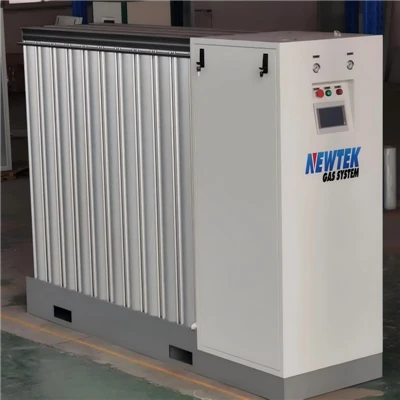
On-site oxygen generation is one technology that can support certain mine safety and emergency response operations. Pressure Swing Adsorption (PSA) oxygen generators produce oxygen-enriched gas from compressed ambient air using molecular sieve technology. When appropriately specified and integrated with compatible oxygen storage and delivery equipment, a PSA system may provide a supplementary oxygen source for designated surface-based mine rescue support facilities and other approved applications.
However, oxygen generation must be distinguished from underground mine ventilation. A PSA oxygen generator is not a substitute for the ventilation system responsible for controlling methane, removing contaminants, and maintaining safe atmospheric conditions in active workings. Nor can a standard industrial oxygen generator automatically replace approved self-rescuers, breathing apparatus, or refuge chamber life-support equipment. Its safety value depends on using oxygen in the correct application, with suitable equipment, operating procedures, and regulatory approval.
Understanding these requirements helps mining operators evaluate where on-site PSA oxygen generation can contribute to emergency preparedness, equipment readiness, and more reliable oxygen supply management.
Why Atmospheric Safety Is Critical in Underground Mining
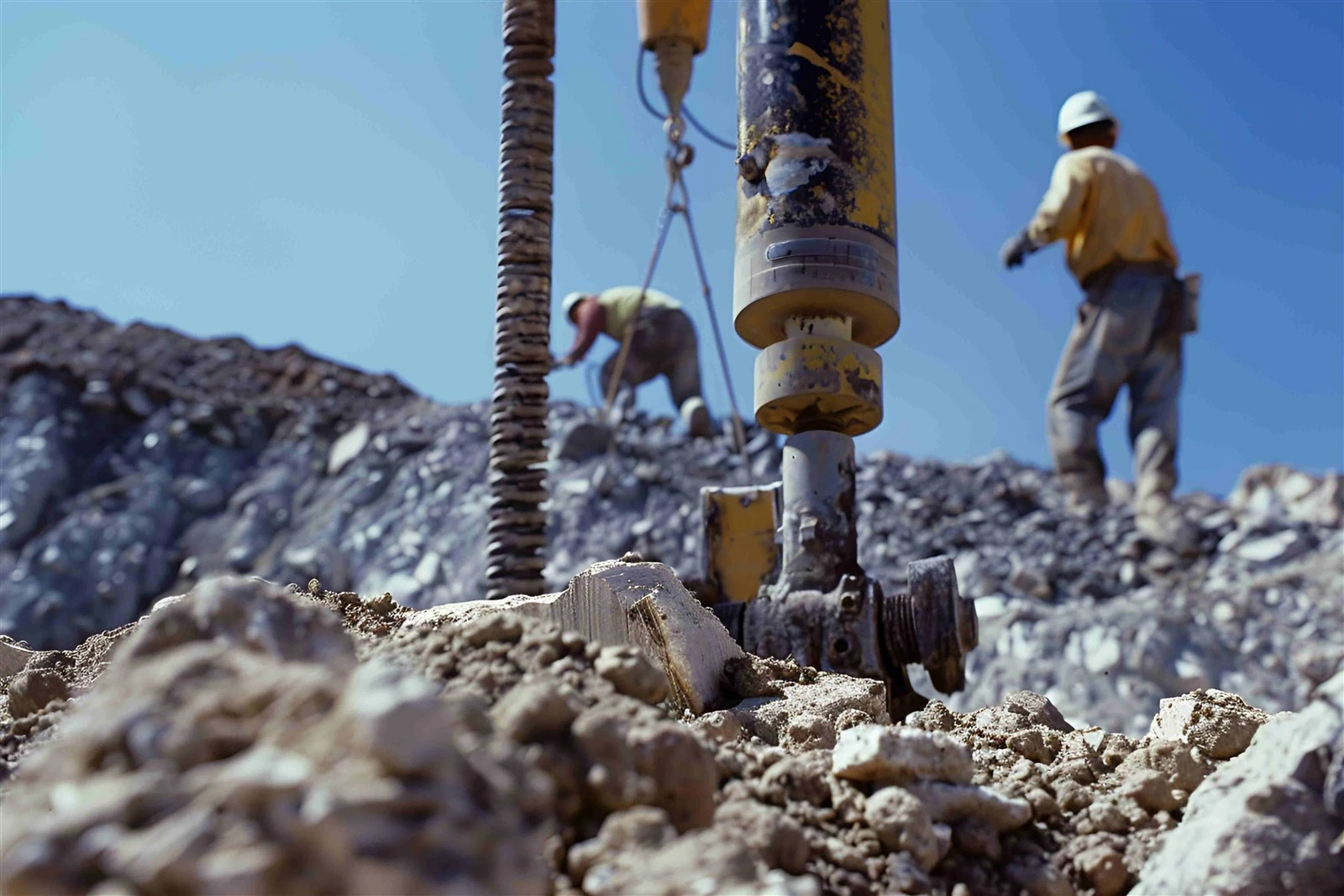
Underground mines have atmospheric risks that differ significantly from those encountered in most surface industrial environments. Limited natural ventilation, long access routes, geological conditions, blasting activities, machinery operation, and the presence of combustible materials can all affect the composition of underground air.
Oxygen deficiency is one of the most immediate concerns. Normal atmospheric air contains approximately 20.9% oxygen. When oxygen concentration falls below 19.5%, workers may experience impaired physical and cognitive performance. More severe oxygen deficiency can cause confusion, loss of coordination, unconsciousness, and life-threatening conditions.
Several underground conditions can contribute to oxygen depletion.
Methane accumulation and ventilation failure
Methane is a flammable gas that can accumulate in underground coal mines and other geological formations. Insufficient ventilation may allow methane concentrations to rise while simultaneously reducing the oxygen content of the surrounding atmosphere.
Methane presents two related hazards: it can displace oxygen and create an explosive atmosphere. If an ignition source is present, accumulated methane may ignite, potentially initiating a larger explosion involving combustible coal dust.
A properly designed mine ventilation system dilutes and removes methane while maintaining suitable atmospheric conditions. Oxygen generation equipment cannot perform this function because it does not remove methane or provide the airflow distribution required for mine ventilation.
Carbon monoxide and toxic gases
Mine fires, explosions, blasting operations, and equipment failures can introduce harmful gases into underground workings. Carbon monoxide is particularly dangerous because it is colorless, odorless, and highly toxic. Smoke and other combustion products may also spread through ventilation networks and restrict escape routes.
In these situations, simply increasing the oxygen concentration of the surrounding atmosphere does not make it safe to breathe. Workers require appropriate respiratory protection, and mine rescue teams must use approved breathing apparatus designed for hazardous or oxygen-deficient environments.
Fire, smoke, and explosion hazards
Underground fires can be especially dangerous because of confined spaces, limited evacuation routes, and the possibility that smoke and toxic gases will spread through the ventilation system.
Combustible dust, methane, electrical equipment, conveyor systems, and other ignition sources create additional risks. Oxygen management must therefore be considered as part of a broader fire and explosion prevention strategy.
Oxygen itself is not flammable, but it supports combustion. An oxygen-enriched atmosphere can cause materials to ignite more easily and burn more intensely. Consequently, oxygen must be stored, transported, and supplied through equipment specifically designed for oxygen service.
Emergency evacuation and rescue operations
Following an underground incident, miners may need to evacuate through contaminated or oxygen-deficient areas. If normal escape routes become inaccessible, rescue teams may have to enter hazardous atmospheres to locate and assist trapped personnel.
These operations require reliable self-rescuers, mine rescue breathing apparatus, gas detection instruments, communication equipment, and properly maintained oxygen supplies. The availability and readiness of these resources can directly influence the effectiveness of an emergency response.
How PSA Oxygen Generators Work
A PSA oxygen generator separates oxygen from compressed air through pressure swing adsorption. The process uses zeolite molecular sieves that preferentially adsorb nitrogen under pressure, allowing oxygen-enriched gas to pass through the adsorption vessel.
A typical industrial PSA oxygen system uses two or more adsorption vessels. While one vessel produces oxygen, another undergoes depressurization and regeneration. The system alternates between these operating stages to maintain a continuous product gas supply.
The main process components include:
Air compressor: Draws in ambient air and compresses it to the required operating pressure.
Air pretreatment system: Removes moisture, oil, and particulate contaminants to protect the adsorption material.
Adsorption vessels: Contain zeolite molecular sieves that preferentially adsorb nitrogen.
Automatic control system: Coordinates pressure cycles, valve switching, and operating parameters.
Oxygen buffer tank: Stores product gas temporarily and helps stabilize downstream supply pressure.
Oxygen delivery equipment: Regulates and distributes the generated oxygen to compatible downstream applications.
Many industrial PSA oxygen generators produce oxygen at approximately 90%–95% concentration, depending on the system design and operating conditions. Actual output, purity, pressure, and flow rate must be evaluated together when selecting equipment.
For mining applications, the PSA generator is only one part of the supply arrangement. If oxygen must be stored in high-pressure cylinders, for example, additional oxygen-compatible compression, filling, storage, and safety systems are required. A standard low-pressure PSA outlet cannot be assumed to charge mine rescue cylinders directly.
The complete installation must be designed around the requirements of the intended application and the specifications of the breathing apparatus or other equipment receiving the oxygen.
How On-Site PSA Oxygen Can Support Mine Rescue Preparedness
One of the most relevant potential applications of on-site oxygen generation in underground mining is supporting surface-based mine rescue facilities.
Mine rescue teams require specialized breathing apparatus to enter atmospheres that may contain toxic gases or insufficient oxygen. Depending on the equipment design, these systems may use compressed oxygen, liquid oxygen, compressed air, or oxygen-generating chemicals.
For closed-circuit oxygen breathing apparatus, the breathing gas is recycled after carbon dioxide is removed from exhaled air. Oxygen is then added to replace the amount consumed by the wearer. This allows trained rescue personnel to operate independently of the surrounding mine atmosphere for the approved duration of the apparatus.
A PSA oxygen generator may support the wider oxygen supply infrastructure if its product gas meets the relevant equipment requirements and is connected through an approved, properly engineered filling or supply arrangement.
Potential contributions include the following.
Supporting a more accessible oxygen supply
Mines that rely entirely on delivered oxygen cylinders may face logistical challenges. Transportation schedules, remote locations, supplier availability, and storage capacity can affect the reliability of oxygen replenishment.
An on-site PSA installation may provide a supplementary oxygen source at a designated surface facility. When integrated with suitable purification, compression, and storage equipment, it can help reduce dependence on frequent deliveries for applications that accept its output specifications.
However, the generated oxygen must meet the required purity, moisture, contamination, and pressure specifications before it can be used with any breathing apparatus. Product suitability must be confirmed with the equipment manufacturer and the applicable regulatory authority.
Supporting mine rescue equipment readiness
Mine rescue stations maintain specialized breathing apparatus, spare oxygen supplies, charging equipment, gas detectors, and other emergency resources.
In the United States, 30 CFR 49.6 specifies mine rescue station equipment requirements, including approved self-contained breathing apparatus, a suitable portable oxygen supply, additional oxygen bottles, and compatible oxygen pumping or cascading equipment.
A properly engineered on-site oxygen supply arrangement may support the replenishment process where it is compatible with the approved equipment. This can provide another option for managing oxygen availability at the rescue station.
The generator itself does not replace the required rescue equipment, spare cylinders, oxygen pumps, or maintenance procedures.
Improving supply planning for remote mining locations
Remote underground mining operations may be far from industrial gas distribution networks. Transporting oxygen cylinders over long distances can involve additional handling, storage, and scheduling requirements.
On-site generation may provide greater control over the supply of oxygen for approved surface applications. It can also help mining operators plan oxygen replenishment around their rescue station's operating requirements.
The economic and operational value depends on local electricity availability, generator utilization, maintenance capability, and the cost of delivered oxygen. A backup supply must remain available because a PSA generator depends on electrical and mechanical systems that can fail.
Supporting Emergency Breathing Apparatus and Respiratory Protection
Emergency respiratory protection is a central part of underground mine safety. Different devices serve different purposes, and their oxygen requirements cannot be treated as interchangeable.
Self-contained self-rescuers
Self-contained self-rescuers (SCSRs) are designed to provide miners with a portable breathing supply during emergency escape. Some models use chemical oxygen generation, while others use closed-circuit breathing systems that remove carbon dioxide and restore oxygen.
These devices are carried or made readily accessible to miners underground, depending on applicable regulations and mine procedures. Their approved service life, storage conditions, inspection requirements, and operating limitations must be followed.
A standard PSA oxygen generator does not replace an SCSR. It should not be connected to, used to refill, or treated as a maintenance substitute for an approved self-rescuer unless the device manufacturer and relevant approval requirements explicitly permit the arrangement.
Mine rescue breathing apparatus
Mine rescue teams may use closed-circuit self-contained breathing apparatus designed for extended operations in oxygen-deficient or immediately dangerous atmospheres.
These devices generally require a controlled oxygen supply and a carbon dioxide removal system. The breathing loop, regulator, oxygen cylinder, valves, seals, and scrubber must operate as an integrated assembly.
On-site PSA generation may be relevant to the surface oxygen supply infrastructure, but the generated gas must meet the breathing apparatus manufacturer's specifications. The purity of an industrial PSA product alone does not establish that it is suitable for respiratory use.
Refuge alternatives and emergency shelters
Refuge alternatives provide a protected environment for miners who cannot safely reach the surface during an emergency. Depending on the mine and regulatory framework, these facilities may be designed to maintain breathable conditions for an extended period.
Their life-support systems must manage oxygen supply, carbon dioxide accumulation, temperature, humidity, and other environmental conditions.
In the United States, 30 CFR 7.506 establishes requirements for breathable air components in refuge alternatives, including oxygen concentration, carbon dioxide control, oxygen delivery, and safeguards against ignition. It also specifies requirements for compressed breathable oxygen systems and their regulators and associated equipment.
A standard PSA generator should not be regarded as a direct replacement for the approved oxygen supply installed in a refuge alternative. Any proposed connection would require a complete engineering assessment and compliance with applicable approval requirements.
Why PSA Oxygen Must Not Replace Underground Ventilation
A critical safety distinction is that oxygen generation and mine ventilation perform different functions.
Mine ventilation supplies and distributes fresh air, dilutes hazardous gases, removes contaminants, and controls the underground atmosphere. A PSA oxygen generator produces oxygen-enriched gas but does not provide the airflow or contaminant-removal capacity required for these functions.
Adding concentrated oxygen to an underground working area is not an acceptable substitute for correcting inadequate ventilation.
Maintaining safe oxygen concentration
Underground work areas must maintain oxygen concentrations within the limits established by applicable mining regulations. In the United States, federal coal mine ventilation requirements specify a minimum oxygen concentration of 19.5% in active workings, together with limits for carbon dioxide and requirements for controlling harmful gases and dust.
This does not mean that the objective is to maximize oxygen concentration. Normal atmospheric oxygen levels are appropriate for ordinary breathing conditions. Excessive oxygen enrichment can increase fire hazards.
Controlling methane and other flammable gases
Methane control depends on ventilation quantity, airflow direction, gas monitoring, and mine-specific engineering measures. Oxygen injection cannot remove accumulated methane.
Indeed, increasing oxygen availability in an atmosphere containing combustible gas or dust can create additional combustion concerns. Mine operators must follow approved ventilation plans and gas control procedures rather than attempting to correct hazardous atmospheric conditions by adding oxygen.
Preventing oxygen-enriched atmospheres
OSHA identifies atmospheres containing more than 23.5% oxygen as oxygen-enriched in its general respiratory protection guidance. Such atmospheres can increase the intensity and speed of combustion.
In underground mining, this risk is particularly serious because combustible materials, electrical equipment, machinery, and potential ignition sources may be present.
PSA oxygen should therefore be handled through controlled equipment and supplied only to designated applications. Uncontrolled release into active mine workings, ordinary ventilation ducts, or unapproved underground spaces must not be treated as a safety improvement.
Oxygen Storage, Compression, and Fire Prevention
The safety performance of an on-site oxygen generation installation depends on more than the PSA process itself. Oxygen storage, compression, piping, and handling procedures are equally important.
Oxygen-enriched gas can create severe fire hazards when it contacts unsuitable materials or enters an environment containing combustible substances. Components that are safe for ordinary compressed air may not be suitable for oxygen service.
Oxygen-compatible equipment
Oxygen systems require materials, regulators, valves, seals, fittings, and piping designed for the intended oxygen concentration and operating pressure.
Equipment should be selected according to applicable oxygen service standards and the specifications of the system manufacturer. Components must be maintained in a condition suitable for oxygen use.
Preventing oil and grease contamination
Oil and grease contamination can create serious ignition hazards in oxygen systems, particularly under high-pressure conditions.
Oxygen-contacting equipment must be cleaned, handled, and maintained according to approved oxygen-cleaning procedures. Ordinary lubricants, contaminated tools, and unsuitable sealing materials should not be introduced into oxygen service equipment.
Managing high-pressure storage
If the installation includes oxygen cylinder filling, the storage and compression system requires additional safeguards. These may include suitable oxygen boosters, pressure regulators, cylinder inspection procedures, filling controls, and protected storage areas.
Cylinders must be compatible with the intended gas, pressure, and filling procedure. Operators should also consider physical protection against impact, heat exposure, unauthorized access, and mechanical damage.
Controlling leakage and oxygen accumulation
Oxygen leakage can create an enriched atmosphere around equipment and storage areas without producing an obvious warning. Oxygen is colorless and odorless, so visual inspection alone cannot reliably identify every hazardous condition.
Suitable ventilation, leak detection procedures, inspection routines, and emergency shutdown arrangements should form part of the installation's safety design.
Integrating PSA Oxygen Generation into a Mine Safety System
An on-site PSA oxygen installation should be considered part of a broader mine safety infrastructure rather than an independent emergency protection device.
Its configuration depends on the intended use, oxygen demand, existing equipment, and applicable regulatory requirements.
Define the intended oxygen application
The first step is to identify whether the system will support a mine rescue station, an approved cylinder filling arrangement, a surface emergency medical facility, or another designated application.
Different uses have different requirements for product purity, gas quality, pressure, flow, storage, and equipment certification.
A system intended for industrial oxygen use cannot automatically be used for breathing apparatus or emergency life-support equipment.
Match generator output to actual demand
The generator should be selected according to the required oxygen flow, product concentration, operating hours, and expected consumption.
If the system is intended to support a cylinder filling installation, the design must also account for the capacity and operating conditions of the oxygen booster and filling manifold.
The PSA generator's rated output should not be confused with the final quantity of oxygen available at the required storage pressure.
Provide suitable buffer and storage capacity
An oxygen buffer tank can help stabilize the generator's product supply and accommodate short-term fluctuations. High-pressure storage, where required, must be designed as a separate system with appropriate pressure-rated components and safety controls.
The storage arrangement should reflect emergency demand, replenishment schedules, and the time required to restore supply after an interruption.
Establish monitoring and alarm functions
The installation should monitor relevant operating parameters, which may include:
Oxygen concentration at the generator outlet.
Product gas flow rate.
Delivery pressure.
Compressor operating condition.
Adsorption cycle performance.
High and low pressure alarms.
System temperature and abnormal operating conditions.
Oxygen storage pressure and filling status.
For breathing-related applications, additional gas quality verification may be necessary. Oxygen concentration alone does not demonstrate that a gas stream meets all requirements for respiratory use.
Maintain an independent backup supply
A PSA generator depends on electricity, compressors, control systems, and mechanical components. Power interruptions or equipment failures can stop production.
Mine rescue facilities should therefore maintain an appropriate backup oxygen supply and follow the applicable requirements for emergency readiness. Backup cylinders, compatible pumps, and other approved equipment should remain available and maintained even when on-site generation is installed.
Maintenance and Operational Management of PSA Oxygen Systems
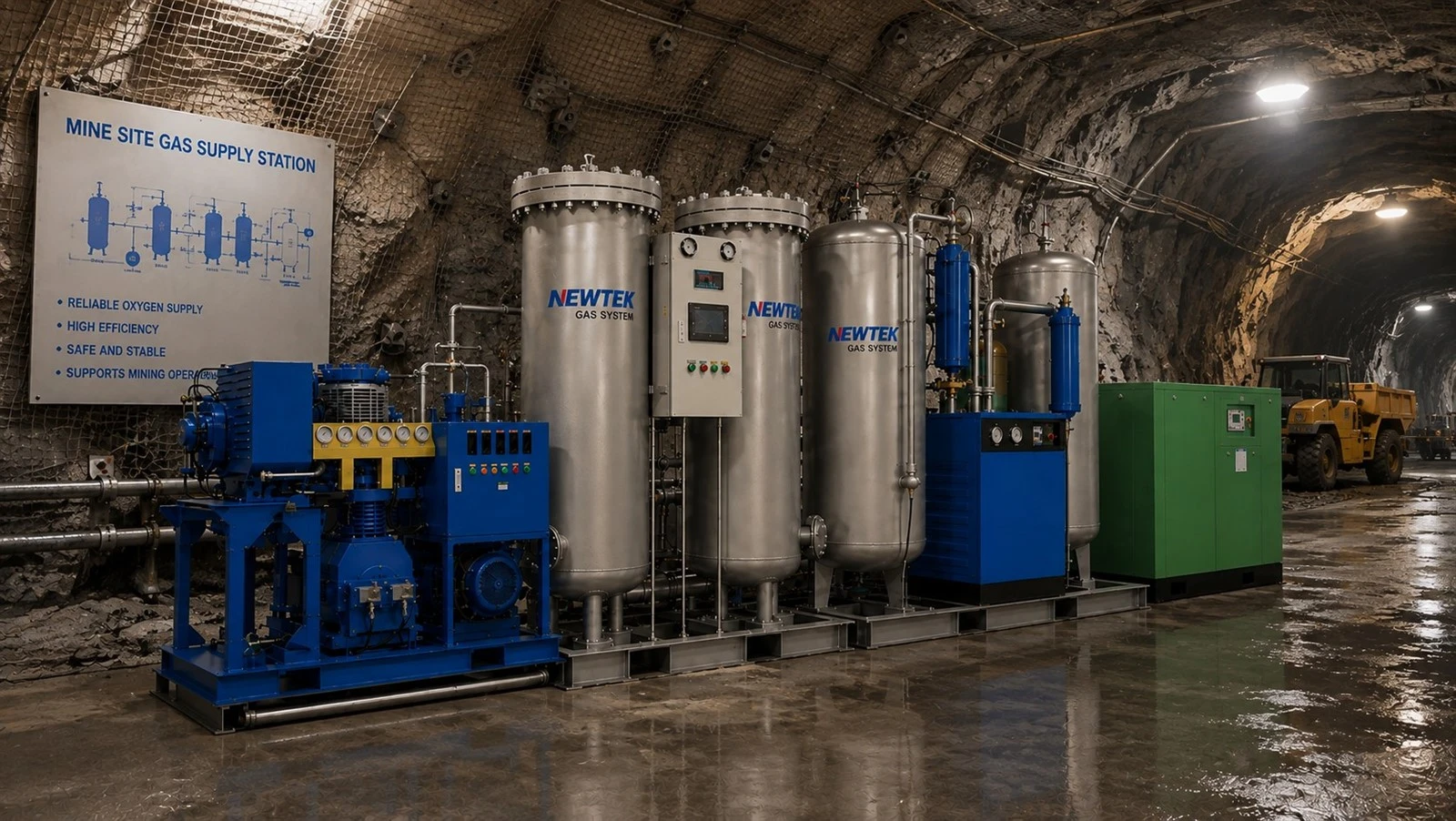
Regular maintenance is essential for keeping a PSA oxygen generator reliable. In mining environments, equipment may be exposed to dust, temperature changes, vibration, humidity, and demanding operating schedules.
Maintenance planning should cover the entire oxygen supply chain rather than focusing only on the adsorption vessels.
Compressor and air pretreatment maintenance
The air compressor supplies the feed air required by the PSA system. Its filters, cooling components, lubrication system, and operating condition should be inspected according to the manufacturer's schedule.
Air pretreatment equipment is equally important. Moisture, oil, and particulate contaminants can reduce molecular sieve performance and affect the reliability of oxygen production.
Filters, dryers, condensate drains, and other treatment components should be checked and serviced at the specified intervals.
Molecular sieve and valve inspection
The adsorption vessels rely on molecular sieve material to separate nitrogen from air. Poor feed air quality or unsuitable operating conditions can affect adsorption performance.
Operators should monitor oxygen concentration, output flow, pressure behavior, and adsorption cycle stability. Abnormal readings may indicate problems with the molecular sieve, valves, seals, or control sequence.
Control system and sensor verification
Automatic control systems coordinate pressure switching and monitor equipment conditions. Faulty sensors or control signals can cause unstable operation or prevent the generator from producing the required output.
Alarms, pressure sensors, oxygen analyzers, and safety interlocks should be inspected and tested according to the maintenance plan.
Oxygen storage and distribution inspection
Where oxygen is stored or distributed under pressure, the inspection program should include cylinders, valves, regulators, piping, manifolds, and connections.
Only trained personnel should carry out oxygen system maintenance and cylinder handling. Procedures must follow equipment manufacturer requirements and relevant pressure system regulations.
Documentation and emergency drills
Maintenance records should document inspection dates, component replacement, operating parameters, faults, and corrective actions.
Mine rescue personnel should also be familiar with the oxygen supply arrangement, equipment limitations, backup procedures, and emergency response responsibilities. Regular drills help verify that equipment and personnel are prepared to respond when the normal supply system is unavailable.
How to Select an On-Site PSA Oxygen Generator for Mining Applications
Selecting a PSA oxygen generator for a mining facility requires a technical assessment of both the oxygen demand and the intended application. A generator should not be selected solely according to its rated capacity or purchase price.
Important considerations include:
| Selection Factor | Key Considerations |
|---|---|
| Intended application | Mine rescue support, approved cylinder supply, or other designated use |
| Required oxygen purity | Must meet the downstream equipment and application specifications |
| Oxygen flow rate | Based on expected consumption and operating schedule |
| Delivery pressure | Must match the requirements of the downstream equipment |
| Air pretreatment | Appropriate removal of moisture, oil, and particulate contaminants |
| Compression and storage | Additional equipment required for high-pressure cylinder applications |
| Installation environment | Temperature, humidity, dust, ventilation, and available space |
| Power supply | Electrical reliability and backup power arrangements |
| Maintenance support | Availability of trained personnel, spare parts, and service resources |
| Regulatory compliance | Applicable mining, pressure equipment, oxygen handling, and respiratory protection requirements |
Confirm downstream equipment compatibility
The most important selection step is confirming whether the PSA product gas is suitable for the intended equipment.
For mine rescue breathing apparatus, refuge alternatives, or other life-support applications, the equipment manufacturer and relevant approval authority must confirm the acceptable oxygen specifications and supply arrangement.
A generator's stated oxygen purity is not sufficient evidence of compatibility.
Evaluate total system capacity
The PSA generator, buffer tank, booster compressor, filling manifold, storage cylinders, and downstream regulators must be evaluated as one coordinated system.
A generator with adequate low-pressure output may still be unsuitable if the filling equipment cannot achieve the required pressure or if the final supply capacity is insufficient.
Consider long-term operating costs
The total cost of ownership includes more than the generator purchase price. Operators should account for electricity consumption, compressor servicing, filters, molecular sieve maintenance, spare parts, installation, oxygen-compatible storage equipment, and backup supply arrangements.
The comparison with delivered oxygen should also consider transport costs, storage requirements, supply reliability, and the mine's expected oxygen consumption.
A system with a higher initial investment may provide operational value where oxygen deliveries are difficult to arrange. However, the economic benefit must be evaluated against actual operating conditions.
Conclusion
On-site PSA oxygen generation can contribute to underground mining safety by supporting designated surface-based oxygen supply infrastructure, particularly where mine rescue stations require a reliable source of oxygen for compatible and approved equipment. It may help mining operators manage oxygen replenishment, reduce dependence on delivered gas for suitable applications, and improve control over emergency supply planning.
Its application must remain within clearly defined safety boundaries. A standard PSA oxygen generator cannot replace mine ventilation, self-contained self-rescuers, approved breathing apparatus, or the certified life-support systems required in refuge alternatives. Generated oxygen must meet the specifications of the receiving equipment, and any cylinder filling arrangement requires suitable oxygen compression, storage, and safety controls.
Ultimately, the value of on-site PSA oxygen in mining depends on correct application design, equipment compatibility, regulatory compliance, reliable backup arrangements, and disciplined maintenance. When integrated appropriately into a mine's emergency preparedness system, it can provide an additional oxygen supply resource while supporting a more organized approach to rescue readiness and operational safety.