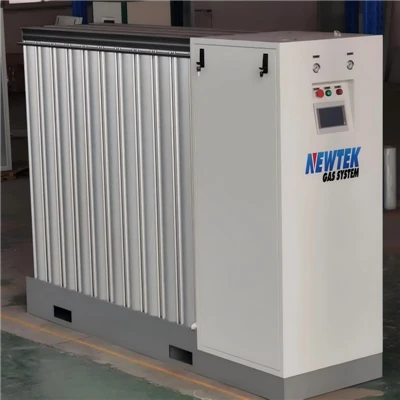
As aquaculture continues to develop toward higher stocking densities, larger production facilities, and more controlled farming environments, maintaining sufficient dissolved oxygen has become a critical part of production management. Fish, shrimp, and other cultured aquatic species rely on dissolved oxygen for respiration, feeding activity, growth, and normal metabolism. When oxygen availability cannot meet biological demand, production performance may decline, and the risk of stress or mortality can increase.
Traditional aeration systems remain widely used in ponds, tanks, and other aquaculture facilities. However, their oxygen transfer capacity may become insufficient as biomass, feeding rates, water temperature, and biological oxygen consumption increase. On-site oxygen generation offers another approach by producing oxygen-enriched gas directly from ambient air. This gas can then be supplied through suitable oxygen transfer equipment to increase the amount of oxygen available for dissolution in water.
Pressure Swing Adsorption (PSA) and membrane separation are two technologies used to enrich oxygen from compressed air. Both reduce the nitrogen content of the feed gas, but they use different separation principles and produce different oxygen concentrations. These differences influence equipment configuration, operating requirements, and suitability for different aquaculture applications. Understanding how the two technologies work helps farm operators evaluate which oxygen supply system better matches their production scale, oxygen demand, and water treatment configuration.
Why Oxygen Supply Is Important in Modern Aquaculture
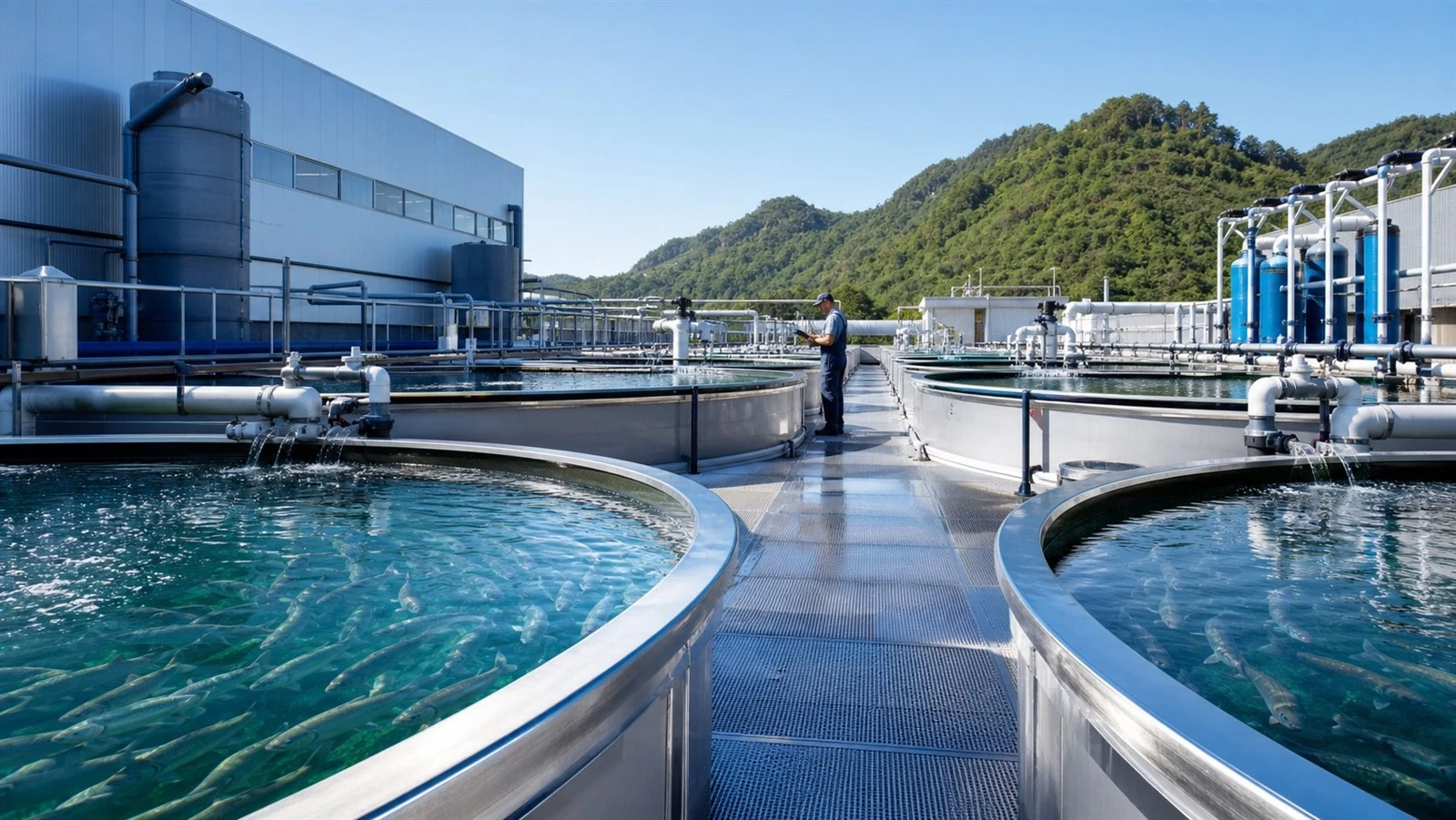
Dissolved oxygen (DO) is one of the most important water quality parameters in aquaculture. Fish and shrimp need oxygen to support respiration and metabolic activity, while microorganisms in the culture environment and biological treatment systems also consume oxygen. The total oxygen requirement therefore includes more than the respiration demand of the cultured animals.
In conventional pond farming, natural surface exchange, photosynthesis, and mechanical aeration may provide sufficient oxygen under suitable conditions. However, oxygen availability can become less stable as stocking density and feeding intensity increase. Larger biomass produces greater respiratory demand, while uneaten feed, fecal matter, and organic waste contribute to microbial oxygen consumption.
Water temperature creates another challenge. Warm water generally holds less dissolved oxygen than cooler water under comparable conditions. At the same time, the metabolic oxygen demand of many cultured species can increase as temperature rises within their suitable growth range. During hot weather, farms may therefore face both reduced oxygen solubility and increased oxygen consumption.
Intensive aquaculture systems are particularly sensitive to these changes. In recirculating aquaculture systems (RAS), oxygen is required not only for fish and shrimp but also for biological processes involved in water treatment. Biofloc systems also have substantial oxygen requirements because microbial activity plays an important role in nutrient management.
When conventional aeration cannot provide sufficient oxygen transfer, farms may need supplementary oxygen supply. On-site oxygen generation can provide a more concentrated gas source than ordinary air, allowing oxygen to be introduced through equipment designed for higher transfer efficiency.
The objective is not simply to achieve a high oxygen concentration at the generator outlet. The complete system must deliver enough oxygen into the water, distribute it throughout the culture area, and maintain suitable DO levels under changing production conditions.
How PSA Oxygen Generators Work
PSA oxygen generators use pressure swing adsorption to separate oxygen from compressed air. The process relies on the different adsorption characteristics of nitrogen and oxygen when air passes through a suitable molecular sieve material.
In oxygen PSA systems, zeolite molecular sieves preferentially adsorb nitrogen under pressure. Oxygen and other less strongly adsorbed components pass through the adsorption bed, producing an oxygen-enriched gas stream. The adsorbed nitrogen is subsequently released when the pressure is reduced, allowing the molecular sieve to be regenerated.
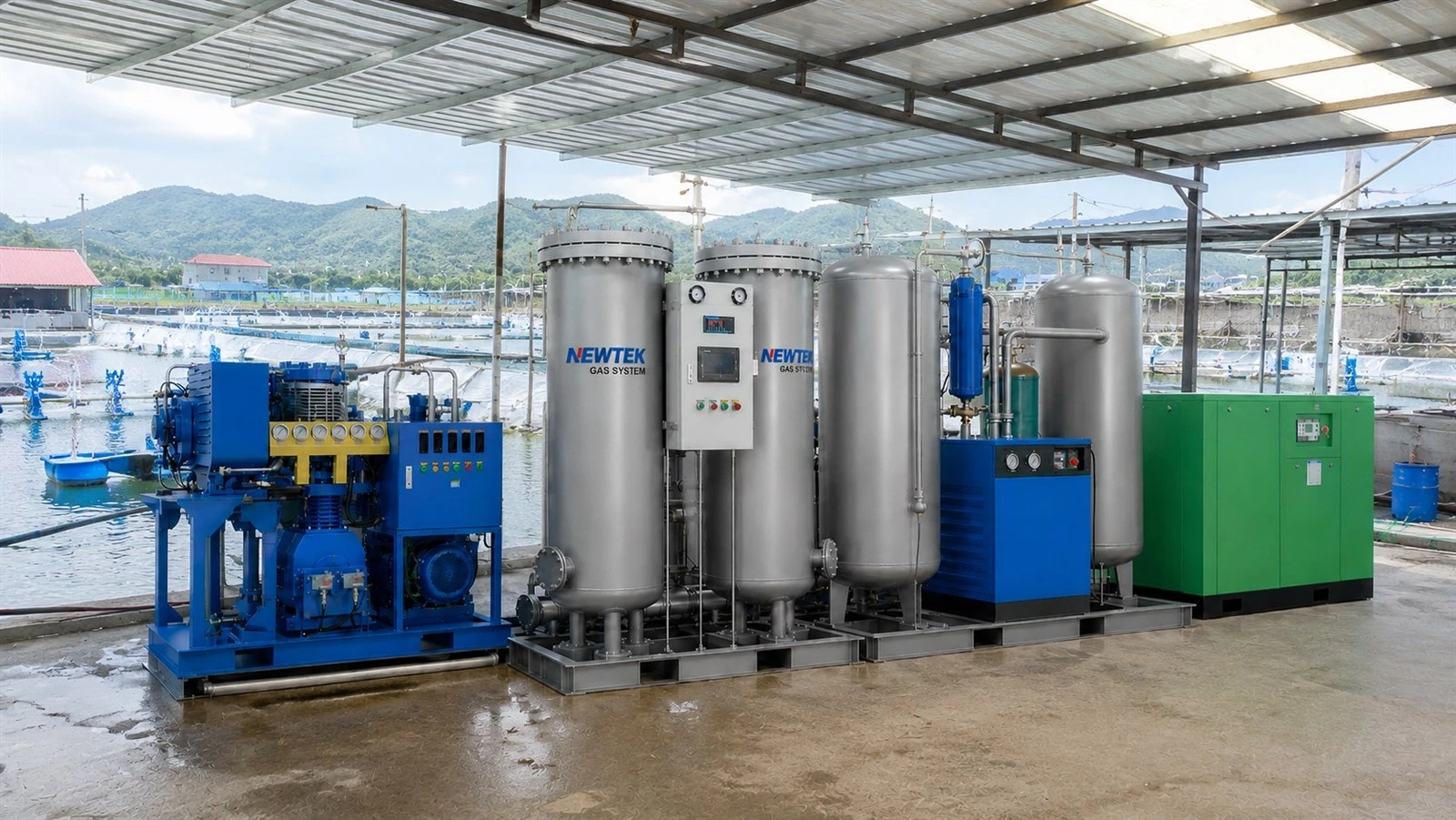
A typical PSA oxygen generator uses two or more adsorption vessels. While one vessel is producing oxygen, another is undergoing depressurization and regeneration. The system switches between the vessels through an automated valve and control arrangement. This alternating process allows oxygen production to continue without requiring a single adsorption vessel to operate continuously.
The main stages of a PSA oxygen generation process include:
Air intake and compression: Ambient air enters the system and is compressed to the required operating pressure.
Air pretreatment: Filters, dryers, and other treatment components remove moisture, oil, and particles that could affect molecular sieve performance.
Nitrogen adsorption: Compressed air passes through the zeolite beds, where nitrogen is preferentially adsorbed.
Oxygen production: Oxygen-enriched gas exits the adsorption vessel and enters the product gas system.
Molecular sieve regeneration: The adsorption vessel is depressurized to release nitrogen and restore its adsorption capacity.
Gas buffering and delivery: An oxygen buffer tank may stabilize pressure and supply before the gas is distributed to the aquaculture system.
Many industrial PSA oxygen generators produce oxygen at approximately 90%–95% concentration. Actual concentration and output depend on equipment design, operating pressure, feed air conditions, and the required oxygen flow rate. Higher flow requirements may affect the achievable product concentration, so these specifications should be evaluated together.
For aquaculture, PSA equipment is generally selected according to required oxygen flow, product purity, delivery pressure, operating hours, and installation conditions. The oxygen generator should also be matched with downstream equipment, such as oxygen cones, injectors, or diffusers, to ensure that the produced gas can be transferred effectively into water.
How Membrane Oxygen Generators Work
Membrane oxygen generators use selective gas permeation to enrich oxygen from compressed air. The separation process is based on differences in the permeability of gas molecules through a membrane material.
When compressed air flows along a gas separation membrane, oxygen generally permeates through the membrane faster than nitrogen. This produces an oxygen-enriched stream on one side and a nitrogen-rich stream on the other. The separation performance depends on the membrane material, operating pressure, temperature, feed gas composition, and system configuration.
Unlike PSA systems, membrane generators do not require alternating adsorption and regeneration cycles involving molecular sieve vessels. Gas separation takes place through membrane modules, and the system can provide a continuous enriched gas stream while operating within its designed conditions.
Membrane technology has several practical characteristics:
Relatively compact separation modules.
A continuous gas separation process.
No cyclic molecular sieve adsorption and regeneration.
A system configuration that can be suitable for moderate oxygen enrichment.
Performance that depends strongly on membrane properties and operating conditions.
However, membrane oxygen generators generally produce a lower oxygen concentration than conventional PSA oxygen generators. In representative oxygen-enrichment applications, membrane systems may provide concentrations around 30%–40%, although actual results vary according to membrane design and operating conditions.
This difference is important when selecting equipment for aquaculture. A membrane system may be suitable where moderate oxygen enrichment meets the required oxygen transfer capacity. However, facilities requiring a more concentrated oxygen source for intensive production may find the lower product concentration restrictive.
Membrane separation should therefore be evaluated according to its actual oxygen output and the requirements of the downstream oxygenation system, rather than being selected only because of its compact configuration or continuous separation process.
PSA vs Membrane Oxygen Generators: Key Technical Differences
Although PSA and membrane systems both enrich oxygen from compressed air, their separation principles create different performance characteristics. The most important differences involve oxygen concentration, system configuration, operating conditions, maintenance requirements, and suitability for different oxygen demand levels.
| Comparison Factor | PSA Oxygen Generator | Membrane Oxygen Generator |
|---|---|---|
| Separation principle | Pressure swing adsorption | Selective gas permeation |
| Main separation material | Zeolite molecular sieve | Gas separation membrane |
| Nitrogen separation | Preferential adsorption of nitrogen | Different gas permeation rates |
| Typical oxygen concentration | Approximately 90%–95% | Often approximately 30%–40% in representative applications |
| Operating process | Cyclic adsorption and regeneration | Continuous membrane separation |
| Main system components | Compressor, air treatment, adsorption vessels, valves, controls | Compressor, air treatment, membrane modules, controls |
| System configuration | Generally more process components | Often a more compact separation structure |
| Product oxygen concentration | Generally higher | Generally lower |
| Maintenance focus | Air pretreatment, valves, molecular sieve condition, compressor | Air pretreatment, membrane condition, compressor |
| Aquaculture suitability | Higher oxygen demand and concentrated oxygen delivery | Moderate oxygen enrichment requirements |
Oxygen concentration and oxygen supply capacity
Oxygen concentration is one of the most visible differences between the two technologies. PSA systems commonly produce oxygen at approximately 90%–95%, while membrane systems generally provide lower enrichment.
A higher oxygen concentration can be useful when oxygen must be introduced into water through a compact transfer device or when the facility needs a concentrated oxygen supply. It can also provide greater flexibility when designing oxygen delivery systems for intensive production.
However, oxygen concentration should not be confused with oxygen flow. A generator with high product purity may still have insufficient output if its rated capacity is too low for the farm's actual demand. Buyers should compare oxygen concentration and gas flow at the same specified operating conditions.
Equipment configuration and operating process
PSA systems require adsorption vessels, switching valves, and control sequences to manage adsorption and regeneration. Their configuration is more closely tied to the pressure cycle and the performance of the molecular sieve beds.
Membrane systems use separation modules and do not need the same cyclic regeneration arrangement. This can simplify certain parts of the separation process, although compressors, air treatment, controls, and gas distribution components are still required.
The appropriate configuration depends on the required output, installation environment, and operating conditions rather than component count alone.
Energy consumption
Energy consumption should be evaluated carefully. Both technologies require compressed air, and the compressor can account for a substantial portion of total power demand. PSA systems also require energy for pressure cycling and auxiliary equipment, while membrane systems require sufficient feed pressure to achieve the desired separation performance.
There is no universal rule that one technology always consumes less energy. A meaningful comparison should use equivalent oxygen output, product concentration, delivery pressure, and operating hours. It should also include auxiliary equipment and the energy required by the complete oxygen delivery system.
Maintenance and service requirements
PSA systems require effective air pretreatment because moisture, oil, and particles can affect molecular sieve performance. Valves, seals, pressure components, and control systems also require inspection. Molecular sieve condition should be monitored as part of long-term maintenance.
Membrane systems also require clean and properly conditioned feed air. Membrane performance can deteriorate if the modules are exposed to unsuitable contaminants or operating conditions. The maintenance plan should follow the membrane manufacturer's specifications.
For aquaculture facilities, maintenance planning should include not only the generator but also oxygen piping, flow controls, transfer devices, sensors, and backup supply equipment.
Why PSA Oxygen Generators Are Suitable for Intensive Aquaculture
PSA technology is particularly relevant to aquaculture operations that require higher-concentration oxygen and a stable supply. Its ability to produce concentrated oxygen-enriched gas makes it suitable for systems where conventional air aeration cannot provide the required oxygen transfer capacity.
Supporting high stocking densities
As fish or shrimp biomass increases, total oxygen consumption rises. High-density systems may experience rapid changes in oxygen demand during feeding, growth, and warmer operating conditions.
PSA oxygen can provide a concentrated gas source for suitable oxygen transfer equipment. This allows the farm to supplement conventional aeration or establish a dedicated oxygen supply arrangement for areas with higher demand.
However, the required capacity should be based on peak oxygen consumption rather than average demand alone. A generator selected only for current operating conditions may become inadequate as biomass increases.
Providing oxygen for RAS facilities
Recirculating aquaculture systems reuse water through mechanical filtration, biological filtration, and other treatment processes. Oxygen is required by cultured animals and by microorganisms involved in biological treatment.
PSA oxygen can be integrated into selected points in the recirculation loop. Depending on the system design, oxygen may be supplied to culture tanks or introduced through dedicated oxygenation equipment before water returns to the production area.
RAS facilities must also manage carbon dioxide and other water quality parameters. Adding oxygen does not automatically remove carbon dioxide, so oxygenation should be coordinated with degassing, filtration, and water circulation.
Supporting intensive shrimp production
Shrimp production can involve substantial oxygen demand, particularly in high-density ponds and controlled indoor systems. Microbial activity and organic matter decomposition may further increase oxygen consumption.
A PSA oxygen generator can supply concentrated oxygen for suitable injection or dissolution equipment. This may be particularly useful where farms need additional oxygen capacity or face logistical challenges when relying on delivered oxygen.
The system should be designed around pond or tank volume, water circulation, stocking density, feeding practices, and the expected peak demand.
Meeting hatchery and nursery requirements
Hatcheries and nursery facilities often operate with smaller water volumes but require close control of water quality. Larvae and juvenile animals may be sensitive to sudden environmental changes.
PSA oxygen can provide a controllable on-site source when integrated with suitable flow regulation and monitoring equipment. The design should avoid excessive oxygen delivery and maintain stable conditions throughout the culture system.
Where Membrane Oxygen Generators May Be Considered
Membrane oxygen generation may be considered in aquaculture applications where moderate oxygen enrichment is sufficient and the required oxygen supply does not justify a higher-concentration PSA system.
For example, some lower-demand facilities may use oxygen-enriched gas to supplement conventional aeration. If the membrane generator can provide the required oxygen flow and the transfer equipment can achieve the target DO level, it may be a practical option.
Its relatively compact separation configuration may also be useful where installation space is limited. However, the complete system still requires a suitable compressor, air pretreatment, piping, and oxygen transfer equipment.
Membrane technology should not be assumed to be suitable for every small-scale aquaculture operation. A smaller facility may have low total oxygen demand, but species sensitivity, stocking density, water temperature, and the consequences of oxygen interruption can still make a higher-concentration supply necessary.
The decision should therefore be based on actual oxygen demand and system performance. If the required oxygen concentration or flow exceeds the practical capability of the membrane configuration, PSA is generally the more appropriate option.
Oxygen Purity, Dissolved Oxygen, and Transfer Efficiency
A common mistake when comparing oxygen generators is to assume that higher gas purity automatically results in a proportionally higher dissolved oxygen concentration. In practice, these are different measurements and should be evaluated separately.
Oxygen purity refers to the percentage of oxygen in the gas produced by the generator. It describes the composition of the supplied gas.
Oxygen flow refers to the volume of gas delivered over a period of time. It determines how much oxygen-containing gas is available to the downstream system.
Dissolved oxygen refers to the amount of oxygen dissolved in water, commonly measured in milligrams per liter. It reflects the oxygen available in the culture environment.
The relationship between these measurements depends on oxygen transfer efficiency. Even when a PSA generator produces high-purity oxygen, not all of the supplied gas necessarily dissolves in water. Some oxygen may escape through the exhaust gas or return to the atmosphere without being transferred.
The performance of the transfer equipment is therefore critical. Common oxygen delivery methods include:
Fine-bubble diffusers: Introduce small bubbles into water to increase gas–liquid contact area.
Oxygen cones: Use a dedicated contact chamber to dissolve oxygen into flowing water.
Venturi injectors: Use water flow and pressure differences to draw or introduce oxygen into the water stream.
Pressurized oxygen contactors: Increase gas–water contact under controlled pressure to improve oxygen dissolution.
Each method has different operating characteristics. A diffuser may be suitable for certain tanks or ponds, while an oxygen cone may be more appropriate for a recirculating water line requiring concentrated oxygen transfer.
Water depth, bubble size, contact time, gas flow, pressure, temperature, and salinity all influence transfer performance. Water circulation also matters because oxygen must reach the locations where cultured animals are present.
For this reason, a complete oxygen supply system should be evaluated as a combination of generator output, transfer equipment, water circulation, and DO monitoring.
How to Select an Oxygen Generator for Aquaculture
Selecting between PSA and membrane technology requires an understanding of the farm's actual operating conditions. The best equipment is not necessarily the system with the highest oxygen purity or the lowest initial purchase price. It is the system that can provide the required oxygen supply reliably and at an acceptable operating cost.
Assess species and production conditions
Different species and growth stages have different oxygen requirements. Buyers should identify the cultured species, current biomass, target stocking density, feeding schedule, water temperature, and salinity.
The farm should also record existing DO levels and identify when and where oxygen shortages occur. Measurements during feeding periods, high temperatures, or peak biomass conditions can provide useful information for equipment sizing.
Estimate total and peak oxygen demand
Oxygen demand includes animal respiration, microbial activity, organic matter decomposition, and biological treatment processes. In RAS and biofloc systems, these additional requirements can be significant.
The system should be designed around the expected peak demand and future production plans. Selecting equipment according to current average demand alone may leave insufficient capacity during periods of increased consumption.
Define oxygen flow, purity, and delivery pressure
The generator supplier needs to understand the required oxygen flow rate, product concentration, delivery pressure, and expected operating hours.
These specifications should be considered together. Rated flow must be checked at the specified purity and pressure because the achievable output can change with operating conditions.
Buyers should also confirm whether the stated capacity refers to the generator outlet or the amount of oxygen available at the downstream transfer equipment.
Choose the oxygen transfer method
The oxygen generator and the transfer equipment should be selected as one coordinated system. The choice of diffuser, oxygen cone, injector, or contactor depends on water depth, flow rate, circulation pattern, required transfer efficiency, and maintenance access.
A generator with adequate output may still fail to meet the required DO level if the transfer equipment is undersized or poorly matched to the application.
Evaluate installation and operating conditions
The installation environment affects equipment selection and long-term operation. Important factors include ambient temperature, humidity, dust, ventilation, electrical supply, available space, and maintenance access.
For farms in remote areas, coastal locations, or regions with limited infrastructure, the availability of technical service and spare parts should also be considered.
Containerized or modular configurations may be appropriate for facilities that require a dedicated equipment enclosure or flexible installation arrangement. However, the site must still provide suitable foundations, electrical connections, ventilation, piping, and maintenance access.
Plan for backup oxygen supply
High-density aquaculture facilities should not rely on a single oxygen generation unit without considering equipment interruption. Power failure, compressor faults, control system problems, or maintenance downtime can reduce oxygen supply.
Backup arrangements may include emergency oxygen cylinders, standby generators, redundant oxygen equipment, automatic changeover systems, and DO alarms. The appropriate configuration depends on biomass, system volume, available response time, and the potential consequences of oxygen interruption.
Monitoring and Maintaining Oxygen Supply Performance
The performance of an oxygen generator should be verified after installation and monitored throughout operation. Commissioning should confirm that the generator produces the specified oxygen concentration, flow, and delivery pressure under the required operating conditions.
The downstream system should also be checked. Oxygen piping, flow controls, transfer devices, and distribution points must operate as intended. DO should be measured at representative locations rather than at only one convenient point.
For intensive aquaculture, monitoring should cover different operating periods, including feeding, warmer weather, and peak biomass conditions. This helps identify whether oxygen supply is adequate when demand is highest.
Routine maintenance should include the following areas:
Air compressor: Inspect operating condition, filters, lubrication requirements, and cooling performance.
Air pretreatment: Check filters, dryers, drains, and moisture removal components.
Adsorption system: Monitor pressure cycles, valve operation, and molecular sieve performance.
Control system: Check alarms, sensors, switching sequences, and operating records.
Oxygen distribution: Inspect piping, connections, flow meters, and pressure regulation.
DO monitoring: Calibrate and maintain probes according to their specifications.
If DO remains below the required level, the cause should be investigated across the complete system. Possible problems include insufficient oxygen output, low transfer efficiency, uneven water circulation, unexpected biological demand, or inaccurate sensor readings. Increasing generator capacity without identifying the actual problem may result in unnecessary investment.
Comparing the Operating Costs of PSA and Membrane Systems
The operating cost of an oxygen generation system depends on equipment capacity, operating hours, energy consumption, maintenance, and the cost of the existing oxygen supply method.
PSA systems require energy for air compression, adsorption cycles, and auxiliary equipment. Membrane systems also require compressed air at suitable pressure, and their energy consumption depends on the membrane separation performance and required product concentration.
A fair comparison should evaluate both systems at equivalent oxygen delivery requirements. Comparing a PSA generator producing high-concentration oxygen with a membrane unit producing lower-concentration gas without adjusting for actual oxygen output can lead to misleading conclusions.
A complete cost assessment should include:
Initial equipment investment.
Compressor and auxiliary power consumption.
Air treatment and filtration components.
Routine maintenance and replacement parts.
Oxygen transfer equipment and distribution piping.
Installation and commissioning costs.
Backup oxygen supply and emergency arrangements.
Expected operating hours and seasonal demand changes.
For farms that currently rely on delivered oxygen cylinders, on-site generation may reduce transportation and supply logistics. The economic benefit depends on local electricity prices, oxygen delivery costs, equipment utilization, and maintenance requirements.
For farms using conventional aeration, the comparison should focus on whether an oxygen generation system can meet the required demand at an acceptable total operating cost. In some applications, retaining conventional aeration for mixing and general gas exchange while adding PSA oxygen for concentrated supply may be more practical than replacing all existing equipment.
Conclusion
PSA and membrane oxygen generators use different separation principles and produce different oxygen concentrations. PSA systems use zeolite molecular sieves to preferentially adsorb nitrogen and commonly produce oxygen at approximately 90%–95% concentration. Membrane systems rely on selective gas permeation and generally provide lower oxygen enrichment. These differences influence their oxygen supply capacity, equipment configuration, and suitability for different aquaculture environments.
For intensive fish farming, shrimp production, hatcheries, and recirculating aquaculture systems, PSA Oxygen Generator is generally more suitable when higher-concentration oxygen and a stable supply are required. Its output can be integrated with oxygen cones, diffusers, injectors, and other transfer equipment to support higher oxygen demand. Membrane systems may be considered where moderate oxygen enrichment is sufficient and the actual output meets the requirements of the culture system.
Ultimately, selecting an oxygen generator requires more than comparing product purity or equipment price. Oxygen demand, peak consumption, gas flow, delivery pressure, transfer efficiency, water circulation, energy use, and maintenance requirements must all be evaluated. The performance of the complete oxygen generation and transfer system determines how effectively oxygen reaches the culture water and supports stable aquaculture operations.