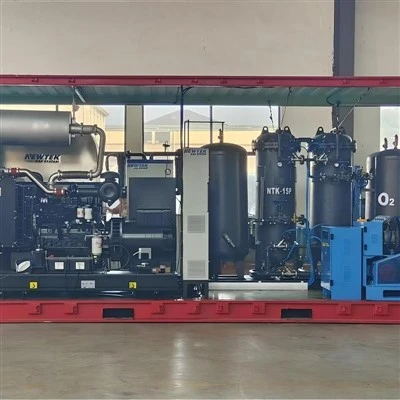
The global demand for reliable, on-site oxygen generation has never been more urgent. From rural healthcare clinics in the Philippines to high-altitude mining operations in Peru, industries and medical institutions worldwide are seeking oxygen solutions that combine efficiency, adaptability, and ease of deployment. Traditional oxygen supply chains-reliant on liquid oxygen bulk tanks or compressed gas cylinders-are increasingly exposed as fragile, expensive, and logistically cumbersome, particularly in remote or rapidly scaling environments. In this landscape, the emergence of compact, intelligent, and modularly expandable Pressure Swing Adsorption (PSA) technology represents a paradigm shift, and at the forefront of this innovation stands NEWTEK Group.
With over 9,000 installations worldwide and a comprehensive portfolio spanning cryogenic air separation units, PSA oxygen generators, and hybrid gas solutions, NEWTEK Group has established itself as a global leader in industrial and medical gas technology. The company's PSA oxygen generators, distinguished by their compact footprint, smart automation capabilities, and expandable modular architecture, are redefining how organizations secure oxygen independence. This article explores the technical foundations, design innovations, and real-world applications of NEWTEK's modular PSA technology, demonstrating why this approach is becoming the preferred solution for diverse oxygen generation needs across healthcare, industry, and emergency response sectors.
Understanding the PSA Technology Foundation
Pressure Swing Adsorption technology, first developed in the 1960s for industrial gas separation, has matured into one of the most efficient and versatile methods for producing medical-grade and industrial oxygen at the point of use. The fundamental principle relies on the differential adsorption characteristics of nitrogen and oxygen molecules when exposed to specialized zeolite molecular sieves under varying pressure conditions.
In a PSA oxygen generation system, ambient air is first drawn into a multi-stage purification system to remove oil, water vapor, dust, and carbon dioxide-impurities that would degrade molecular sieve performance and contaminate the final oxygen product. The purified air is then compressed to 4–8 bar(g) by a low-noise, energy-efficient air compressor. This pressurized air is directed into adsorption vessels filled with zeolite molecular sieves. Under pressure, the zeolite preferentially adsorbs nitrogen molecules while allowing oxygen molecules to pass through and collect as product gas. When the vessel becomes saturated with nitrogen, the system automatically switches to a second vessel while the first undergoes depressurization, releasing the adsorbed nitrogen through an exhaust valve. A small portion of the produced oxygen is used for reverse purge of the sieve, ensuring complete regeneration and maintaining long-term adsorption efficiency. This alternating pressure swing between vessels enables continuous oxygen production with minimal operator intervention.
Four Synchronized Automated Cycles:
Modern PSA systems achieve oxygen concentrations between 90% and 96%, meeting international pharmacopeia standards for medical oxygen and satisfying industrial requirements for welding, cutting, and chemical processing. The technology offers several inherent advantages that make it particularly suitable for decentralized deployment: it operates using freely available ambient air as the raw material, requires no hazardous chemical inputs, produces oxygen on-demand without storage limitations, and scales efficiently from small clinic units to large industrial installations. NEWTEK's PSA systems further enhance these fundamentals through advanced process optimization, intelligent control systems, and innovative modular architectures that transform traditional oxygen generation into a flexible, future-proof infrastructure investment.
The Compact Design Revolution
Space constraints represent one of the most persistent challenges in oxygen infrastructure planning. Urban hospitals with limited mechanical room space, rural clinics operating from converted buildings, industrial facilities where every square meter carries production value, and mobile deployment scenarios all demand oxygen generation systems that maximize output while minimizing footprint. NEWTEK's compact PSA oxygen generators directly address this challenge through a design philosophy that prioritizes spatial efficiency without compromising performance or reliability.
The compact design begins at the component level. NEWTEK employs high-efficiency compressors with variable frequency drives (VFD) that adjust output based on real-time oxygen demand, reducing energy consumption by up to 20% compared to fixed-speed compressors while occupying significantly less space than traditional industrial compressors. The adsorption vessels themselves are engineered with optimized internal geometries that maximize gas contact efficiency within minimized external dimensions. Integrated air handling systems consolidate filtration, drying, and purification functions into compact skid-mounted assemblies that eliminate the sprawling piping networks and separate equipment rooms required by conventional installations.
The spatial efficiency of NEWTEK's compact systems extends beyond mere dimensional reduction. By integrating all process components-air compressor, purification train, PSA adsorption modules, oxygen buffer tank, and distribution manifold-into unified, pre-engineered assemblies, these systems eliminate the interstitial spaces, access corridors, and redundant infrastructure that inflate the total installation footprint of traditional oxygen plants.
| System Output Sizing | Physical Enclosure Footprint | Operational Placement Equivalence |
|---|---|---|
| 5 Nm³/h (93% Purity) | 1200 × 800 × 1500 mm | Standard Office Filing Cabinet |
| 20 Nm³/h (High Flow Capacity) | 2000 × 1200 × 2000 mm | Industrial Mezzanines / ISO Containment Modules |
This compact architecture delivers transformative benefits for space-constrained applications. Small to mid-sized hospitals can install on-site oxygen generation without expensive building expansions or mechanical room renovations. Rural healthcare centers operating from limited facilities can achieve oxygen independence without sacrificing clinical space. Industrial facilities can position oxygen generation adjacent to consumption points, reducing pipeline lengths and pressure losses. Mobile medical units, disaster relief operations, and military field hospitals can transport complete oxygen plants within standard vehicle cargo areas, enabling rapid deployment to any location with basic electrical supply.
The compact design also facilitates installation efficiency. Pre-assembled skid units arrive at site ready for connection, requiring minimal civil works and reducing commissioning time by 50% compared to traditional installations. For medical applications, this rapid deployment capability means hospitals can transition from cylinder-dependent oxygen supply to autonomous on-site generation within days rather than months, minimizing disruption to clinical operations and accelerating the realization of cost savings and supply security benefits.
Smart Automation and Intelligent Control
The "smart" dimension of NEWTEK's PSA technology represents perhaps its most significant advancement over conventional oxygen generation systems. While traditional PSA units operate as fixed-capacity mechanical devices requiring constant manual oversight and adjustment, NEWTEK's intelligent systems function as adaptive, self-optimizing oxygen production platforms that respond dynamically to demand fluctuations, environmental conditions, and operational requirements.
At the core of this intelligence lies advanced PLC-based control architecture integrated with proprietary process optimization algorithms. The system continuously monitors multiple operational parameters-including oxygen purity, flow rate, pressure, temperature, humidity, and energy consumption-through high-precision sensors distributed throughout the process train. This real-time data feeds into control logic that automatically adjusts compressor speed, adsorption cycle timing, valve switching sequences, and purge ratios to maintain optimal performance under varying conditions.
The variable frequency drive (VFD) compressor control exemplifies this intelligent adaptation. Rather than operating at fixed speed regardless of actual oxygen demand, the compressor adjusts its output in real-time based on downstream consumption patterns. During periods of low demand-such as overnight hours in hospitals or shift changes in industrial facilities-the system reduces compressor speed, cutting energy consumption proportionally while maintaining oxygen purity and pressure. During surge demand events, the compressor ramps up immediately, ensuring uninterrupted supply without the lag times associated with starting fixed-speed compressors from standby. This demand-responsive operation typically achieves 20-30% energy savings compared to conventional fixed-capacity systems, with the additional benefit of reduced mechanical wear and extended compressor lifespan.
Oxygen purity monitoring constitutes another critical smart function. NEWTEK systems incorporate built-in oxygen analyzers that continuously verify product gas quality against programmed thresholds. If purity falls below 90%-the minimum acceptable level for medical applications-the system triggers audible and visual alarms, automatically initiates corrective actions such as extended purge cycles or reduced flow rates, and logs the event for maintenance review. This automated quality assurance eliminates the manual sampling and laboratory analysis procedures required by traditional systems, ensuring that every cubic meter of oxygen produced meets stringent medical and industrial standards without human intervention.
The smart capabilities extend to predictive maintenance and remote monitoring. NEWTEK's Wi-Ctrl remote intelligent monitoring system enables centralized technical teams to access real-time operational data from distributed installations worldwide. Equipment status, fault warnings, performance trends, and maintenance alerts are transmitted via secure internet connectivity to cloud-based management platforms. This connectivity enables proactive maintenance scheduling based on actual component condition rather than arbitrary time intervals, reducing unplanned downtime and optimizing spare parts inventory. For molecular sieve life prediction, the system analyzes adsorption cycle efficiency trends, humidity exposure history, and purge effectiveness to forecast replacement needs with accuracy exceeding 95%, allowing facilities to plan maintenance budgets and schedule sieve refreshing during convenient operational windows.
The noise management capabilities of NEWTEK's smart systems further demonstrate intelligent design. Medical environments require quiet operation, with noise levels ideally maintained below 65 dB at one meter distance. NEWTEK achieves this through a combination of low-noise compressor selection, soundproof cabin enclosures, and intelligent operating modes that reduce compressor speed during low-demand periods, cutting noise to as low as 45 dB in energy-saving mode. This acoustic performance makes the systems suitable for installation within hospital buildings, laboratories, and other noise-sensitive environments without requiring separate mechanical buildings or extensive sound attenuation infrastructure.
Expandable Modular Architecture
The modular design philosophy underlying NEWTEK's PSA oxygen generators represents the most transformative aspect of the technology, converting oxygen generation from a rigid, capacity-fixed infrastructure into a fluid, demand-responsive resource that grows organically with organizational needs. This architecture departs fundamentally from traditional twin-tower PSA systems, where capacity is determined at installation by fixed vessel dimensions and cannot be altered without complete system replacement.
NEWTEK's modular approach decomposes the oxygen generation process into standardized, interchangeable PSA modules, each containing optimized adsorption vessels, valve assemblies, and control interfaces. These modules function as independent oxygen production units that can be operated individually or connected in parallel to multiply total capacity. A facility beginning with modest oxygen needs might install a single module producing 5 Nm³/h. As demand grows-whether from hospital bed expansion, new industrial processes, or emergency surge requirements-additional identical modules can be added to the existing installation, increasing capacity in discrete increments without disrupting ongoing operations.
This expandable architecture delivers multiple strategic advantages. Capital expenditure is aligned with actual demand, eliminating the inefficiency of permanently oversized installations that consume excess energy and occupy unnecessary space during periods of low utilization. Facilities can initiate oxygen generation programs with minimal initial investment, demonstrating operational benefits and generating cost savings that fund subsequent capacity expansion. The modular approach also de-risks demand forecasting uncertainty-if actual oxygen consumption exceeds projections, capacity can be augmented within weeks rather than the months or years required for traditional system replacement.
The technical implementation of modular expansion is remarkably straightforward. NEWTEK's modular systems utilize unified components across the entire product range, meaning that spare parts, maintenance procedures, and operational expertise developed for initial modules apply directly to subsequent additions. The PLC control system automatically recognizes newly connected modules, reconfiguring cycle timing, flow distribution, and alarm parameters to accommodate the expanded array. No specialized skills or additional control hardware are required-facilities can adjust capacity simply by varying the number of PSA modules, with the system managing all operational complexities internally.
The modular architecture extends beyond mere capacity scaling to encompass configuration flexibility. For applications requiring oxygen cylinder filling, modular systems can be integrated with compact filling stations (CFP) that package produced oxygen into portable cylinders for distribution to satellite facilities or mobile medical units. For high-purity requirements, additional purification modules can be appended to standard PSA units to achieve 99% oxygen purity for specialized industrial or laboratory applications. For remote or off-grid deployments, modular power conditioning units can be added to integrate solar photovoltaic arrays, battery storage, and backup generators, achieving complete energy independence from unreliable electrical grids.
This configurability makes NEWTEK's modular systems uniquely suited to diverse and evolving operational environments. A Ghanaian mining client initially installed a 30,000 Nm³/h PSA system and subsequently expanded to 60,000 Nm³/h using NEWTEK's modular components, doubling capacity without disrupting ongoing operations or requiring new civil works. Philippine government hospitals have deployed modular systems that began serving general wards and expanded to support ICU oxygenation, surgical anesthesia, and emergency resuscitation as clinical programs matured. Industrial facilities have added modules seasonally to match production cycles, removing surplus capacity during low-demand periods to optimize energy consumption.
Real-World Applications and Deployment Scenarios
The versatility of NEWTEK's compact, smart, and expandable modular PSA technology manifests across an extraordinarily diverse range of applications, from life-critical medical care to precision industrial manufacturing and emergency humanitarian response.
In the medical sector, NEWTEK's PSA oxygen generators serve as the backbone of oxygen supply infrastructure for hospitals, clinics, and field medical units worldwide. The systems produce medical-grade oxygen meeting WHO, Ph. Eur., and USP standards for 90%–96% purity, with built-in oxygen analyzers and triple protection systems including real-time concentration monitoring, automatic high-temperature shutdown, and emergency oxygen supply via optional UPS power. For central hospital oxygen supply, modular systems scale from single-module installations serving 50-bed facilities to multi-module arrays supporting 500+ bed hospitals with integrated secondary decompression boxes and terminal oxygen pipe network systems. For high-altitude medical stations, specialized configurations optimize adsorption efficiency for low-pressure environments, ensuring oxygen concentration stability at elevations where traditional systems fail. For military medical units and disaster relief operations, containerized modular systems combine rapid deployment capability with integrated cylinder filling stations, enabling 30-minute quick-start operation and autonomous oxygen supply in environments where external logistics are impossible.
The industrial applications of NEWTEK's modular PSA technology are equally extensive. In the glass manufacturing industry, continuous oxygen supply supports combustion optimization, reducing fuel consumption and emissions while improving product quality. The modular approach allows glass plants to match oxygen capacity to furnace size and production schedule, expanding modules as production lines increase. In metal processing, oxygen supports oxyfuel cutting, welding, and steel refining operations, with modular systems providing the flexible capacity needed to match varying batch sizes and material specifications. In aquaculture, PSA-generated oxygen maintains dissolved oxygen levels in intensive recirculating aquaculture systems (RAS), with modular capacity adjustment enabling seasonal optimization-ramping up during summer months when high temperatures reduce water oxygen-holding capacity and decreasing output during winter when metabolic rates decline. In wastewater treatment, oxygen feeds biological processes that break down organic contaminants, with modular systems providing the scalable aeration capacity needed for treatment plant expansion and seasonal flow variation.
The containerized deployment format represents a particularly innovative application of NEWTEK's modular technology. By integrating complete oxygen generation, purification, compression, and distribution systems within standardized shipping containers, these self-contained plants can be transported by truck, rail, or ship to virtually any location with basic road access. The robust steel construction protects sensitive equipment during transit and provides structural integrity in challenging environmental conditions. Climate control systems maintain optimal operating temperatures across tropical humidity, desert heat, and high-altitude cold. This mobility enables rapid response to emerging needs-during disease outbreaks, containerized units can be deployed to epidemic hotspots within days; as rural health networks expand, systems can be repositioned to serve new facilities; when original locations achieve permanent infrastructure, mobile units transition to other underserved areas, maximizing capital investment utility across healthcare systems.
Sustainability and Environmental Responsibility
Environmental sustainability increasingly influences infrastructure investment decisions across all sectors, and NEWTEK's modular PSA oxygen generators offer compelling ecological advantages that align with global net-zero commitments and corporate sustainability objectives.
The primary environmental benefit derives from eliminating the carbon-intensive logistics of traditional oxygen supply chains. Cylinder-based and liquid oxygen delivery systems require continuous transportation by diesel trucks, with associated emissions from production facilities, refrigeration plants, and cylinder manufacturing. On-site PSA generation eliminates most transportation emissions, reducing the carbon footprint of oxygen supply by 60-80% compared to delivered oxygen over a ten-year operational period. When containerized systems are integrated with renewable energy sources-particularly solar photovoltaic arrays mounted on container roofs-the operational carbon footprint approaches zero, creating genuinely carbon-neutral oxygen supply for rural communities and remote industrial sites.
The energy efficiency of NEWTEK's smart control systems further enhances environmental performance. Demand-responsive compressor operation, optimized adsorption cycle timing, and intelligent purge ratio management collectively reduce energy consumption by 30% compared to traditional PSA systems and by 50% compared to liquid oxygen supply infrastructure. For a typical hospital consuming 50 Nm³/h of oxygen, this efficiency improvement translates to annual electricity savings of approximately 35,000 kWh-equivalent to reducing carbon emissions by 15-20 tons depending on regional grid composition.
Waste reduction represents another sustainability dimension. Compressed gas cylinders require periodic hydrostatic testing, replacement of damaged units, and eventual disposal of metal containers. PSA systems generate minimal material waste during operation, with zeolite molecular sieve material lasting 10-15 years before replacement and other components offering similar longevity. The modular architecture further supports sustainability by enabling component-level replacement rather than complete system disposal-when individual modules reach end-of-life, they can be refurbished or replaced while the remaining system continues operating, maximizing resource utilization and minimizing electronic waste. NEWTEK's commitment to environmental responsibility extends to material selection and manufacturing processes. The zeolite molecular sieves used in the systems are non-toxic and recyclable, while the exhaust gas-primarily nitrogen-releases harmlessly into the atmosphere with no harmful byproducts. The company's manufacturing facilities employ advanced welding and bending robots that improve production efficiency while reducing material waste and energy consumption. For clients seeking comprehensive carbon reduction strategies, NEWTEK offers integration with Carbon Capture, Utilization, and Storage (CCUS) systems, enabling industrial oxygen users to achieve net-zero operational emissions.
Economic Value and Total Cost of Ownership
The economic case for NEWTEK's modular PSA technology extends far beyond the initial equipment purchase, encompassing a comprehensive total cost of ownership analysis that demonstrates substantial long-term savings compared to traditional oxygen supply methods.
While the upfront capital investment in PSA equipment exceeds the cost of establishing cylinder-based supply, the operational economics dramatically favor on-site generation. For a typical medium-sized hospital consuming 100 Nm³/h of oxygen, delivered cylinder oxygen costs approximately $0.15-0.25 per cubic meter, including cylinder rental, delivery charges, and administrative overhead. Liquid oxygen bulk supply reduces this to approximately $0.08-0.12 per cubic meter but requires expensive cryogenic infrastructure and carries significant evaporative losses. NEWTEK's modular PSA generation, powered by grid electricity at average industrial rates, achieves production costs of $0.03-0.05 per cubic meter-a 60-80% reduction compared to delivered alternatives.
10-Year Cumulative Operating Expenditure (100 Nm³/h Sizing):
- Traditional Delivered Gas Cylinders: $1.3 Million – $2.2 Million
- Bulk Cryogenic Liquid Oxygen (LMO): $700,000 – $1.05 Million
- NEWTEK Modular PSA Generation: $260,000 – $440,000 (Direct electricity draw baseline)
Over a ten-year operational period, these cost differences compound into substantial savings. A hospital consuming 100 Nm³/h continuously (876,000 Nm³ annually) would spend approximately $1.3-2.2 million on cylinder oxygen or $700,000-1.05 million on liquid oxygen over ten years. The same consumption via NEWTEK modular PSA generation would cost approximately $260,000-440,000 in electricity, yielding cumulative savings of $1-1.8 million compared to cylinder supply and $440,000-790,000 compared to liquid oxygen. Even accounting for maintenance, sieve replacement, and component refurbishment, the total cost of ownership for modular PSA systems remains 50-70% lower than traditional supply methods over a fifteen-year equipment lifespan.
The modular architecture further enhances economic value through capacity-aligned investment. Traditional systems require sizing for projected peak demand, resulting in permanent overcapacity during normal operations and associated energy waste. Modular systems allow capacity to grow incrementally with actual demand, ensuring that capital is never invested in unused capacity and that energy consumption always matches actual production requirements. This demand-aligned economics is particularly valuable for growing facilities, seasonal operations, and applications with uncertain future demand trajectories.
Maintenance cost economics also favor the modular approach. PSA systems contain no moving parts within the adsorption modules, minimizing mechanical wear. Routine maintenance focuses on compressor servicing, filter replacement, and periodic valve inspection-tasks that can be performed by trained local technicians without specialized expertise. The unified component design across the product range simplifies spare parts inventory management, with identical valves, sensors, and control modules serving all system sizes. Remote monitoring capabilities reduce the frequency of on-site service visits, cutting maintenance labor costs by 40-50% compared to systems requiring constant physical oversight. For organizations seeking to minimize initial capital outlay, NEWTEK offers innovative financing mechanisms including lease arrangements and oxygen-as-a-service models. In these structures, NEWTEK installs and maintains the equipment while the client pays per cubic meter of oxygen consumed, converting capital expenditure to manageable operational costs and eliminating the budget barriers that prevent many facilities from achieving oxygen independence.
Future Trajectories and Technological Evolution
The modular PSA technology sector continues evolving rapidly, with emerging innovations that promise to further enhance the capabilities and applications of NEWTEK's systems. Several technological trajectories are particularly significant for future development.
Advances in zeolite materials research may yield next-generation adsorbents with improved nitrogen selectivity, enabling higher oxygen purity at reduced energy consumption or faster adsorption cycles that increase output from existing vessel dimensions. Lithium-based zeolite materials, already employed in NEWTEK's medical-grade systems, offer superior moisture resistance and extended lifespan compared to traditional sodium-based sieves, with operational lives exceeding 100,000 hours. Continued materials innovation could push these boundaries further, reducing replacement frequency and improving performance in challenging environments such as high-humidity tropical regions or high-altitude low-pressure locations.
Artificial intelligence and machine learning integration represents another transformative trajectory. While current NEWTEK systems employ PLC-based control with programmed optimization logic, future generations may incorporate self-learning algorithms that analyze historical operational data to predict demand patterns, preemptively adjust cycle parameters for anticipated conditions, and autonomously optimize performance based on multi-variable objectives including energy cost, purity maintenance, and component longevity. These AI-enhanced systems could achieve additional 10-15% efficiency improvements beyond current smart control capabilities while further reducing the need for human operator intervention.
Miniaturization trends may enable even smaller modular configurations suitable for individual point-of-care applications. Combined with continued solar power cost reductions and advances in battery energy storage, these ultra-compact systems could bring autonomous oxygen generation to community health posts, ambulances, and home care settings, completing the coverage expansion from central hospitals to every point of care in the healthcare network. For industrial applications, miniaturized modules could be integrated directly into production equipment, providing oxygen at the precise point of consumption without distribution infrastructure.
Digital health and Industry 4.0 integration creates opportunities for oxygen system data to inform broader operational management. Oxygen consumption patterns indicate production demand trends, equipment utilization rates, and potential process inefficiencies. When modular systems transmit operational data to enterprise resource planning systems, manufacturing execution systems, or health information platforms, this intelligence supports capacity planning, predictive maintenance scheduling, and performance optimization across organizational networks. NEWTEK's Wi-Ctrl remote monitoring platform provides the connectivity foundation for these integrations, with API interfaces enabling seamless data exchange with third-party management systems.
Hybrid technology configurations combining PSA with complementary gas separation methods may address emerging application requirements. For applications requiring both high-purity oxygen and nitrogen, integrated PSA systems could serve both needs from a single air compression infrastructure, maximizing capital efficiency. For ultra-high purity requirements exceeding PSA capabilities, modular PSA units could serve as pre-concentration stages feeding small cryogenic polishers, achieving 99.999% purity with dramatically reduced cryogenic plant size and energy consumption compared to standalone cryogenic systems. These hybrid approaches leverage the strengths of multiple technologies while maintaining the modularity and flexibility that define NEWTEK's design philosophy.
Conclusion
NEWTEK Group's compact, smart, and expandable modular PSA oxygen generation technology represents a convergence of mature gas separation science, innovative engineering design, and intelligent automation that directly addresses the most pressing challenges in contemporary oxygen supply.
Request Modular Plant Sizing
NEWTEK modular architectures are tailored to align precisely with your infrastructure load timelines. Submit your core process values:
- Target continuous flow (Nm³/h)
- Required gas purity (93% - 99%)
- Local site environment parameters
- Grid power metrics & stability
Gas Infrastructure Units
Interchangeable PSA Modules
Parallel parallel setups starting from 5 Nm³/h steps.
Integrated Skid Platforms
Pre-assembled systems maximizing space efficiency.
Wi-Ctrl Predictive Tracking
Cloud analytics offering >95% diagnostic precision.