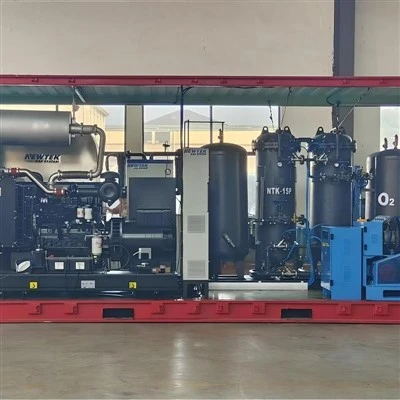
Modern mining operations depend on stable gas supply systems to support different production processes, including mineral oxidation, flotation, metal extraction, and combustion-related applications. As mining activities expand into remote regions, oxygen supply management becomes more complex due to transportation distance, storage requirements, and continuous operation demands.
Traditional oxygen supply methods often rely on external delivery systems, such as oxygen cylinders or liquid oxygen transportation. These methods require regular logistics planning, storage space, and additional safety management. For remote mining sites, transportation delays or supply interruptions may affect production schedules.
A PSA oxygen generation system provides an alternative approach by producing oxygen directly at the mining site. The system uses compressed air as the raw material and separates oxygen through pressure swing adsorption technology. By integrating air compression, air purification, adsorption separation, oxygen storage, and automatic control, PSA systems can be configured according to specific mining requirements, including oxygen purity, flow rate, pressure, and operating conditions.

The Role of Oxygen in Modern Mining Operations
Oxygen plays an important role in many mining and mineral processing procedures because it participates in chemical reactions and supports specific production processes. The required oxygen supply depends on the mineral characteristics, processing technology, production capacity, and operating environment.
In mineral extraction processes, oxygen may be introduced to support oxidation reactions that change the chemical properties of minerals. These reactions can influence the efficiency of subsequent separation or recovery stages. Because different minerals have different reaction characteristics, oxygen demand needs to be calculated according to actual production conditions.
Mining operators usually evaluate several factors before selecting an oxygen generation system:
- required oxygen purity;
- oxygen consumption rate;
- operating pressure;
- continuous operation time.
A properly configured PSA oxygen system should match the actual production process instead of using a fixed capacity model. This helps ensure that oxygen output corresponds with process requirements during normal and peak operating conditions.
Oxygen Requirements in Mineral Processing
Mineral processing involves multiple stages where oxygen supply can affect reaction conditions and processing efficiency. In some extraction procedures, oxygen is used to create a controlled oxidation environment that supports mineral treatment.
The oxygen requirement for these applications is influenced by:
- mineral composition and chemical characteristics;
- processing method;
- production volume;
- reaction conditions.
For example, different ore types may require different oxygen input levels because their chemical reactions and processing requirements are not the same. Engineers need to evaluate the complete production process before determining the required oxygen capacity.
An oversized oxygen system may increase equipment investment and energy consumption, while an undersized system may not provide sufficient gas during continuous production. Therefore, accurate oxygen demand calculation is an important step before system selection.
Oxygen Supply in Flotation and Metal Recovery
Flotation is a widely used mineral separation process that relies on the interaction between minerals, water, reagents, and air bubbles. Oxygen can influence the chemical environment inside flotation equipment by affecting oxidation-reduction conditions.
A stable oxygen supply helps maintain consistent operating parameters. When oxygen flow fluctuates, the processing conditions may change, affecting production control.
For flotation-related applications, mining companies usually consider:
- oxygen flow stability;
- gas distribution requirements;
- connection between oxygen supply and processing equipment;
- operating pressure requirements.
In metal recovery processes, oxygen may also be used to support oxidation-related procedures. The oxygen system needs to provide consistent gas quality and capacity according to the requirements of the specific production line.
How PSA Oxygen Generation Technology Works?
A PSA oxygen generation system produces oxygen by separating oxygen and nitrogen from compressed air. The separation process is based on the different adsorption characteristics of gases when they pass through molecular sieve materials.
The complete PSA oxygen generation process includes air compression, purification, adsorption separation, regeneration, and oxygen storage.
The general operating cycle includes:
compressed air enters the adsorption system;
molecular sieve materials selectively adsorb nitrogen;
oxygen-rich gas exits as the product gas;
adsorption towers regenerate through pressure reduction.
By repeating these cycles, the system continuously produces oxygen without requiring external oxygen transportation.
Compressed Air Preparation Before Oxygen Separation
Before oxygen separation begins, ambient air must be compressed and purified. The air preparation section directly affects the operating condition of the PSA system because contaminants may reduce adsorption performance.
The process normally includes:
The air compressor provides the pressure required for adsorption. The compressor capacity must match the oxygen production requirement because insufficient compressed air volume can affect system output.
Compressed air may contain oil particles, dust, and other impurities. Filtration equipment removes these contaminants before the air enters the adsorption towers.
Moisture control is also important because excessive water content may affect molecular sieve performance. Dry compressed air helps maintain stable adsorption cycles.
Through proper air treatment, the PSA system can maintain consistent separation performance during long-term operation.
Pressure Swing Adsorption and Molecular Sieve Operation
The core component of a PSA oxygen system is the adsorption tower filled with molecular sieve materials. These materials have selective adsorption characteristics that allow nitrogen molecules to be captured while oxygen passes through.
During operation, compressed air enters one adsorption tower under pressure. Nitrogen is retained by the molecular sieve, while oxygen-rich gas moves to the storage section.
After a certain operating period, the adsorption material reaches its working capacity. The system then reduces pressure to release the adsorbed nitrogen and restore the adsorption ability.
PSA systems normally use multiple adsorption towers working alternately. While one tower performs oxygen production, another tower completes regeneration. This cycle allows continuous oxygen output for mining applications.
Why Mining Companies Consider On-Site PSA Oxygen Generation?
Mining operations are often located in areas with limited infrastructure and long distances from industrial gas suppliers. Oxygen transportation can become a significant factor in production planning.
An on-site PSA oxygen generation system produces oxygen directly at the mining location using available air as the raw material. This approach allows operators to adjust oxygen production according to actual process requirements.
Compared with external oxygen delivery, on-site generation reduces the need for:
frequent oxygen transportation;
large storage areas;
delivery schedule coordination.
For mining companies, this can simplify oxygen supply management, especially in remote areas where transportation conditions may change.
How Does Compressed Air Quality Affect PSA Oxygen System Performance in Mining Applications?
Compressed air quality is a critical factor that affects the operating condition of a PSA oxygen generation system. Since the oxygen separation process depends on molecular sieve materials inside adsorption towers, the condition of the incoming compressed air directly influences adsorption efficiency, cycle stability, and long-term equipment operation.
Before compressed air enters the PSA adsorption units, it must pass through a complete air treatment process. The purification section typically includes air filters, oil separation components, and drying equipment to remove contaminants such as dust particles, oil mist, and moisture. These impurities may reduce the adsorption capability of molecular sieve materials if they accumulate inside the adsorption towers.
For mining applications, compressed air treatment becomes especially important because many mining sites operate under challenging environmental conditions. Dust exposure, temperature fluctuations, and continuous operating schedules may increase the requirements for air preparation equipment. The air compressor capacity, filtration accuracy, and moisture control system should be configured according to the actual installation environment.
When evaluating a PSA oxygen system, mining companies should consider not only oxygen production parameters but also the design of the compressed air treatment section. A properly configured air preparation system helps maintain stable adsorption cycles, protects key separation components, and supports continuous oxygen supply during long-term mining operations.
Key Factors for Selecting a PSA Oxygen System for Mining
Selecting a PSA oxygen system requires evaluation of both gas requirements and installation conditions. The system configuration should match the actual application environment.
| Parameter | Description |
|---|---|
| Oxygen Purity | Determines whether oxygen quality meets the process requirement |
| Oxygen Flow Rate | Defines the production capacity of the system |
| Outlet Pressure | Affects pipeline design and equipment connection |
| Operating Hours | Influences system sizing and maintenance planning |
| Installation Environment | Determines protection and configuration requirements |
Oxygen Purity Requirement
Different mining applications may require different oxygen purity levels. Buyers should determine purity requirements based on process conditions rather than selecting the highest available value.
The required oxygen purity affects system configuration, energy consumption, and operating parameters.
Oxygen Flow Capacity
Oxygen flow rate is one of the most important selection factors. Engineers need to consider production scale, equipment quantity, operating schedule, and peak oxygen demand.
Accurate calculation ensures that the system can provide sufficient oxygen during continuous operation.
Installation Conditions
The mining environment affects equipment design. Factors such as temperature range, dust level, altitude, available space, and maintenance access should be evaluated before installation.
What Buyers Should Confirm Before Ordering a PSA Oxygen System
Before purchasing a PSA oxygen generation system, mining companies should prepare detailed technical information to support accurate system configuration.
Important information includes:
oxygen purity requirement;
oxygen production capacity;
outlet pressure;
installation environment;
operating schedule;
power supply conditions.
About NEWTEK
NEWTEK provides PSA oxygen generation systems, PSA nitrogen generation systems, and compressed air purification systems for industrial applications requiring on-site gas production.
The company focuses on gas system configuration, equipment integration, and industrial gas generation technologies. By combining air treatment units, adsorption separation technology, storage equipment, and automatic control systems, NEWTEK develops gas generation systems for mining, wastewater treatment, aquaculture, and other industrial applications.