PSA oxygen used in glass manufacturing is normally specified by oxygen concentration, flow, outlet pressure, moisture content, and contaminant limits rather than by purity alone. In oxygen-enriched glass furnace combustion, oxygen concentration around 90–95% is commonly considered, but the required value depends on the burner arrangement, fuel, furnace temperature, oxygen injection rate, and whether oxygen is blended with combustion air or supplied as the main oxidant. The procurement specification should therefore connect oxygen purity with the actual furnace operating conditions instead of selecting the highest available concentration.
Why Does Glass Manufacturing Use PSA Oxygen?
A glass furnace burns fuel inside a combustion chamber to transfer heat to the glass batch and molten glass. When combustion air is supplied, nitrogen enters the furnace together with oxygen because atmospheric air contains a large nitrogen fraction. This nitrogen does not participate in combustion but is heated inside the furnace and leaves through the exhaust system.
A PSA oxygen generator separates oxygen from compressed air using molecular sieve adsorbent beds. During the adsorption stage, the molecular sieve preferentially retains nitrogen while the oxygen-enriched gas passes toward the product outlet. The generator then switches beds and regenerates the saturated adsorbent by reducing pressure. The resulting oxygen stream can be injected into burners or mixed with combustion air before entering the furnace.
The practical objective is therefore not simply to produce oxygen at a specified concentration. The system must deliver a controlled oxygen flow to the furnace while maintaining the pressure and gas composition required by the burner.
What Oxygen Purity Is Normally Considered for Glass Furnaces?
For oxygen-enriched combustion, PSA oxygen is commonly supplied in the approximate range of 90–95% O₂, depending on the PSA configuration and furnace application. This range should not be treated as a universal glass-industry standard because different furnace designs use different oxidizer compositions.
For example, a furnace using oxygen only to enrich combustion air may accept a different PSA oxygen concentration from an oxy-fuel furnace in which oxygen forms the primary oxidant. The same PSA product purity can also produce different combustion conditions when the oxygen flow rate and fuel flow are changed.
| PSA Oxygen Parameter | Engineering Consideration |
|---|---|
| Oxygen concentration | Defines the O₂ fraction entering the combustion system |
| Oxygen flow | Determines how much oxygen can be supplied to burners |
| Outlet pressure | Must match the oxygen piping, control valves, and burner inlet requirements |
| Moisture | Affects product-gas quality and downstream equipment conditions |
| Oil contamination | Must be controlled by compressor and filtration design |
| Particle contamination | Requires appropriate inlet and downstream filtration |
| Load variation | Determines generator capacity and buffer requirements |
| Oxygen monitoring | Detects concentration deviations during operation |
For procurement, the required specification should therefore state both oxygen concentration and oxygen delivery capacity. A purity figure without a flow requirement does not define the usable oxygen supply.
How Does Oxygen Purity Change Furnace Combustion?
Oxygen concentration changes the amount of nitrogen entering the combustion zone. When PSA oxygen replaces part of the combustion air, the oxidizer contains more oxygen and less nitrogen than ordinary air.
The furnace burner then receives a different gas composition at the same fuel input. This can change flame temperature, flame volume, exhaust-gas quantity, and heat-transfer conditions. The actual effect depends on the burner geometry, fuel type, oxygen injection position, and furnace operating temperature.
For example, if PSA oxygen is injected upstream of an air-fuel burner, the oxygen mixes with combustion air before reaching the flame zone. If oxygen is introduced through a dedicated oxygen lance or oxygen burner, the gas velocity, mixing pattern, and flame geometry are determined by the separate oxygen and fuel passages.
This distinction is important because 90% oxygen supplied through one burner configuration does not produce the same furnace condition as 90% oxygen supplied through another configuration.
What Impurities Need to Be Controlled in PSA Oxygen?
PSA oxygen is generated from atmospheric air, so the feed-air treatment system directly affects the condition of the oxygen product. The PSA unit normally receives compressed air after filtration, cooling, and moisture removal.
Nitrogen is the main component removed by the molecular sieve. Residual nitrogen and argon remain in the product stream and reduce the measured oxygen concentration.
The required residual level depends on the target oxygen concentration and the combustion process. The oxygen analyzer should continuously monitor product concentration rather than relying only on commissioning measurements.
Compressed air contains moisture. If water reaches the adsorption beds in excessive quantities, it can occupy adsorption sites and interfere with nitrogen separation.
The air-treatment section therefore normally includes an aftercooler, condensate removal, filters, and a suitable drying stage. The exact dew-point requirement depends on the PSA adsorbent and equipment design.
Oil from a lubricated compressor can enter the compressed-air line if separation and filtration are inadequate. Oil contamination can affect the molecular sieve and downstream oxygen equipment.
The compressor type, coalescing filters, activated-carbon filtration, and maintenance interval should therefore be specified together with the PSA system.
Dust and filter media particles can enter valves and adsorption vessels if inlet filtration is not maintained. Differential-pressure monitoring across filters can be used to identify filter loading before it restricts the air supply.
What Are the Main Components of a PSA Oxygen System for Glass Production?
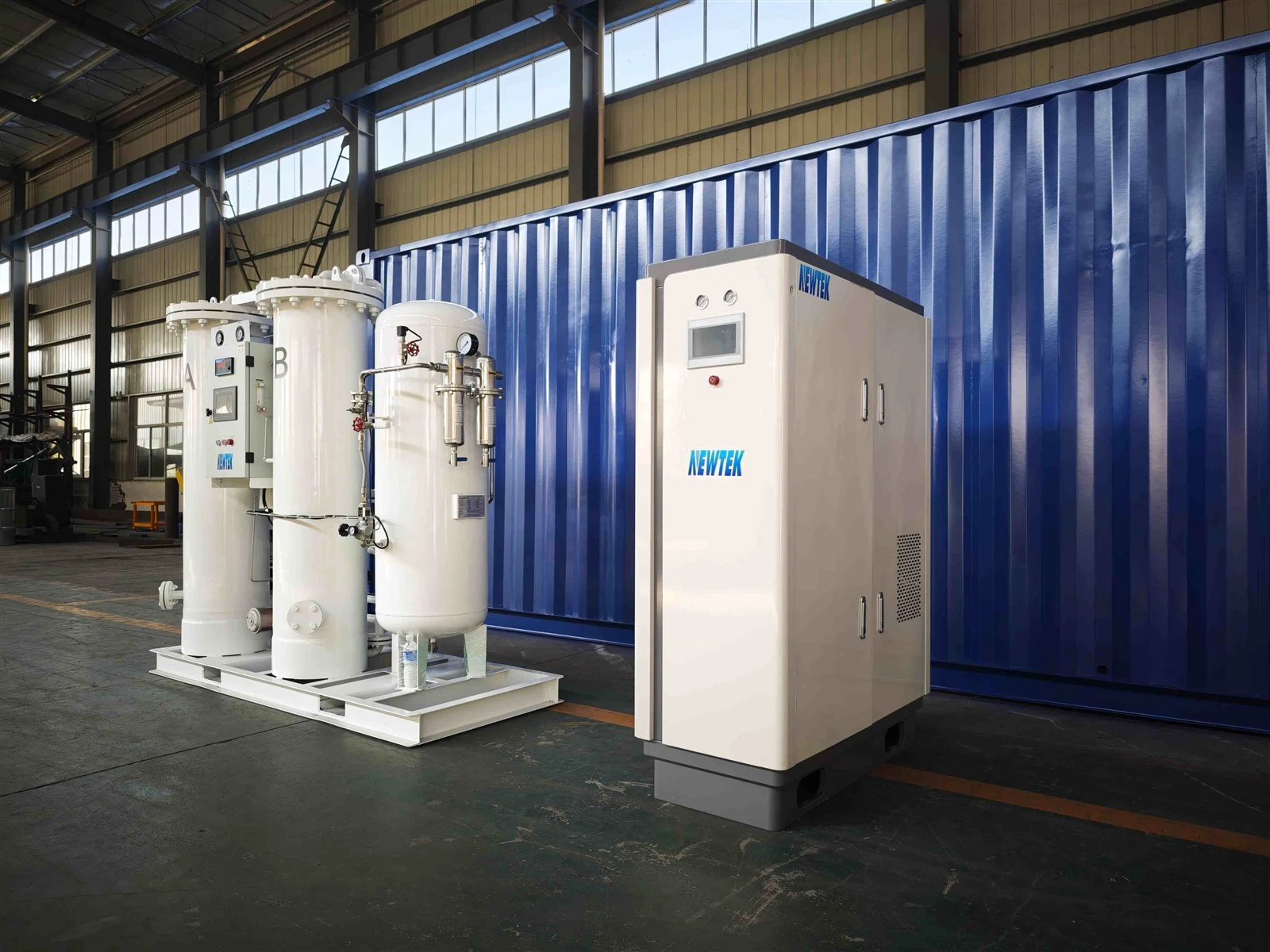
A PSA oxygen system is not a single separation vessel. It consists of several components that control feed-air treatment, adsorption, regeneration, oxygen storage, and product delivery.
The compressor supplies atmospheric air to the PSA system at the pressure required by the adsorption cycle. Compressor capacity must cover the PSA feed-air demand at the required operating pressure.
Filters, coolers, condensate separators, and dryers remove oil, liquid water, and particles before compressed air enters the adsorption vessels.
The adsorption vessels contain molecular sieve material that preferentially adsorbs nitrogen from compressed air. Oxygen-enriched gas passes through the bed toward the product side.
Automatic valves alternate the adsorption and regeneration stages between vessels. Valve timing determines the PSA cycle and therefore affects oxygen recovery and product concentration.
The buffer tank stores product oxygen and reduces short-term pressure and flow fluctuations between the PSA generator and furnace.
An oxygen analyzer measures the product-gas concentration. The control system can generate an alarm or change operating conditions when oxygen concentration falls outside the specified range.
Regulators, control valves, pressure transmitters, and flowmeters control oxygen delivery from the generator to the furnace distribution system.
How Does the PSA Oxygen Supply Connect to a Glass Furnace?
The oxygen supply route normally follows a sequence similar to:
Atmospheric air → compressor → filtration and drying → PSA adsorption beds → oxygen buffer → oxygen analyzer → pressure regulation → flow control → burner/oxygen injection system → glass furnace
Each section performs a different engineering function.
The compressor establishes feed-air pressure. Pretreatment removes contaminants. The PSA beds separate nitrogen from oxygen. The buffer tank stabilizes short-term demand changes. The analyzer verifies oxygen concentration. Pressure and flow controls then deliver the gas to the furnace at the required operating condition.
The oxygen pipeline should also be designed around the actual flow rate and pressure drop. Pipe diameter, valve size, fittings, and regulator capacity should not be selected only according to the PSA outlet connection.
How Should Glass Manufacturers Determine the Required PSA Oxygen Capacity?
Capacity should be calculated from the furnace's normal and peak oxygen demand.
A practical calculation should consider:
number of burners × oxygen demand per burner × operating load × peak-demand factor
The calculation should also account for production changes. A furnace may operate at one oxygen demand during normal melting and require a different flow during startup, production-rate changes, burner adjustment, or oxygen-enrichment operation.
If the PSA generator is sized only according to average consumption, the product oxygen concentration or outlet pressure may fall when the furnace reaches peak demand.
A buffer tank can reduce short-duration fluctuations, but it cannot compensate indefinitely for an undersized PSA generator. The generator capacity must therefore match the continuous oxygen requirement, while the storage volume handles short-term changes.
What Should Buyers Check Before Ordering a PSA Oxygen Generator for Glass?
A technical procurement specification should include the following information:
| Procurement Item | Information to Confirm |
|---|---|
| Furnace type | Regenerative, recuperative, oxy-fuel, or other configuration |
| Glass production rate | Normal and peak production |
| Oxygen purity | Required O₂ concentration and tolerance |
| Oxygen capacity | Normal and maximum Nm³/h |
| Oxygen pressure | Generator outlet and furnace inlet requirements |
| Fuel | Natural gas, LPG, oil, or another fuel |
| Burner configuration | Air-fuel, oxygen-enriched, oxygen-fuel, or mixed arrangement |
| Oxygen injection | Main oxidant, enrichment line, lance, or burner port |
| Feed-air quality | Oil, water, particle, and dew-point limits |
| Buffer volume | Required to absorb short-term demand changes |
| Monitoring | Oxygen concentration, pressure, flow, and alarms |
| Installation conditions | Ambient temperature, ventilation, available floor area, and utility connections |
| Maintenance | Filter replacement, valve inspection, analyzer calibration, and adsorbent service |
The furnace operator should provide these conditions before the PSA oxygen generator is sized. Otherwise, the supplier can only select equipment based on a nominal oxygen purity and estimated flow, which may not represent the actual furnace load.
Why Choose NEWTEK for PSA Oxygen Generator Manufacturing?
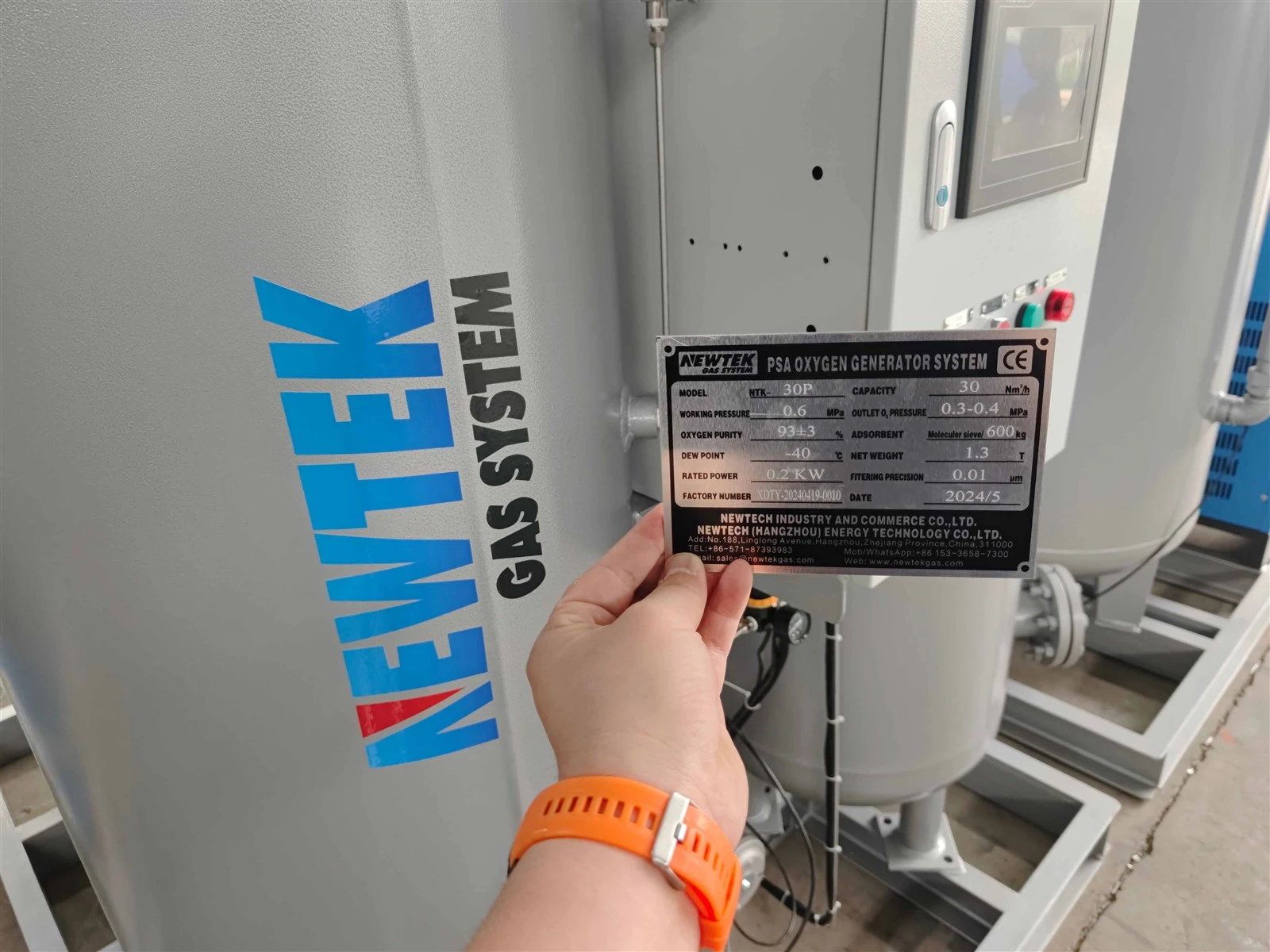
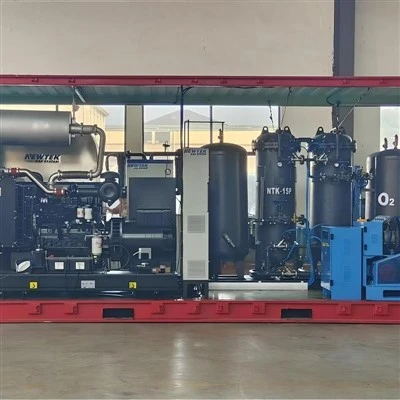
NEWTEK develops and supplies on-site gas generation equipment, including PSA Oxygen Generators, PSA Nitrogen Generators, Modular Oxygen Plants. This product range allows the gas-generation configuration to be selected according to required capacity, installation space, gas pressure, and operating conditions.
NEWTEK's project process covers technology research, engineering design, device fabrication, installation testing, and after-sales service. During equipment configuration, oxygen capacity, purity, discharge pressure, site temperature, humidity, and electrical conditions can be considered together with the PSA system design. Its published oxygen generator range is 1–300 Nm³/h, with oxygen purity listed at 93%±3%, adjustable oxygen pressure of 0.01–0.5 MPa, and an oxygen dew point of -40°C to -75°C atmospheric dew point.
For manufacturing and delivery, NEWTEK combines PSA adsorption equipment with air treatment, automatic valve switching, oxygen monitoring, pressure control, and system communication functions. Modbus, Profibus Fieldbus, and Ethernet communication options are available for connecting the gas-generation equipment with plant monitoring and control systems.