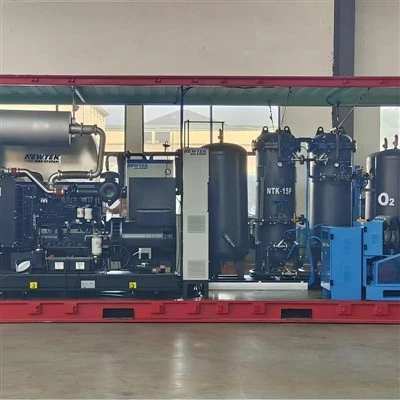
Mining operations often take place in demanding environments where oxygen supply, equipment reliability, and personnel safety directly affect production efficiency. From underground mine support activities to mineral processing, metal cutting, and smelting-related operations, oxygen may be required for specific industrial processes. A Pressure Swing Adsorption (PSA) oxygen generation system can provide an on-site source of oxygen, reducing dependence on delivered gas when the equipment is correctly designed, operated, and maintained.
However, oxygen is not a fuel, but it strongly supports combustion. Materials that burn slowly in normal air can ignite more easily and burn more intensely in oxygen-enriched environments. Oil, grease, combustible dust, contaminated clothing, and unsuitable equipment can all contribute to serious fire or ignition hazards. At mining sites, these risks may be compounded by confined spaces, heavy machinery, electrical installations, hot work, and difficult emergency access.
Understanding the safety rules for using PSA oxygen in mining sites is therefore essential for mine operators, engineering contractors, maintenance teams, and oxygen system suppliers. Safe operation requires more than installing a generator and connecting a pipeline. It depends on suitable equipment selection, controlled oxygen distribution, trained personnel, preventive maintenance, gas monitoring where necessary, and a documented emergency response plan.
Understand the Main Oxygen Hazards Before Operation
Before a PSA oxygen plant enters service, personnel should understand how oxygen behaves and why its presence changes the site's fire risk.
Oxygen enrichment increases combustion risk
Air normally contains approximately 20.9% oxygen. When the oxygen concentration in the surrounding atmosphere rises above normal levels, many combustible materials can ignite more readily, burn faster, and release more heat. Clothing, gloves, packaging, cable insulation, hydraulic fluid residues, and other materials may become significantly more hazardous in oxygen-enriched conditions.
Oxygen enrichment can occur when a pipeline leaks, a valve is left open, a hose becomes damaged, or oxygen is discharged into a poorly ventilated room. A small leak may not be immediately obvious because oxygen is colorless and odorless.
Mining sites should therefore treat oxygen leaks as potential fire hazards rather than relying on visible signs or smell to identify them.
Oxygen does not replace mine ventilation
An oxygen generation system is designed to supply oxygen for a defined industrial process. It is not a substitute for the mine's ventilation system, atmospheric monitoring, or emergency breathing equipment.
Underground mines can contain methane, carbon monoxide, hydrogen sulfide, and other hazardous gases, depending on the geology and mining method. Oxygen addition does not make an atmosphere safe for entry, and increasing oxygen concentration can increase combustion hazards where flammable gases or combustible materials are present.
Safety rule: Never use process oxygen to correct a suspected oxygen-deficient underground atmosphere or to support personnel breathing. Follow the mine's approved ventilation and respiratory protection procedures.
Oxygen purity and oxygen safety are different requirements
A PSA system separates oxygen from compressed air to produce an oxygen-enriched gas stream. Its actual oxygen purity depends on the equipment design, operating conditions, and specified output.
Meeting the required oxygen purity does not automatically make the system safe for every application. Pipeline cleanliness, operating pressure, materials compatibility, ventilation, leak prevention, and fire protection must also be addressed.
The oxygen purity and delivery pressure should be selected according to the intended process and the equipment manufacturer's specifications, rather than choosing a generator solely by its nominal production capacity.
Install the PSA Oxygen Plant in a Suitable Location
The installation location determines how effectively operators can control heat, ventilation, ignition sources, maintenance access, and emergency response.
Select a location with adequate ventilation
The oxygen generation area should have ventilation appropriate to the system's output, potential leakage, room size, and applicable fire-safety requirements. Ventilation helps prevent oxygen accumulation following an accidental release.
The plant should not be installed in an enclosed space without an engineering assessment of the potential leak rate and the required ventilation arrangements. Ventilation openings should remain unobstructed, and exhaust air should not be directed toward areas where personnel gather or combustible materials are stored.
Where oxygen equipment is installed in a containerized unit, the enclosure still requires suitable ventilation and access arrangements. A container exterior does not eliminate the need to control oxygen enrichment or equipment overheating.
Separate oxygen equipment from ignition hazards
The plant location should be evaluated against the mine's surrounding operations. Potential ignition sources include welding and cutting activities, hot surfaces, electrical faults, open flames, and equipment that can generate sparks.
Combustible materials should not be stored unnecessarily around oxygen equipment, valves, or pipeline connections. Where separation distances are required, they should be established through the project fire-risk assessment, applicable regulations, and equipment documentation.
In mining and mineral-processing facilities, the installation assessment should also consider dust accumulation, vibration, water ingress, corrosive atmospheres, and vehicle movements.
Provide safe access for inspection and emergency isolation
Operators need unobstructed access to the generator, compressors, filters, control panels, valves, and emergency shutoff points. Equipment should not be positioned where moving vehicles, falling objects, or routine material handling can damage oxygen pipelines.
Isolation valves should be clearly identified, accessible, and included in operating procedures. Emergency responders must be able to determine which valves control the oxygen supply without relying on trial and error.
Before commissioning, the installation team should verify that the equipment foundation, lifting arrangements, electrical supply, grounding, and environmental protection meet the manufacturer's requirements and applicable local standards.
Keep Oxygen Pipelines and Connections Clean
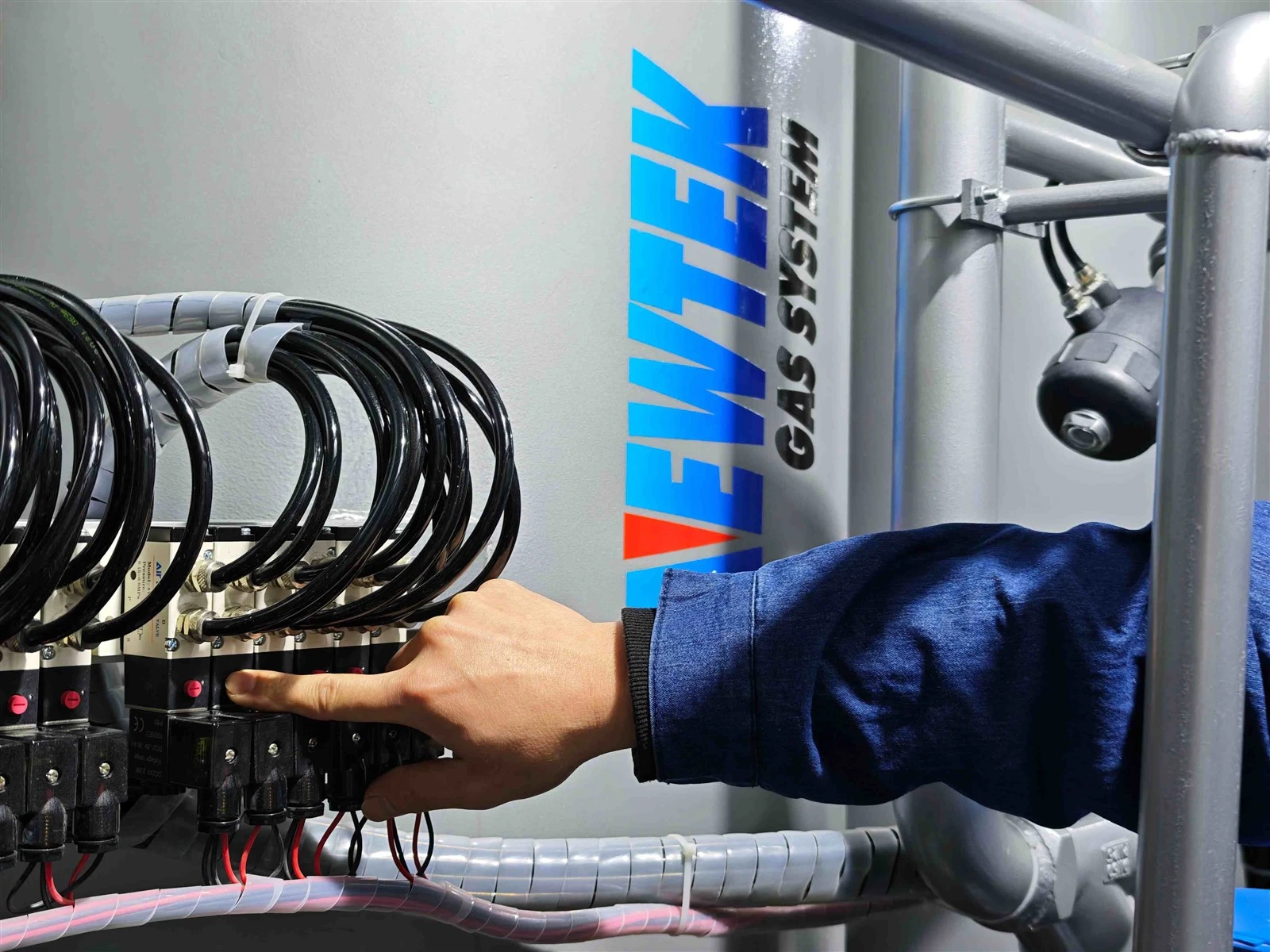
Oxygen pipeline safety is one of the most important aspects of operating a PSA oxygen generation system. Materials that are relatively harmless in ordinary air can ignite violently under certain oxygen-service conditions, particularly when exposed to elevated pressure, rapid pressurization, or contamination.
Prevent oil and grease contamination
Oil, grease, and other incompatible contaminants must be kept away from oxygen-contact surfaces. Under unsuitable conditions, these substances can react intensely with oxygen and create an ignition hazard.
Maintenance personnel should never apply ordinary lubricants to oxygen valves, regulators, fittings, or other oxygen-contact components unless the product is specifically approved for the intended oxygen-service conditions.
Cleaning agents, sealants, gaskets, and replacement parts should be selected according to the component manufacturer's oxygen-service specifications. Personnel must not assume that a product is suitable simply because it is commonly used in industrial compressed-air systems.
Use components rated for oxygen service
Pipes, valves, regulators, hoses, pressure gauges, seals, and connectors must be compatible with the intended oxygen purity, pressure, temperature, and operating conditions.
Components originally intended for general compressed air may not be appropriate for oxygen service. Material compatibility alone is not enough: design, cleanliness, pressure rating, assembly practices, and service history also matter.
Procurement specifications should clearly identify the intended oxygen service and require appropriate documentation from the supplier.
Prevent rapid pressurization
Rapidly opening a valve can create localized heating and increase the risk of ignition under certain conditions, particularly where contaminants or unsuitable materials are present.
Operators should follow the equipment manufacturer's specified valve-opening sequence and pressure ramp-up procedures. Valves should be operated in a controlled manner, and personnel should never improvise a pressurization procedure.
Before opening an oxygen line, confirm that downstream equipment is ready to receive oxygen, the relevant pressure ratings are correct, and the pipeline has been inspected and approved for service.
Inspect hoses, fittings, and pipeline supports
Routine inspections should identify:
Cracked, damaged, or deteriorated hoses.
Loose fittings, damaged threads, and leaking connections.
Corrosion, mechanical impact, or unsupported pipeline sections.
Signs of overheating, discoloration, or contamination.
Missing labels, damaged pressure gauges, and inaccessible isolation valves.
Damaged oxygen-service components should be removed from service and replaced or repaired under an approved procedure. Temporary repairs using unapproved tape, sealants, or improvised fittings should not be permitted.
Control Oxygen Leaks and Monitor the Atmosphere
Oxygen leakage can create a dangerous environment even when the generation equipment continues to operate normally. Leak prevention and detection should therefore form part of the mine's broader process-safety program.
Establish a leak inspection routine
Operators should inspect accessible pipeline joints, valve stems, flexible connections, pressure regulators, and equipment interfaces at defined intervals. Inspection frequency should reflect operating pressure, vibration, environmental exposure, maintenance history, and the consequences of failure.
Leak testing must use methods and materials approved for oxygen service. Personnel should never use an open flame to search for a leak.
If a leak is suspected, personnel should follow the site's emergency procedure, keep ignition sources away, isolate the affected section when safe to do so, and prevent unauthorized access.
Use oxygen monitoring where the risk assessment requires it
Fixed or portable oxygen monitors may be appropriate in enclosed equipment rooms, oxygen storage or distribution areas, or other locations where an accidental release could create an oxygen-enriched atmosphere.
Monitor selection should consider the intended measurement range, sensor response, environmental conditions, alarm requirements, calibration, and maintenance arrangements. Equipment designed only to detect oxygen deficiency may not provide adequate protection against oxygen enrichment unless its measurement range and alarm settings cover that hazard.
Alarm thresholds should be established by the responsible safety or engineering team in accordance with applicable regulations and the site's risk assessment. Monitoring equipment should be tested and maintained according to its manufacturer's instructions.
An oxygen monitor is not a replacement for ventilation, leak prevention, or safe operating procedures.
Treat alarms and unexplained pressure changes seriously
A sudden pressure drop, unusual oxygen consumption, repeated low-pressure alarms, or an unexpected change in generator performance may indicate a leak, a process fault, or abnormal downstream demand.
Operators should not respond by simply increasing the generator output or opening additional valves. The correct response is to investigate the cause, assess the affected area, and isolate equipment when necessary.
The site's operating procedure should specify who is authorized to investigate alarms, who can shut down the system, and who is responsible for approving a restart.
Keep Oxygen Away from Combustible Materials and Hot Work
Mining facilities commonly conduct welding, cutting, grinding, maintenance, and heavy equipment repair. These activities can create ignition sources close to oxygen pipelines or oxygen-consuming processes.
Apply strict hot-work controls
Welding, flame cutting, and grinding should be conducted under the mine's permit-to-work system where required. Before hot work begins, personnel should identify oxygen lines, assess potential leak points, remove or protect combustible materials, and establish suitable fire-watch arrangements.
If oxygen equipment or piping is within the affected work area, the responsible person should determine whether isolation, depressurization, or other protective measures are necessary. Work must not proceed until the required controls are verified.
Oxygen used for a cutting process must be supplied through equipment specifically designed and approved for that application. Operators should follow the cutting equipment manufacturer's procedures and the site's fire-prevention rules.
Never use oxygen for cleaning or ventilation
Compressed oxygen must not be used to blow dust from clothing, clean machinery, ventilate a work area, or accelerate the drying of equipment. Oxygen enrichment can make clothing and nearby combustible materials much easier to ignite.
Use approved compressed-air cleaning methods, industrial vacuum systems, or other suitable techniques according to the task and mine safety rules. In areas with combustible dust, cleaning methods must also address dust dispersion and ignition risks.
Keep clothing and personal protective equipment free of contamination
Workers handling oxygen equipment should avoid contact between oxygen-service components and oil-contaminated gloves, dirty rags, or greasy tools.
Clothing exposed to a significant oxygen release should be treated as a potential hazard. Personnel should move away from the release area, avoid ignition sources, and follow site procedures for allowing the clothing to return to normal atmospheric conditions before approaching hot work or other ignition sources.
Follow Safe Startup and Shutdown Procedures
A written startup and shutdown procedure reduces the risk of incorrect valve operation, abnormal pressure conditions, and unexpected oxygen release.
Pre-start inspection checklist
Before starting a PSA oxygen plant, the authorized operator should confirm that:
The installation has passed the required commissioning and inspection checks.
The compressed-air supply and pretreatment equipment are operating within specified limits.
Filters, drains, and other service items are in their required condition.
Oxygen pipelines and downstream equipment are approved for service and correctly connected.
Pressure gauges, control instruments, alarms, and protective devices are functioning.
Emergency isolation valves are accessible and correctly identified.
Ventilation is operating as required.
There are no known oxygen leaks or unauthorized maintenance activities.
The intended process is ready to receive oxygen within its specified pressure and flow range.
Required personnel are present and aware of the operating status.
The manufacturer's startup sequence should always take precedence over a generic checklist where equipment-specific instructions differ.
Monitor operating parameters after startup
During operation, personnel should monitor the parameters identified in the plant's operating manual. These commonly include oxygen purity, delivery pressure, output flow, compressor condition, temperatures, alarms, and the status of air-treatment equipment.
Unexpected changes should be investigated before the system is allowed to continue operating under potentially unsafe conditions. Oxygen purity outside the process specification may require the supply to be diverted, isolated, or otherwise managed according to the manufacturer's procedure and the downstream process requirements.
The control system should not be bypassed simply to maintain production.
Shut down in a controlled manner
Normal shutdown should follow the approved sequence for the generator and downstream process. Emergency shutdown procedures should define when to stop oxygen production, when to close isolation valves, and how to manage residual pressure.
The correct sequence depends on the equipment design and connected process. Personnel should not assume that switching off the generator alone isolates the entire oxygen distribution network.
After shutdown, verify the condition of the system before maintenance, disconnection, or recommissioning begins.
Apply Lockout/Tagout Before Maintenance
PSA oxygen systems typically include electrical equipment, compressed-air machinery, pressurized vessels or piping, and control components. Maintenance can expose personnel to electrical energy, stored pressure, moving machinery, and unexpected oxygen release.
Isolate all relevant energy sources
Before maintenance begins, personnel should identify and isolate the energy sources associated with the task. These may include electrical power, compressed air, oxygen pressure, pneumatic actuators, rotating machinery, and other connected process systems.
The site's lockout/tagout (LOTO) procedure should identify the isolation points, the responsible authorized workers, and the method for verifying that equipment is in a safe condition.
Stopping a compressor or switching off a control panel does not necessarily eliminate stored energy. Pressure must be relieved using the approved procedure, and zero-energy conditions must be verified before work proceeds.
Prevent accidental oxygen release
Where maintenance involves oxygen-contact components, the affected section should be isolated and depressurized as specified by the equipment manufacturer and the site's procedure. Personnel must confirm that connected systems cannot reintroduce pressure or oxygen during the work.
Components should not be dismantled while pressurized. If a task requires special oxygen-service cleaning or reassembly, it should be performed by qualified personnel using approved materials and documented methods.
Verify the system before returning it to service
Following maintenance, check that tools, temporary fittings, and materials have been removed; connections have been correctly assembled; and required inspection and testing have been completed.
Oxygen-contact components must be kept clean and protected from contamination during assembly. Before reintroducing oxygen, verify the correct valve positions, downstream readiness, and the required leak-test results.
Only authorized personnel should approve the return to service.
Manage Oxygen Storage and Distribution Pressure
Some mining applications need an oxygen buffer or downstream storage arrangement to accommodate short-term changes in demand. The appropriate configuration depends on the process, required flow, operating pressure, and continuity requirements.
Where oxygen is stored under pressure, the storage equipment and associated piping must be designed and maintained for the intended service.
Protect pressure equipment
Pressure vessels, cylinders, regulators, and associated valves should comply with applicable regulations and be inspected at the required intervals. Operators should never exceed the rated working pressure of any component.
Pressure-relief devices must be suitable for the service, correctly installed, and maintained according to the equipment documentation. Their discharge arrangements should be assessed to prevent oxygen release into hazardous or poorly ventilated locations.
Unauthorized adjustment or disabling of pressure-relief devices is unacceptable.
Secure cylinders and control handling
If backup oxygen cylinders are used, they should be secured against falling, impact, and unauthorized movement. Cylinder valves should be protected as required during transport and storage, and oxygen cylinders should be clearly identified.
Cylinders must be kept away from excessive heat and protected from mechanical damage. Oxygen cylinders should not be handled with oily gloves or contaminated tools, and valve connections should be compatible with the intended oxygen service.
Storage areas should be managed according to local fire codes and applicable requirements for compressed-gas storage.
Avoid uncontrolled pressure fluctuations
Sudden changes in downstream demand can affect system pressure and process performance. A properly engineered distribution arrangement may use pressure regulation, buffer capacity, alarms, and automatic controls to maintain the required supply conditions.
Operators should not compensate for pressure instability by repeatedly opening valves or adjusting regulators outside the approved procedure. Persistent fluctuations require an engineering assessment of generator capacity, piping losses, demand variation, and control settings.
Consider Mining-Specific Environmental and Operational Risks
Mining sites expose industrial equipment to conditions that differ from many conventional factory environments. A safety plan should account for these conditions when selecting and operating an oxygen generation system.
Dust and contamination
Dust can accumulate on cooling surfaces, electrical cabinets, filters, and moving equipment. Excessive accumulation may contribute to overheating, reduced cooling performance, or electrical faults.
The maintenance plan should specify suitable cleaning methods and inspection intervals. Where combustible dust is present, cleaning must not create a dust cloud or introduce an ignition source. The plant's electrical and mechanical protection should be suitable for the assessed environment.
Vibration and mechanical damage
Heavy vehicles, blasting-related vibration, material handling, and uneven foundations may affect equipment and pipeline integrity.
The installation should use suitable supports and protective arrangements to reduce the likelihood of mechanical damage. Flexible connections, where specified by the design, must be rated for oxygen service and inspected for deterioration.
After a significant impact, abnormal vibration event, or suspected structural movement, the affected equipment should be inspected before normal operation resumes.
Temperature, humidity, and corrosion
Ambient temperature and humidity can influence compressor performance, cooling, air pretreatment, and the operating conditions of the PSA system. Corrosive atmospheres may also affect enclosures, supports, electrical connections, and pipelines.
Equipment selection should account for the actual site environment, including the expected temperature range, dust exposure, moisture, altitude where relevant, and the available maintenance infrastructure.
A system intended for a sheltered industrial building may require additional environmental protection before it can be used safely at a remote mining site.
Underground installation requires additional review
Installing oxygen-generation equipment underground introduces specific issues involving access, ventilation, electrical protection, hazardous-area classification, and emergency evacuation.
The equipment must not be installed underground merely because its dimensions fit the available space. The mine's engineering and safety teams must determine whether the proposed location, oxygen distribution method, and emergency arrangements comply with applicable mining regulations.
Where the process can be located in a suitable surface facility, the design team should evaluate that option against the operational and safety requirements. Any underground installation should undergo a site-specific engineering and risk assessment before approval.
Train Personnel and Restrict Unauthorized Access
Even a well-designed oxygen system can become unsafe when operators lack training or when unauthorized personnel alter the equipment.
Training should cover the system's intended use, normal operating limits, startup and shutdown procedures, alarm interpretation, leak response, isolation points, and maintenance restrictions.
Personnel should understand that oxygen enrichment may not be detectable by human senses. They should also know that oxygen is not itself a fuel, but it can make fires start more easily and burn more intensely.
Only qualified and authorized personnel should adjust control parameters, modify pipeline arrangements, service oxygen-contact components, or approve repairs. Contractors should receive site-specific induction before working near oxygen equipment.
Training should be refreshed after significant equipment modifications, changes in operating procedures, or incidents that reveal gaps in the existing system.
Operating instructions, pipeline diagrams, emergency contacts, and isolation procedures should be available at appropriate locations. Labels should identify oxygen service, flow direction where relevant, pressure hazards, and emergency isolation points.
Prepare a Clear Emergency Response Plan
Mining operations must be prepared for oxygen leaks, fires, equipment failures, and related emergencies. A written plan should define immediate actions, communication responsibilities, isolation procedures, evacuation arrangements, and the conditions required before work can resume.
Response to a suspected oxygen leak
When an oxygen leak is suspected:
Warn personnel in the affected area and follow the site's emergency notification procedure.
Keep flames, sparks, smoking materials, and other ignition sources away from the suspected release.
Do not operate equipment or perform repairs that could create an ignition source in an oxygen-enriched atmosphere.
Isolate the affected supply remotely or from a safe location when the approved procedure allows it.
Restrict access until the area has been assessed and declared safe by authorized personnel.
Use suitable atmospheric monitoring and ventilation measures as specified by the emergency plan.
Investigate the cause and obtain the required inspection and authorization before restarting the system.
Personnel should not enter a hazardous area to close a valve if doing so would expose them to unacceptable risk.
Response to a fire
If a fire occurs near oxygen equipment, activate the mine's emergency response procedure and notify the designated response team. The oxygen supply should be isolated when this can be done safely and in accordance with the emergency plan.
Emergency responders must be informed that oxygen equipment or pressurized oxygen lines are involved. Firefighting methods should be selected by trained responders according to the materials burning, the site conditions, and the applicable emergency procedures.
The area should not be returned to service until the cause has been investigated and the damaged equipment, pipelines, and protective systems have been assessed.
Investigate incidents and near misses
A small leak, abnormal pressure event, damaged hose, or unexpected alarm should be treated as a learning opportunity rather than ignored because no injury occurred.
Incident investigations should identify the direct cause, contributing conditions, failed safeguards, and corrective actions. Findings should be used to improve inspection routines, operating procedures, training, and equipment design.
Use Preventive Maintenance to Reduce Safety Risks
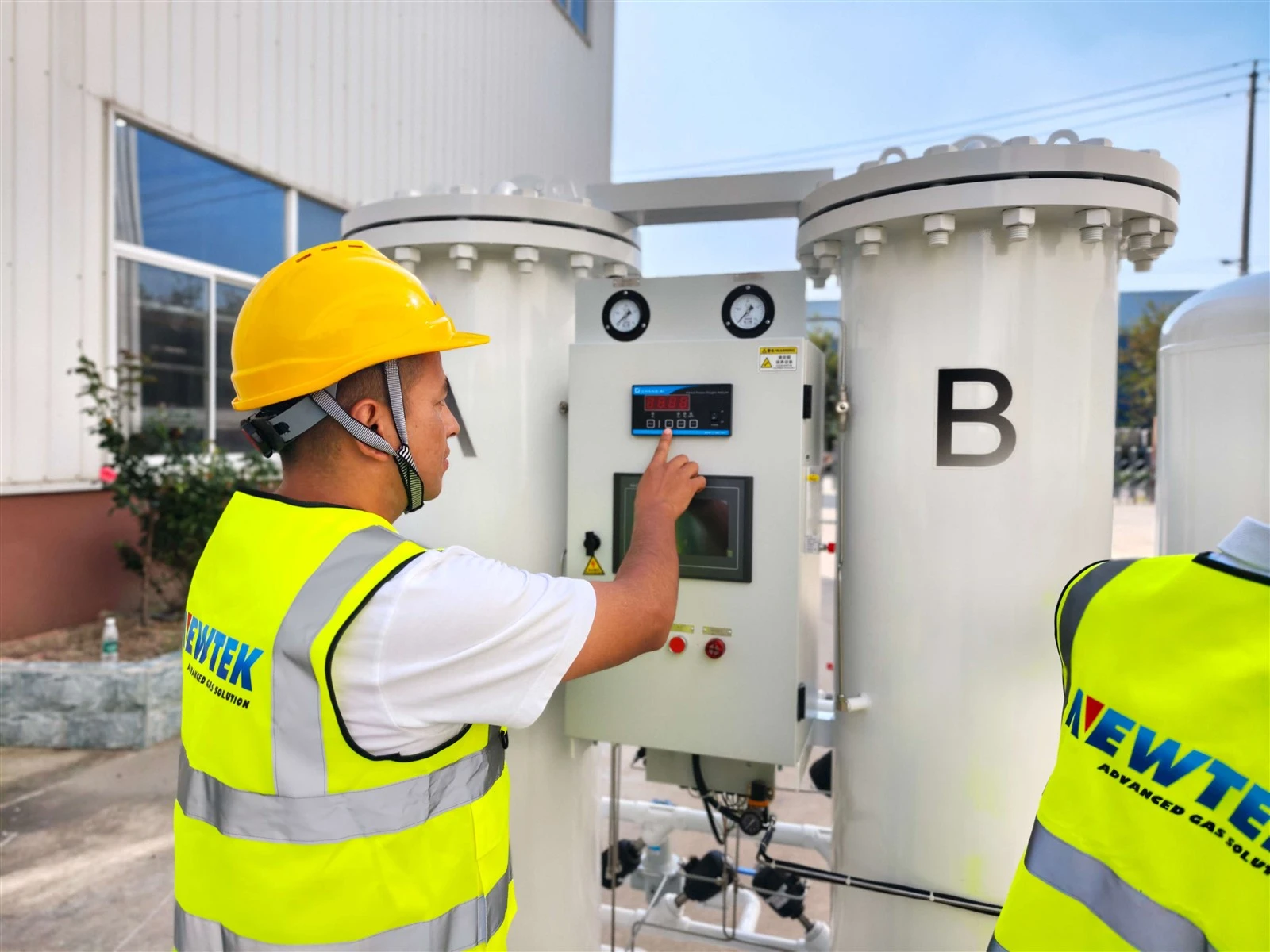
Preventive maintenance helps preserve oxygen purity, system performance, and the integrity of the equipment. A maintenance program should be based on the manufacturer's instructions, operating hours, site conditions, failure history, and applicable statutory inspection requirements.
| Equipment or component | Safety-related inspection focus | Typical control measure |
|---|---|---|
| Air compressor | Abnormal noise, vibration, temperature, and lubrication condition | Follow the compressor manufacturer's maintenance schedule |
| Air pretreatment filters and dryers | Filter condition, moisture removal, pressure drop, and drain function | Replace or service components according to specified limits |
| PSA adsorption and valve system | Abnormal cycling, valve faults, and performance changes | Inspect and service according to the equipment manual |
| Oxygen analyzer | Measurement accuracy, sensor condition, and alarm function | Perform scheduled verification or calibration |
| Oxygen pipelines and fittings | Leaks, contamination, corrosion, and mechanical damage | Inspect using approved oxygen-service procedures |
| Regulators and pressure instruments | Abnormal readings, damage, and pressure-control performance | Verify operation and replace defective components |
| Ventilation and oxygen monitors | Airflow, sensor response, alarms, and maintenance status | Test and maintain according to the risk assessment |
| Electrical control system | Overheating, damaged wiring, grounding, and alarm faults | Inspect through qualified personnel |
| Emergency isolation devices | Accessibility, identification, and operating condition | Conduct approved functional checks |
The exact maintenance interval should be established for the equipment and site. A generic schedule cannot replace manufacturer recommendations or legal inspection requirements.
Maintenance records should include inspection dates, findings, replaced components, calibration results, corrective actions, and authorization to return equipment to service. Repeated failures should trigger a review of the underlying design or operating conditions rather than relying only on repeated component replacement.
Select the Right PSA Oxygen System for Mining Applications
Safety begins during project planning. A system that is undersized, installed in an unsuitable location, or poorly matched to the process may create unnecessary operating pressure and maintenance demands.
Define the actual oxygen demand
The project team should identify the required oxygen flow, purity, delivery pressure, operating hours, and expected variation in demand. The calculation should account for normal consumption, peak demand, process interruptions, and any required standby capacity.
The rated output of the generator should not be treated as the amount of oxygen guaranteed under every site condition. Performance may depend on inlet air conditions, operating pressure, ambient temperature, and other specified parameters.
The supplier should provide the relevant performance data and clearly identify the operating conditions associated with the stated capacity.
Assess the complete system, not only the generator
The installation may include an air compressor, air-treatment equipment, PSA oxygen generator, oxygen analyzer, control panel, pressure regulation, storage equipment, and distribution pipelines.
Each component must be suitable for the intended service. The project specification should define the responsibilities of the generator supplier, installation contractor, and mine operator for oxygen piping, electrical work, commissioning, training, and maintenance.
For remote mining sites, spare-parts availability, service access, operator training, and the ability to diagnose faults are also important safety considerations.
Require documented commissioning and acceptance tests
Before routine operation, the system should undergo commissioning checks appropriate to its design. These may include verification of installation, pipeline cleanliness, leak testing, pressure testing where applicable, instrument calibration, alarm testing, control-system checks, and confirmation of output performance.
Testing procedures must be suitable for oxygen service and performed by qualified personnel. Any test that could introduce contamination or damage oxygen-contact components should be avoided.
The handover documentation should include operating limits, approved startup and shutdown procedures, maintenance requirements, equipment drawings, component specifications, emergency contacts, and records of completed commissioning tests.
Practical Daily Safety Checklist for Mine Operators
A short daily checklist helps operators identify developing problems before they result in an incident. It should supplement, rather than replace, formal inspection and maintenance procedures.
Before operation, confirm that:
The plant area is clean, adequately ventilated, and free of unnecessary combustible materials.
Oxygen pipelines, hoses, and fittings show no visible signs of damage or leakage.
Pressure readings and oxygen purity are within the specified operating limits.
The compressor, air-treatment equipment, and PSA system show no abnormal alarms.
Oxygen monitors and other required safety devices are available and in their required operating condition.
Emergency isolation valves and access routes are unobstructed.
No unauthorized modifications or maintenance activities are in progress.
Operators understand the expected process demand and the approved shutdown procedure.
During operation, monitor system performance and report unusual pressure changes, abnormal sounds, overheating, or repeated alarms. At the end of the operating period, follow the approved shutdown or standby procedure and record any abnormal conditions for follow-up.
If any condition could affect safe operation, the responsible person should assess the risk before continuing. Production targets should never take priority over the site's approved safety controls.
FAQ
Is PSA oxygen safe to use at a mining site?
A PSA oxygen system can be used safely when it is correctly selected, installed, operated, and maintained for the intended application. Safe use requires oxygen-compatible components, controlled distribution pressure, leak prevention, suitable ventilation, trained personnel, and emergency procedures. A site-specific risk assessment is necessary, especially in underground or hazardous areas.
Can oxygen leaks cause a fire even if there is no flame nearby?
An oxygen leak does not necessarily start a fire by itself, because oxygen is not a fuel. However, oxygen enrichment makes many materials easier to ignite and can cause an existing fire to burn more intensely. Ignition sources such as hot surfaces, electrical faults, sparks, and hot work can become significantly more dangerous in an oxygen-enriched environment.
Can ordinary compressed-air hoses be used for oxygen?
Not unless the specific hose and its connections are approved for the intended oxygen service and operating conditions. General compressed-air equipment may have unsuitable materials, contamination, pressure ratings, or cleanliness levels. All oxygen-contact components should be selected and maintained according to the manufacturer's oxygen-service requirements.
Does a high oxygen purity guarantee safe operation?
No. Oxygen purity is only one performance parameter. Safe operation also depends on pressure control, pipeline cleanliness, component compatibility, leak prevention, ventilation, equipment condition, and operator training. A system can meet its purity specification and still present serious hazards if these controls are inadequate.
How often should a mining oxygen generation system be inspected?
Inspection frequency depends on the equipment manufacturer's recommendations, site conditions, operating hours, legal requirements, and the consequences of failure. Operators should carry out routine operational checks, while qualified personnel perform scheduled maintenance, instrument verification, and formal inspections at the specified intervals. Any abnormal event may require an additional inspection before restart.
What should operators do if oxygen purity or delivery pressure becomes unstable?
They should follow the approved alarm and abnormal-operation procedure, assess the effect on the downstream process, and investigate the cause. Potential causes include changes in demand, equipment faults, air-treatment problems, instrument errors, or pipeline leakage. Operators should not bypass protective controls or adjust operating parameters beyond their authorization simply to maintain production.
Can a PSA oxygen plant be installed underground?
That depends on the mine's regulations, equipment design, ventilation, electrical protection, access, and emergency arrangements. Underground installation requires a site-specific engineering and safety assessment. The decision should consider not only whether the equipment fits physically, but also whether the location and distribution system can be operated and maintained safely.
Conclusion
Using PSA oxygen at mining sites requires a systematic approach to fire prevention, pressure control, equipment integrity, personnel training, and emergency preparedness. The central safety principle is that oxygen enrichment changes the behavior of combustible materials, making leaks, contamination, and uncontrolled releases potentially serious hazards.
Mining operators should establish clear installation requirements, use components approved for oxygen service, inspect pipelines and connections, maintain ventilation and monitoring systems where required, and enforce safe startup, shutdown, and maintenance procedures. Preventive maintenance, documented commissioning, and regular operator training help ensure that protective measures remain effective throughout the system's service life.
For mining projects, the safest approach is to evaluate the complete oxygen supply arrangement-from compressed-air preparation and PSA generation to storage, pressure regulation, and the point of use. Matching the equipment to the actual process demand and the site's environmental conditions reduces avoidable risks while supporting consistent operation. A properly engineered system, combined with disciplined operating practices and a site-specific risk assessment, provides the foundation for responsible oxygen use in demanding mining environments.