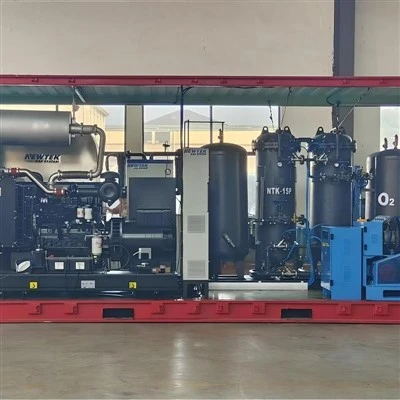
The integration of zeolite in Pressure Swing Adsorption (PSA) generators has revolutionized gas separation technologies, particularly in industrial and medical applications. NEWTEK , a leading developer of advanced gas separation solutions, specializes in leveraging zeolite's unique properties to optimize PSA performance. This article explores how zeolite enhances PSA efficiency, addresses technical challenges, and drives innovation in gas purification. By combining scientific principles with NEWTEK's proprietary formulations, we provide a comprehensive analysis of zeolite's role in modern PSA systems.
Core Principles of PSA Technology
PSA generators rely on adsorption-desorption cycles to separate gases from air or other mixtures. Key components include:
Adsorption Towers: Contain zeolite or other adsorbents to trap target gases.
Pressure Cycling: Alternating high-pressure adsorption and low-pressure desorption phases.
Valve System: Controls gas flow between towers for continuous operation.
Zeolite's role in this process is critical: it selectively adsorbs certain gases (e.g., nitrogen, carbon dioxide) while allowing others (e.g., oxygen) to pass through. This selectivity is determined by zeolite's microporous structure and ion-exchange capacity .

What Is Zeolite?
Zeolites are hydrated aluminosilicate minerals with a crystalline structure containing interconnected pores. Their unique properties include:
High Surface Area: Up to 800 m²/g, enabling efficient gas adsorption .
Molecular Sieving: Pores of uniform size (0.3–1.0 nm) allow only specific molecules to enter .
Thermal Stability: Resist temperatures up to 500°C, making them suitable for harsh environments .
Common zeolite types used in PSA include 13X, 5A, and LiX. For example:
13X Zeolite: Widely used for oxygen generation due to its high nitrogen adsorption capacity.
LiX Zeolite: Offers superior oxygen purity (95–99%) in medical applications .
NEWTEK's zeolite formulations are engineered for optimal adsorption kinetics and longevity, ensuring consistent performance across diverse operating conditions.
How Zeolite Enhances PSA Performance
Zeolite improves PSA efficiency through three primary mechanisms:
a. Selective Gas Adsorption
Zeolite's micropores selectively trap smaller gas molecules (e.g., nitrogen) while allowing larger ones (e.g., oxygen) to pass. For instance, in oxygen generation:
Nitrogen Adsorption: 13X zeolite adsorbs nitrogen at high pressure, leaving oxygen as the product gas.
Desorption: Reducing pressure releases nitrogen, regenerating the zeolite for the next cycle .
b. High Adsorption Capacity
Zeolite can adsorb up to 25% of its weight in gases, far exceeding traditional adsorbents like activated carbon. This allows PSA systems to operate with smaller adsorption towers and lower energy consumption .
c. Fast Adsorption Kinetics
Zeolite achieves equilibrium adsorption within seconds, enabling rapid pressure cycling and continuous gas production. This is critical for applications requiring high flow rates, such as industrial oxygen plants .
Technical Challenges and Solutions
While zeolite offers significant advantages, its use in PSA faces challenges:
a. Moisture Sensitivity
Water vapor can compete with target gases for adsorption sites, reducing efficiency. NEWTEK addresses this by:
Pre-Drying Systems: Integrating desiccant filters to remove moisture before air enters the PSA tower.
Hydrophobic Zeolite Coatings: Applying specialized treatments to repel water while maintaining gas adsorption capacity .
b. Mechanical Stress
Repeated pressure cycling can cause zeolite particles to fracture, reducing bed permeability. NEWTEK's high-strength zeolite pellets minimize attrition, ensuring a lifespan of 5–10 years under normal conditions .
c. Impurity Tolerance
Trace contaminants (e.g., hydrocarbons) can foul zeolite surfaces. NEWTEK's multi-stage filtration systems remove impurities upstream, protecting the zeolite bed and extending maintenance intervals .
NEWTEK's Zeolite-Based PSA Solutions
NEWTEK offers tailored zeolite formulations for PSA applications:
a. Oxygen Generation Systems
HTZ-100 Series: Uses 13X zeolite to produce 93–95% pure oxygen for medical and industrial use. Features include:
Compact Design: Modular units for easy installation in limited spaces.
Energy Efficiency: Low power consumption (≤1.5 kWh/Nm³) .
HTZ-200 Series: Incorporates LiX zeolite for 99% oxygen purity, ideal for semiconductor manufacturing and aerospace .
b. Nitrogen Generation Systems
NTZ-300 Series: Employs 5A zeolite to produce 95–99.9% nitrogen for food packaging and chemical processes. Key benefits:
Rapid Start-Up: Delivers nitrogen within 15 minutes of activation.
Smart Controls: Real-time monitoring of adsorption efficiency and pressure cycles .
c. Customized Formulations
NEWTEK collaborates with clients to develop bespoke zeolite blends, adjusting pore size and ion-exchange properties to meet specific gas separation needs. For example:
Hydrogen Purification: Zeolite modified with silver ions selectively adsorbs carbon monoxide, improving hydrogen purity to 99.999% .
Industry Applications and Case Studies
Zeolite-based PSA systems are transforming industries worldwide:
a. Healthcare
A leading European medical device manufacturer adopted NEWTEK's HTZ-100 Series for hospital oxygen supply. The system reduced energy costs by 20% while maintaining 93% oxygen purity, ensuring reliable support for critical care units .
b. Food and Beverage
A U.S. brewery integrated NEWTEK's NTZ-300 Series to replace liquid nitrogen tanks. The PSA system provided 99.9% nitrogen for beer bottling, cutting logistics costs by 30% and eliminating waste .
c. Oil and Gas
An offshore drilling platform in the South China Sea used NEWTEK's custom zeolite PSA to remove hydrogen sulfide from natural gas. The system achieved 99.5% sulfur removal efficiency, complying with strict environmental regulations .
Maintenance and Longevity Considerations
To maximize zeolite performance:
Regular Inspection: Monitor zeolite bed integrity and replace fractured particles annually.
Moisture Control: Ensure pre-drying systems function optimally to prevent water ingress.
Regeneration Efficiency: Adjust desorption pressure and time based on gas composition and flow rate.
Performance Testing: Conduct adsorption capacity tests every 6 months to verify zeolite health .
FAQ
Q1: What is the lifespan of zeolite in PSA systems?
A: NEWTEK's zeolite formulations typically last 5–10 years under normal operating conditions. Lifespan depends on gas purity, moisture levels, and regeneration frequency .
Q2: Can zeolite be regenerated?
A: Yes. Zeolite is regenerated by reducing pressure (PSA) or applying heat (TSA). NEWTEK's systems automate this process to maintain efficiency .
Q3: How does zeolite compare to carbon molecular sieve (CMS)?
A: Zeolite offers higher oxygen purity (93–99%) and longer lifespan than CMS. CMS is cheaper but less efficient for high-purity applications .
Q4: Is zeolite safe for medical use?
A: Yes. NEWTEK's medical-grade zeolite complies with ISO 8573-1:2001 standards for purity and biocompatibility, ensuring safe oxygen delivery .
Q5: Can zeolite be used in portable PSA devices?
A: Yes. NEWTEK's portable oxygen concentrators use compact zeolite beds to provide 2–5 L/min oxygen flow, ideal for home and emergency use.
Conclusion
Zeolite's unique properties-selective adsorption, high capacity, and thermal stability-make it indispensable in modern PSA generators. By optimizing zeolite formulations and system design, NEWTEK delivers gas separation solutions that are efficient, reliable, and cost-effective. Whether in healthcare, manufacturing, or energy production, zeolite-based PSA systems are driving innovation and sustainability. For tailored solutions, visit www.newtekgas.com to explore NEWTEK's advanced zeolite technologies.